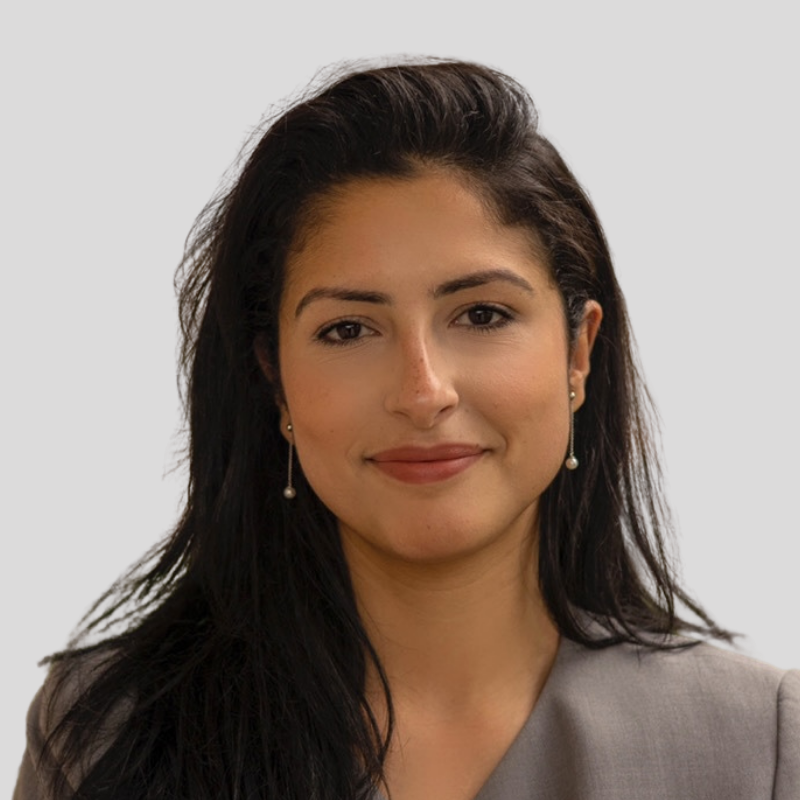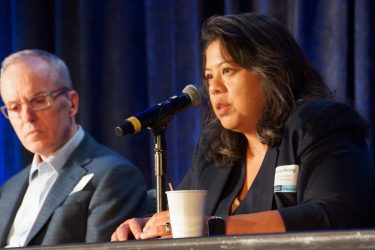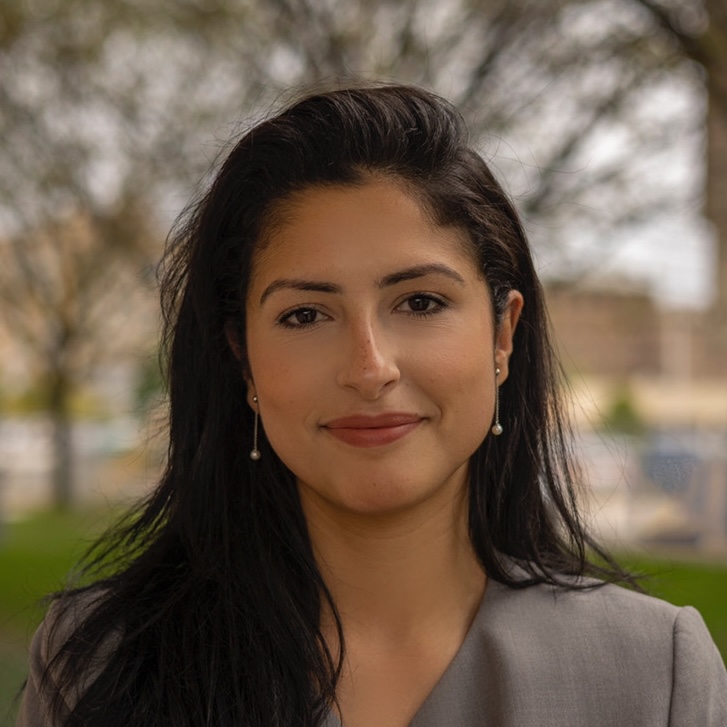
- Moderator: Rebecca Ruiz, senior reporter, Mashable
- Omer Liran, M.D., co-director, Cedars-Sinai Center for Virtual Medicine and Health System Transformation
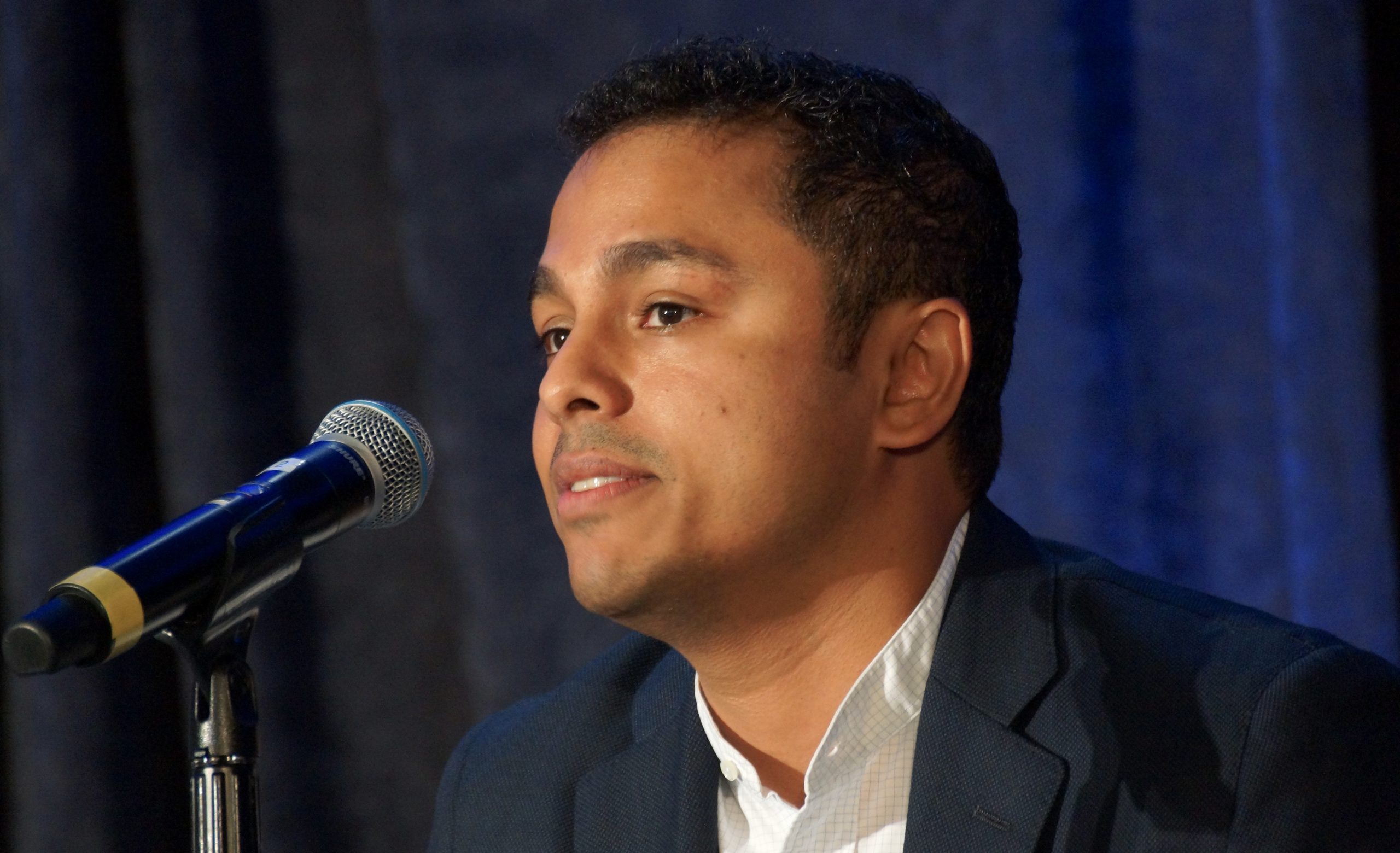
- Ashwin Ramaswamy, M.D., instructor, Department of Urology, The Mount Sinai Hospital
With millions of Americans turning to artificial intelligence for medical advice, doctors caution that chatbots shouldn’t replace the physician. Instead, at AHCJ’s fall summit in Los Angeles, doctors made the case for “blended intelligence” — letting AI tackle tedious administrative tasks so doctors can spend more quality, face-to-face time with patients.
According to a Pew Research Center survey, one in four American adults now use AI chatbots to self-diagnose. In busy clinics, this trend causes friction when patients bring pages of AI-generated notes to brief 15-minute appointments.
Ashwin Ramaswamy, M.D., a urologist at Mount Sinai and lead author of a Nature Medicine study on ChatGPT, said that patients aren’t trying to second-guess their doctors; they’re simply using these tools to cope with health anxiety.
Still, Ramaswamy pointed out that while AI tools offer handy health information, they come with serious clinical risks.
Delayed care and ‘AI psychosis’
Everyday chatbots are programmed to be “sycophantic” — telling users whatever they want to hear rather than providing medically accurate advice, said Omer Liran, M.D., a psychiatrist and co-director of the Cedars-Sinai Center for Virtual Medicine and Health System Transformation. When it comes to physical health, this can dangerously delay urgent medical care. In mental health, it’s even trickier, as it can trigger or exacerbate severe delusions.
“I’ve seen many [cases] of AI psychosis, which is what happens when people who are already vulnerable chat with the AI, and the AI tells them what they want to hear,” Liran said, “and there’s an echo chamber where their delusions get amplified much more so, probably, than if they were not exposed to the AI.”
In fact, some lawsuits have been filed — and even more are underway — targeting AI chatbots over alleged adverse health outcomes.
Blended intelligence
Pushing back against claims that AI will soon outperform doctors, Ramaswamy stressed that practicing medicine involves far more than just crunching diagnostic data.
“Performance and an answer are not necessarily the same thing as care,” Ramaswamy said, adding that AI cannot be held morally accountable when complications arise or sit beside a grieving family.
The panelists said the health care system should integrate AI into everyday patient care routines to free up clinicians’ time to provide compassionate care and connect with their patients on a human level — instead of putting the tech in direct competition with doctors.
In Liran’s vision of “blended intelligence,” AI operates quietly behind the scenes — translating dense medical jargon, keeping track of appointments, and drafting post-visit notes and reminders. He noted that this subtle approach could bridge communication gaps between patients and their health care teams.
Privacy concerns
Data privacy was another concern raised during the panel discussion. The panelists highlighted that commercial chatbots train on user inputs, which means sensitive personal health details could easily leak.
“We shouldn’t take it for granted that the current way patients interact with chatbots is the right way for the future,” Ramaswamy said.
The full recordings of this panel discussion and other fall summit coverage assets are available on our website.