AI in Health Care: Reporting What’s Real
AI in health care is moving fast — and journalists need both a strong grounding in the forces driving that change and a chance to see the technology in action.
Over two days, AHCJ’s fall summit, AI in Health Care: Reporting What’s Real, brought together journalists, researchers, clinicians and other experts to examine what AI means for patients, providers and the health care system.

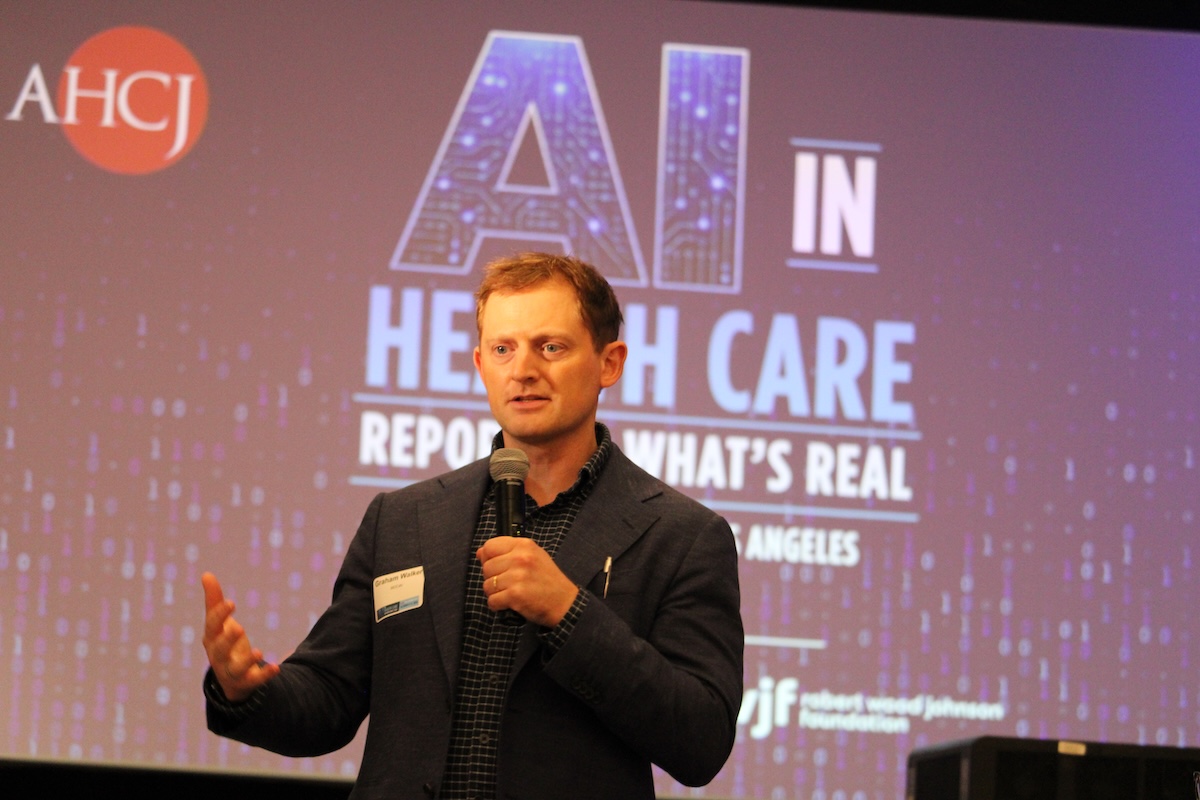
 Graham Walker, M.D., emergency physician and clinical informaticist; co-founder, MDCalc. Photo by Kevin Ridder
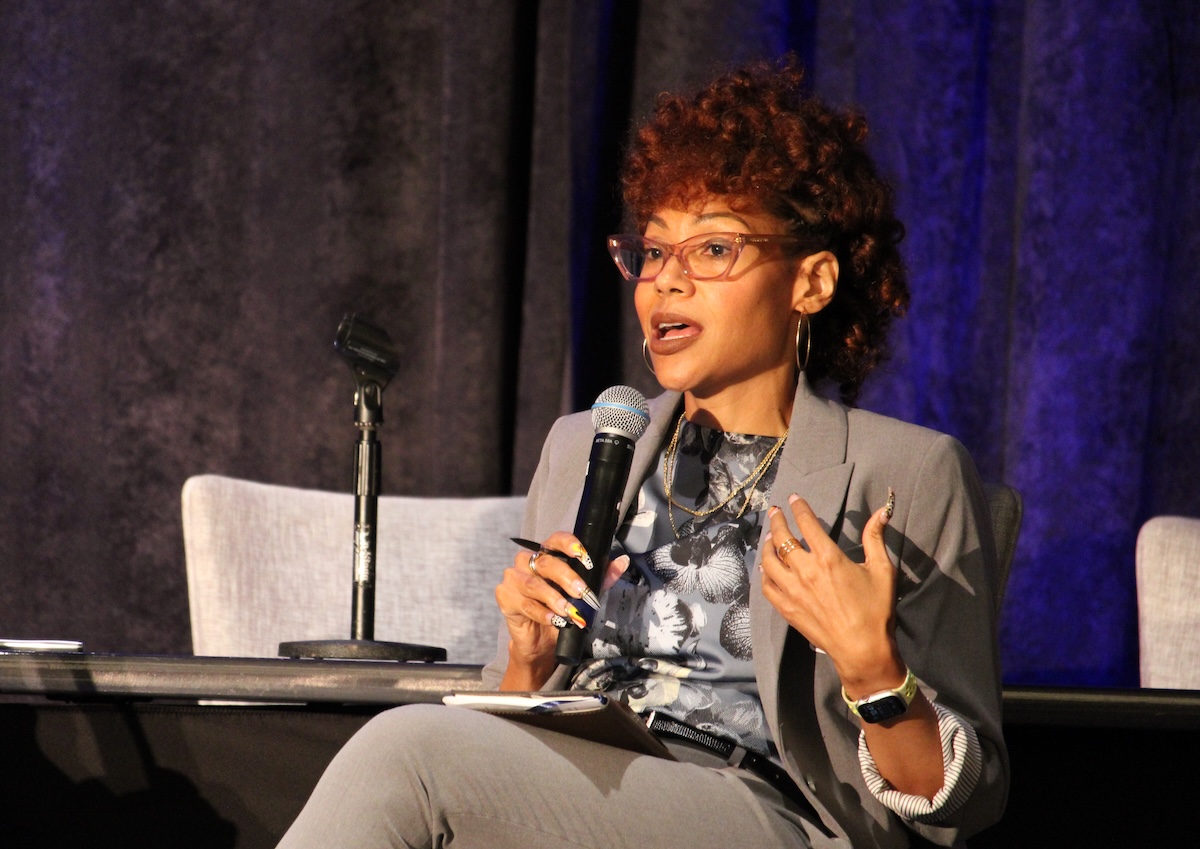
- Tiffani J. Bright, Ph.D., of Cedars-Sinai speaks at the 2026 Fall Summit. Photo by Kevin Ridder
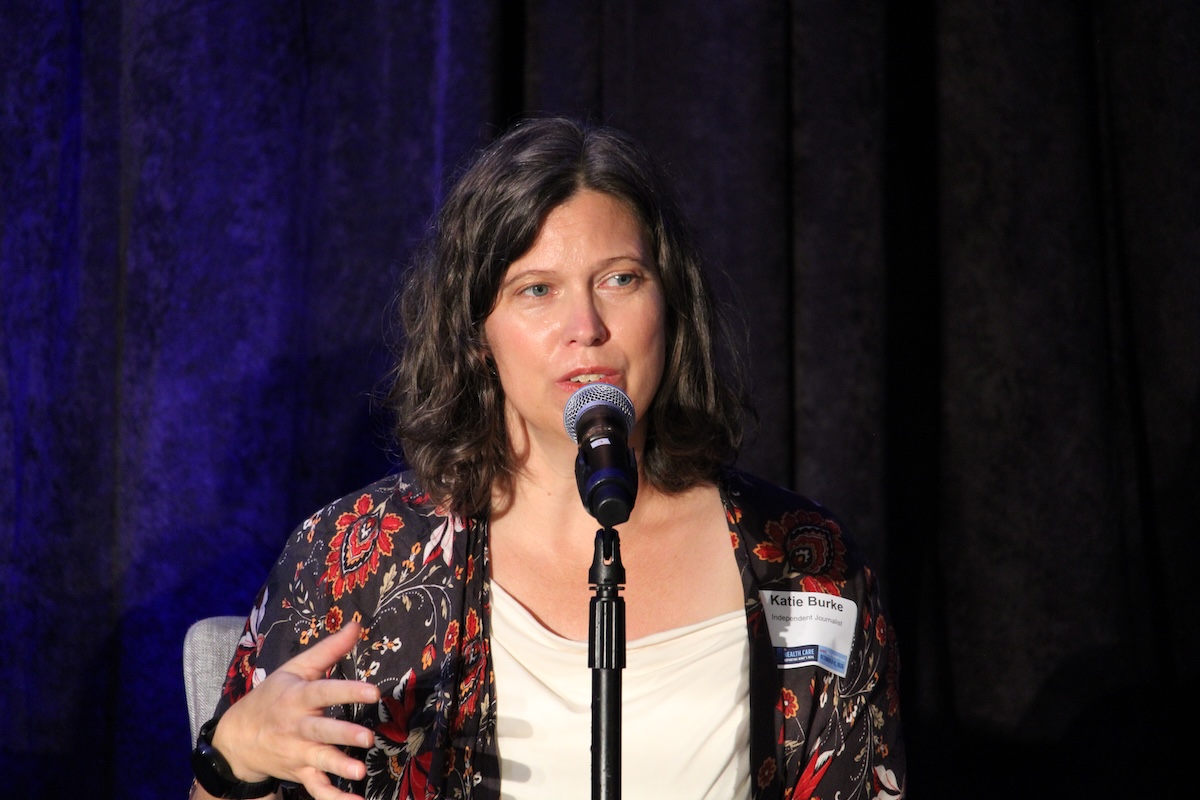
- Katie Burke, senior contributing editor, American Scientist. Photo by Kevin Ridder
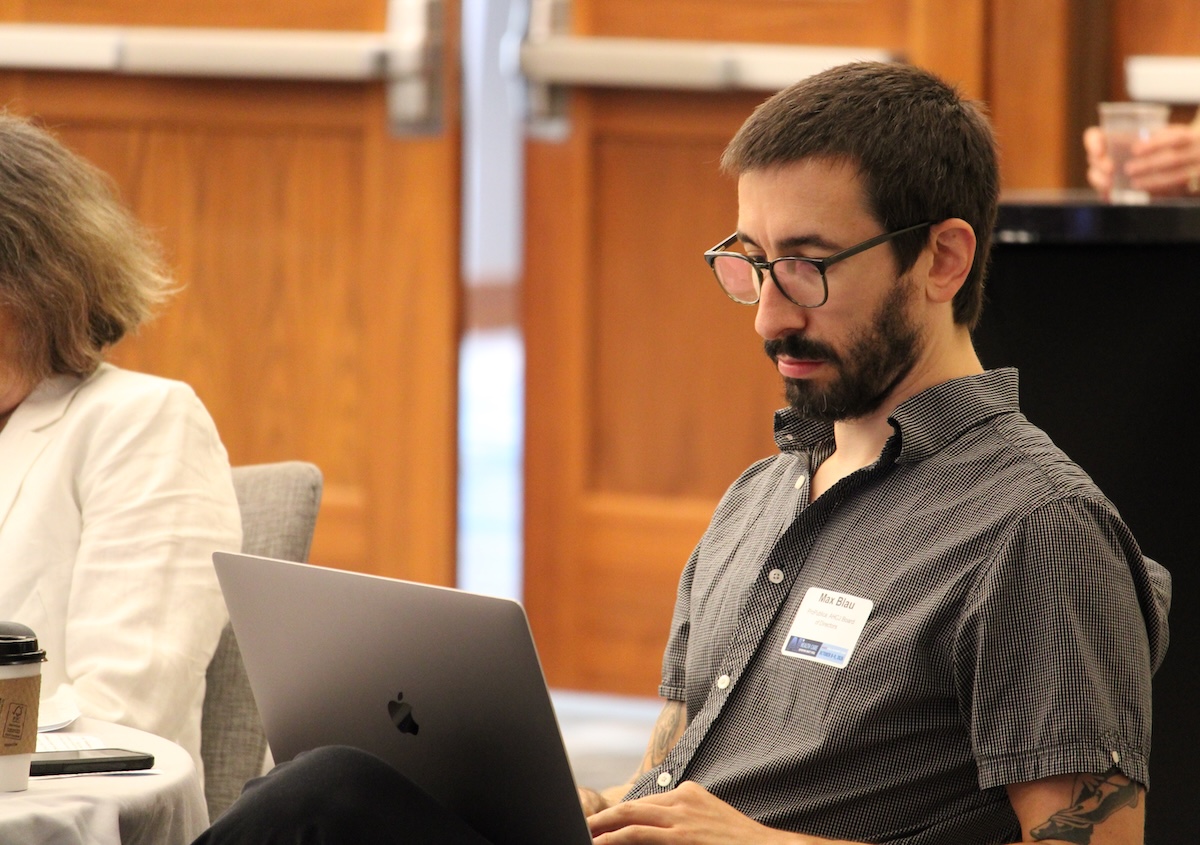
- ProPublica investigative reporter and AHCJ board member Max Blau at the 2026 Fall Summit. Photo by Kevin Ridder
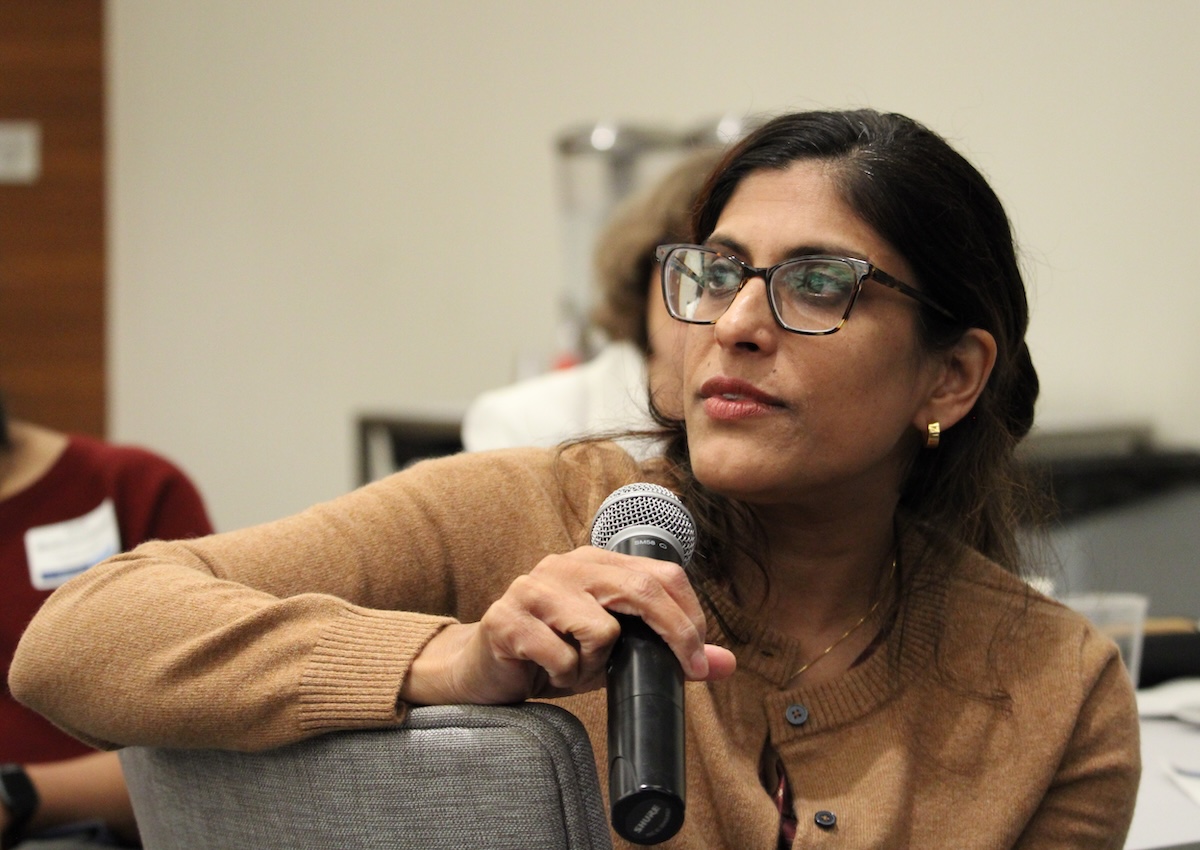
- Renu Rayasam, KFF Health News senior correspondent at the Fall Summit. Photo by Kevin Ridder
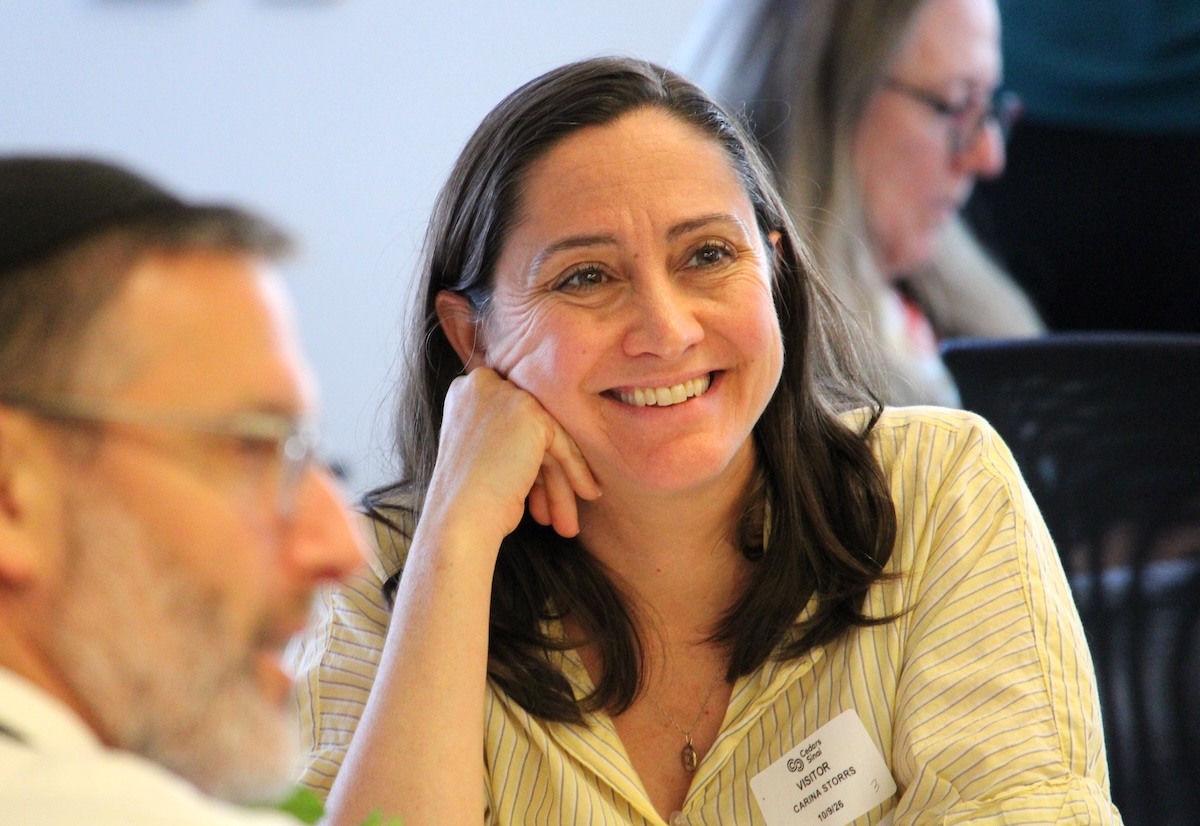
- Freelance journalist Carina Storrs during the Fall Summit 2026 field trip to Cedars-Sinai. Photo by Kevin Ridder
Session Recordings
Audio recordings of each session at the 2026 Fall Summit are now available! Click here to view all recordings on Google Drive, or click the links below for individual sessions. For session descriptions and speaker information, scroll down.
Thursday
Friday
AI 101: Gaining clarity when development is at blur speed
Artificial intelligence has rapidly spread into every nook and cranny of health care — or so the pitches and press releases would have you believe. It can be challenging to tell which technologies might have a real impact on patients and which are marketing fluff. This session will examine how different classes of artificial intelligence and machine learning tools in medicine have evolved over time, the rules and regulations that do (and don’t) govern them, and which have gained a significant foothold.
Hello, doc; meet my chatbot
Implications for change — for better or for worse — in the provider-patient relationship with AI in the room on both sides.
Super sleuthing: AI in diagnostics and prevention
Many hospitals today are incorporating AI into their electronic health records systems. These tools can review patient vital signs and symptoms in real time, alerting physicians when a disease state worsens. In less urgent situations, they can help predict health outcomes. In this panel, physicians from three Los Angeles hospitals will share some of their efforts using and validating AI tools to predict or identify sepsis, postoperative complications for patients with cancer, lung blood clots, brain bleeds, and more.
You make the call: An AI decision-making exercise
- Introduction: Participants will be presented with a realistic scenario involving the use of AI in health care and asked to decide what they would do with incomplete information, competing priorities and no obvious right answer.
- Table discussions: Surface the questions journalists should be asking about evidence, accountability, bias, patient impact and tradeoffs. We’ll return to the scenario at the end of the day to compare decisions and hear how different groups approached the problem.
The AI gold rush in health care: Promises, pitfalls and who pays the price
In this session, Tiffani Bright, computational bioinformaticist and co-director of the Center for Artificial Intelligence Research and Education at Cedars-Sinai, will talk about how AI is racing into clinical care, decision-making, and our own patient records — sometimes in invisible and potentially harmful ways. She will also discuss work being done to ensure new technologies don’t exclude vulnerable populations and how quickly developing AI tools might be best created, used and regulated.
Schooled by AI: The evolving role of artificial intelligence in medical education
Artificial intelligence is shaping how doctors are being taught, both formally and informally. This session will highlight the diverse ways AI is being incorporated into medical school and medical training curricula, as well as how it is being harnessed to provide continuing education to practicing providers. Journalists will learn about how AI is shaping the way clinicians think — and what that means for patients in the short and long term.
How AI is changing disaster detection and response
The average number of billion-dollar disasters per year is more than six times what it was in the 1980s; the most expensive years on record have all occurred in the past five. Artificial intelligence can help address pernicious challenges that crop up every time disaster strikes: detecting threats early, coordinating relief efforts, and saving lives and property. But when and how to use AI remains a sensitive issue, especially when public trust in AI is so low. In this session, two researchers at the forefront of these questions will weigh the exciting pros and the troubling cons of this new technology.
The promise and the hype: How AI is changing drug R&D and how it isn’t
The average number of billion-dollar disasters per year is more than six times what it was in the 1980s; the most expensive years on record have all occurred in the past five. Artificial intelligence can help address pernicious challenges that crop up every time disaster strikes: detecting threats early, coordinating relief efforts, and saving lives and property. But when and how to use AI remains a sensitive issue, especially when public trust in AI is so low. In this session, two researchers at the forefront of these questions will weigh the exciting pros and the troubling cons of this new technology.
AI and the health care workforce
Will AI replace jobs, save us from a shortage of health care workers or both? With AI becoming an increasingly important issue in labor negotiations, working conditions and workforce planning, two experts will share their perspectives on how AI might transform parts of the health care workforce, including home care aides, insurance coders and transplant surgeons.
The AI digital divide: Will rural and safety-net providers with thin margins be left behind?
Academic medical centers and other big hospitals have the money, IT infrastructure, staffing and expertise to take advantage of what AI has to offer. What if you’re a small, rural or safety-net provider operating on a thin margin? We’ll hear from a northern Arizona physician about the challenges of implementing AI in rural community health centers and from an entrepreneur whose company is trying to help hospitals narrow the AI divide.
Field trip to Cedars-Sinai
Hands-on Sim Center demonstration: AI for robotic surgery
The Hung Laboratory works at the intersection of surgery and artificial intelligence, also known as surgical AI. Their work, funded by the National Cancer Institute, seeks to utilize machine learning methods to objectively assess surgeon performance during robotic surgery and anticipate patient-reported outcomes after surgery.
Hands-on VR demonstration: Using Xaia in diagnostics
An AI-enabled tool used with VR glasses started in Spiegel’s research lab and has now been used by more than 100 Cedars-Sinai doctors within orthopedics. The digital tool prepares pre-clinic notes and recommendations for doctors, tracks ambient noise and completes post-appointment summaries and, most notably, has recommended medical diagnoses that may otherwise have been missed.
Thursday, Oct. 8
Build the Foundation
Thursday gives journalists the context and critical framework they need before seeing AI at work. Sessions will explore how the technology is changing diagnosis and prevention, the patient-provider relationship, medical education, drug development and disaster forecasting, while examining the evidence, ethics, regulation and other questions reporters need to understand in a rapidly evolving field. Discussions throughout the day will challenge participants to apply what they are learning to real-world decision-making and tradeoffs.
AI 101: Gaining clarity when development is at blur speed
Artificial intelligence has rapidly spread into every nook and cranny of health care — or so the pitches and press releases would have you believe. It can be challenging to tell which technologies might have a real impact on patients and which are marketing fluff. This session will examine how different classes of artificial intelligence and machine learning tools in medicine have evolved over time, the rules and regulations that do (and don’t) govern them, and which have gained a significant foothold.
Hello, doc; meet my chatbot
Implications for change — for better or for worse — in the provider-patient relationship with AI in the room on both sides.
10:25-10:35 a.m. 10-minute break
10:35-11:30 a.m. Super sleuthing: AI in diagnostics and prevention
Many hospitals today are incorporating AI into their electronic health records systems. These tools can review patient vital signs and symptoms in real time, alerting physicians when a disease state worsens. In less urgent situations, they can help predict health outcomes. In this panel, physicians from three Los Angeles hospitals will share some of their efforts using and validating AI tools to predict or identify sepsis, postoperative complications for patients with cancer, lung blood clots, brain bleeds, and more.
11:30-12:15 p.m. You make the call: An AI decision-making exercise
- Introduction: Participants will be presented with a realistic scenario involving the use of AI in health care and asked to decide what they would do with incomplete information, competing priorities and no obvious right answer.
- Table discussions: Surface the questions journalists should be asking about evidence, accountability, bias, patient impact and tradeoffs. We’ll return to the scenario at the end of the day to compare decisions and hear how different groups approached the problem.
12:15 p.m. Lunch buffet
Served in Regency Ballroom 1, where attendees will be seated for the next session.
12:30-1:15 p.m. The AI gold rush in health care: Promises, pitfalls and who pays the price
In this session, Tiffani Bright, computational bioinformaticist and co-director of the Center for Artificial Intelligence Research and Education at Cedars-Sinai, will talk about how AI is racing into clinical care, decision-making, and our own patient records — sometimes in invisible and potentially harmful ways. She will also discuss work being done to ensure new technologies don’t exclude vulnerable populations and how quickly developing AI tools might be best created, used and regulated.
1:15-2:10 p.m. Schooled by AI: The evolving role of artificial intelligence in medical education
Artificial intelligence is shaping how doctors are being taught, both formally and informally. This session will highlight the diverse ways AI is being incorporated into medical school and medical training curricula, as well as how it is being harnessed to provide continuing education to practicing providers. Journalists will learn about how AI is shaping the way clinicians think — and what that means for patients in the short and long term.
2:15-3:10 p.m. How AI is changing disaster detection and response
The average number of billion-dollar disasters per year is more than six times what it was in the 1980s; the most expensive years on record have all occurred in the past five. Artificial intelligence can help address pernicious challenges that crop up every time disaster strikes: detecting threats early, coordinating relief efforts, and saving lives and property. But when and how to use AI remains a sensitive issue, especially when public trust in AI is so low. In this session, two researchers at the forefront of these questions will weigh the exciting pros and the troubling cons of this new technology.
3:10-3:25 p.m. 15-minute break
3:25-4:20 p.m. The promise and the hype: How AI is changing drug R&D and how it isn’t
There’s a lot of talk about how AI will transform drug research, finding cures for diseases that have confounded human scientists. Many biopharma companies are incorporating AI into their labs, but the technology hasn’t yielded an approved drug to date. This panel will take a hard look at the applications for AI in drug R&D, and its limitations and equip reporters with the important questions to ask.
4:20-5 p.m. You made the call. Now, what shaped your decision?
We’ll reconvene to compare choices, unpack the assumptions and values behind them, and explore what the exercise reveals about the ethical questions journalists will encounter as AI becomes more embedded in health care.
5-7 p.m. Dinner reception
Jetway Patio
Friday, Oct. 9
Go Inside AI in Practice at Cedars-Sinai
Friday brings Thursday’s conversations to life. After morning sessions exploring some of AI’s broader real-world implications, participants will travel to Cedars-Sinai for a behind-the-scenes, firsthand look at how one of the country’s leading health systems is researching, developing and deploying AI.
Journalists will meet directly with clinicians, researchers and operational leaders, see demonstrations and get hands-on experience with robotic surgery and AI-assisted diagnostic tools. It’s a rare opportunity to move beyond presentations and experience the people, tools and questions shaping AI in medicine up close.
7-8 a.m. Breakfast buffet
Regency Foyer 1
8-8:05 a.m. Good morning, recap of yesterday and framing for today
Regency Ballroom 1
8:05-9 a.m. AI and the health care workforce
Will AI replace jobs, save us from a shortage of health care workers or both? With AI becoming an increasingly important issue in labor negotiations, working conditions and workforce planning, two experts will share their perspectives on how AI might transform parts of the health care workforce, including home care aides, insurance coders and transplant surgeons.
9-9:55 a.m. The AI digital divide: Will rural and safety-net providers with thin margins be left behind?
Academic medical centers and other big hospitals have the money, IT infrastructure, staffing and expertise to take advantage of what AI has to offer. What if you’re a small, rural or safety-net provider operating on a thin margin? We’ll hear from a northern Arizona physician about the challenges of implementing AI in rural community health centers and from an entrepreneur whose company is trying to help hospitals narrow the AI divide.
Field Trip
10 a.m. Participants board shuttle to Cedars-Sinai after the last session ends
10:45 a.m. Estimated arrival
11 a.m. Welcome / orientation
11:15 a.m.-12:45 p.m. Lunchtime lightning talks and Q&A (Boxed lunch provided)
- AI ethics and spiritual perspectives on modern medicine (30 minutes)
- Expert: Rabbi Jason Weiner, BCC, senior rabbi and executive director of the Spiritual Care Department
- Sudden cardiac arrest prevention (30 minutes)
- Expert: Sumeet Chugh, M.D., director of the Artificial Intelligence in Medicine Research Center at Cedars-Sinai Health Sciences University
- Chain insights supply chain tool (30 minutes)
- Expert: Nausheen Ahmed, executive director of Supply Chain Operational Excellence: Making a very big difference for nurses
12:45-1 p.m. Short break / transition spaces
1-2:15 p.m. Hands-on Sim Center demonstration: AI for robotic surgery
The Hung Laboratory works at the intersection of surgery and artificial intelligence, also known as surgical AI. Their work, funded by the National Cancer Institute, seeks to utilize machine learning methods to objectively assess surgeon performance during robotic surgery and anticipate patient-reported outcomes after surgery.
2:15-3:15 p.m. Hands-on VR demonstration: Using Xaia in diagnostics
An AI-enabled tool used with VR glasses started in Spiegel’s research lab and has now been used by more than 100 Cedars-Sinai doctors within orthopedics. The digital tool prepares pre-clinic notes and recommendations for doctors, tracks ambient noise and completes post-appointment summaries and, most notably, has recommended medical diagnoses that may otherwise have been missed.
3:30 p.m. Shuttle to hotel
Location
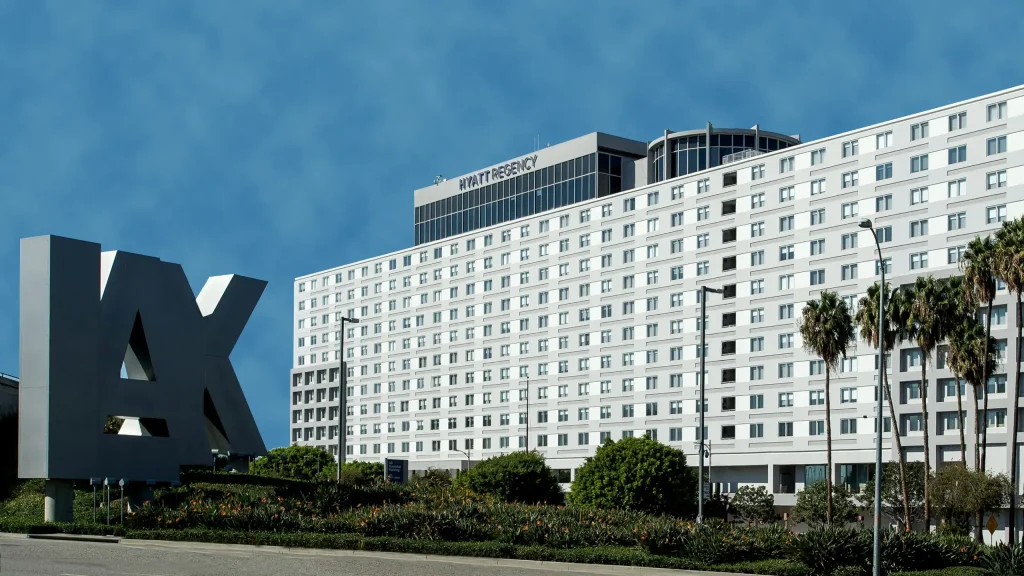
Hyatt Regency Los Angeles International Airport
6225 West Century Blvd
Los Angeles, CA 90045







Sponsors