
Plenary: The cost of fear: The short- and long-term health consequences of aggressive immigration enforcement
By Lindsay Lee Wallace, Connecticut Health Journalism 2026 fellow
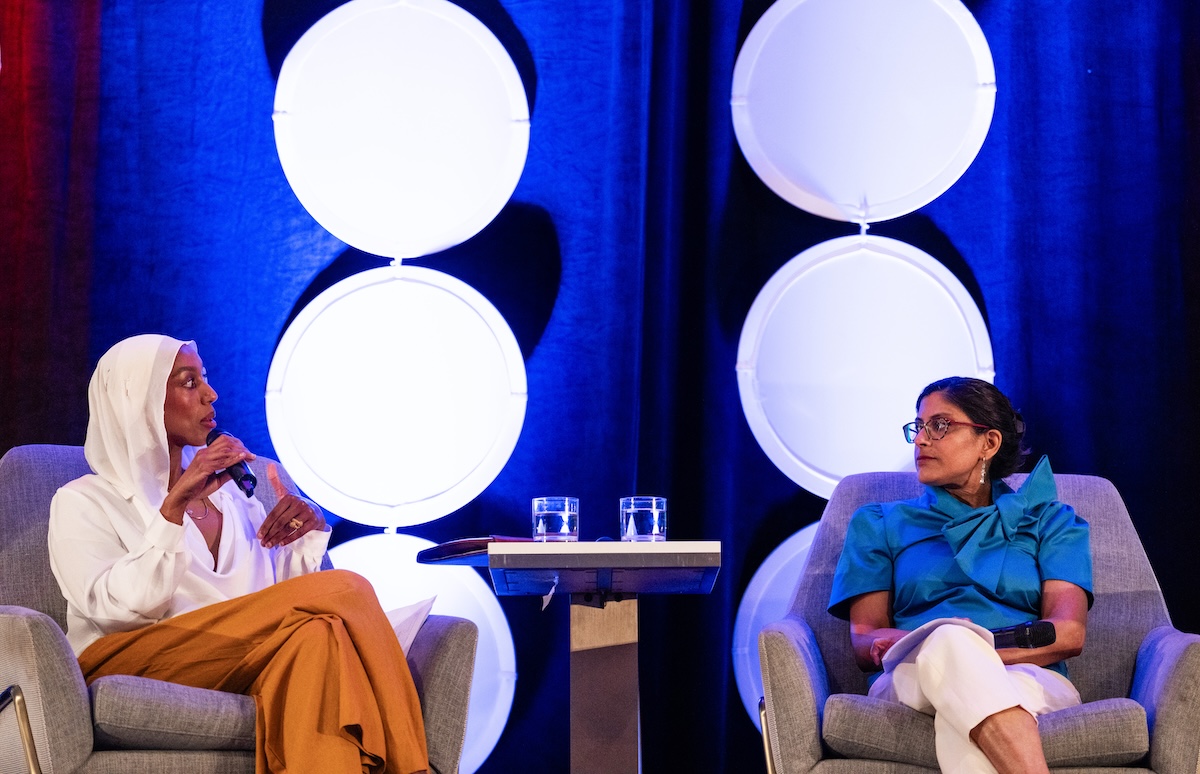
Munira Maalimisaq, CEO of Inspire Change Clinic, opened the community health center in 2025 to provide culturally responsive care, especially to fellow members of Minneapolis’ immigrant communities.
“I wanted to be in the community making changes, educating patients on health literacy,” she said during a plenary at Health Journalism 2026 in Minneapolis last month. Her practice focused on avoiding doctor-patient hierarchy and building trust and rapport over time.

Then shortly after, U.S. Immigration and Customs Enforcement (ICE) and Customs and Border Protection (CBP) descended on her city. When Operation Metro Surge hit Minneapolis, she and her staff had to rapidly transform how they provided care, Maalimisaq told attendees.
Reporters should describe ICE’s and CBP’s actions and their chilling effect on targeted communities’ access to health care in the clearest possible terms, Georges C. Benjamin, M.D., executive director of the American Public Health Association, emphasized.
It was an inhumane, illegal, unconstitutional occupation of the city that targeted people by race, and we need to call it what it was. And they ain’t done yet. It created community fear, it created negative health impacts.
Georges C. Benjamin, M.D.
Maalimisaq said that 60% of her patients were canceling or skipping their appointments during Metro Surge. “People are not showing up for prenatal visits, [and] chemo, they’re not picking up seizure medications,” she said.
Unwilling to see her patients go without care, Maalimisaq brought the care to them. She and her team created a list that grew to 150 clinicians who could make home visits to perform procedures like sutures and blood draws and deliver necessities like diapers and groceries.
Maalimisaq recalled being called to the home of a pregnant woman in labor who was afraid to go to the hospital for fear of encountering federal agents. She and her team escorted her and her children, providing protection and ensuring the baby was delivered safely. Afterwards, the family became primary care patients at Inspire Change.
The clinic has been able to provide care for the family during the chaos of birth and Operation Metro Surge, and for the long term. This is because Inspire Change doesn’t just provide health care — it provides community care.
“Our main goal was to have equity be part of the foundation of the clinic,” Maalimisaq said.
Although ICE and CBP have since reduced their presence in Minneapolis, Maalimisaq and Benjamin said that violent and aggressive immigration enforcement will have lasting consequences.
“We’re gonna see more spikes in vaccine-preventable infectious diseases, higher infant mortality rates, more preterm births, more maternal complications during pregnancy,” Benjamin said.
Many families are struggling to get by. In families where parents lost their jobs, some have been too worried about simply surviving to do things like take children to well-child visits, Maalimisaq added.
“Cultural, social environment is extraordinarily important,” Benjamin said. “It’s programs like [Inspire Change] that help expand the horizons because they bring a degree of sensitivity.”
Lindsay Lee Wallace is a freelance writer based in New York City.