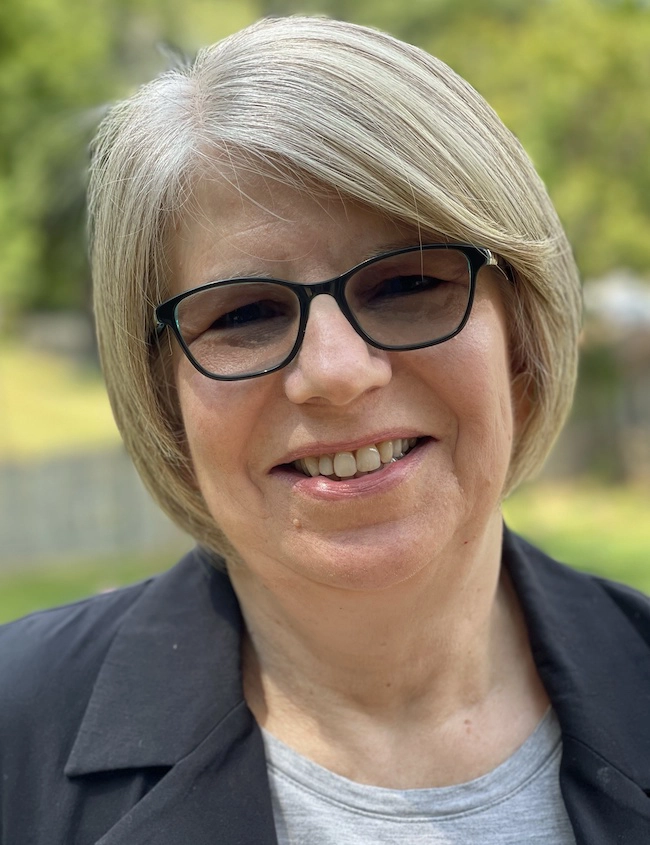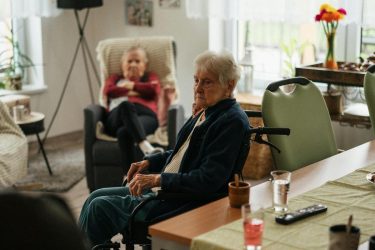
Kiley Koscinski, a reporter at WESA, Pittsburgh’s public radio station, was one of this year’s recipients of the AHCJ International Health Study Fellowship, supported by The Commonwealth Fund. A prior trip to Japan was the basis of her reporting project, a multi-part series called “Designing Dignity.” It explores how the U.S. and Japan approach elder care, with a focus on dementia, caregiving infrastructure, and what policy ideas might translate across the Pacific. WESA has committed to deepening its aging coverage in Allegheny County, where the population is getting steadily older.
This interview has been lightly edited for brevity and clarity.
What prompted the series?
I had traveled to Japan in 2024 and saw what I think a lot of tourists see, which is a lot of infrastructural support for the elderly that left a lasting impression. Back at WESA, our newsroom was looking at coverage gaps, and aging kept coming up as an area we could dive much more deeply into. When I came across the AHCJ fellowship comparing two countries’ approaches to a health issue, I pitched the idea that Allegheny County’s aging population is growing, Pennsylvania’s is growing. Can we look toward a country that has had the world’s oldest population since 2000 to get a jumpstart on how we respond to this demographic shift?
How did you land on ‘Designing Dignity’ as the name?
The word dignity kept coming up. I talked to so many people for this series, and that was the north star. How can we assist people to age with dignity as they’re losing cognitive function? It’s very easy for people to get stuck in less-than-dignified situations. And I find that Japan’s doing a pretty good job of that. So whenever we’re talking about elder care, we’re asking, how are people achieving dignity? One of the four M’s of age-friendly care is what matters. Giving a person with cognitive decline agency to decide what matters to them is really important.
What differences between the two countries struck you most?
The major caveat that came up in every conversation — with policymakers, care home managers, and regular families — was universal health and long-term care insurance. They couldn’t fathom how any of this would be possible without that financial support. Beyond that, the industry of care managers and navigators who help families figure out which programs they qualify for is well established in Japan. There are very nascent versions here in southwestern Pennsylvania, but families here mostly get a diagnosis and Google their way to what comes next. I talked to folks in Pittsburgh who worked in health care or had done extensive research, and even they were stuck. And then transportation. Japan’s train system enables independence. Pittsburgh’s bus system might not even show up.
How did you find sources in Japan?
I obviously started talking with people in Pennsylvania first. And then for Japan, the two questions they teach you in journalism school, “What didn’t I ask that I should have?” and “Who else should I talk to?”, broke open a lot for me. I found Ayaka Anzo, a neuroscience researcher who’s written books in Japanese on dementia. She busted open the door, connecting me with families, dementia cafes, home care providers, group homes. The dementia care community in Japan can be tight-knit. Once you meet the right person, they lead you to everyone else.
Did you run into problems with the language barrier?
My Japanese is quite limited. Ayaka would do an informal Japanese-to-English translation during interviews, and then I would have the tape formally translated afterward. It wasn’t a perfect system, but it worked.
The interesting challenge was actually reaching people in the first place. Email was never effective. I’d get two weeks of silence. But WhatsApp and Japan-specific chat apps worked much better. The other fellows who traveled to Japan hit the same wall — no response by email, then immediate warmth once you’re in the country. So my advice for anyone reporting internationally is to try every communication channel and be physically present if you can.
You got some remarkable tape of a patient undergoing a Montreal Cognitive Assessment. How did that come about?
That came directly from provider trust. The best thing I did was talk to as many geriatric primary care providers as I could. They’re few, but the ones who go into that field are extremely passionate, and they want to educate you. Those background and educational interviews, even when you never use the tape, shape where your reporting goes next. Because I’d invested that time, a provider trusted me enough to allow me to be present during the screening.
Patricia was in her 90s, cracking jokes, fully engaged. And then she takes this test, and the cognitive decline became very clear. I get chills thinking about it. Sometimes in this job you think, I am so privileged to be trusted to tell this story.
What policy ideas could translate to the U.S.?
I’m really interested in Washington State’s long-term care insurance program. Benefits began drawing down this month. It’s capped at about $36,500, indexed to inflation, which is far short of the $10,000-plus per month families pay for care facilities. But if a state can absorb the first chunk of risk and bring down private insurance premiums, we might be on to something. Pennsylvania had legislative interest, but it stalled in committee. About six other states are exploring it. The gap is political will. A geriatric specialist told me most lawmakers don’t feel urgency until their own parent is in that situation.
Any advice for reporters who want to cover aging and dementia?
Get into it. The declining birth rate means the other end of that is more older people. There are endless issues to cover. Talk to as many providers as you can, even on background. Prioritize real families alongside specialists. There’s this term I came across called “the long middle,” the decade-plus period between diagnosis and the end of life. That stretch deserves attention. People deserve to live with dignity during that time, and telling their stories is how we make that visible.