
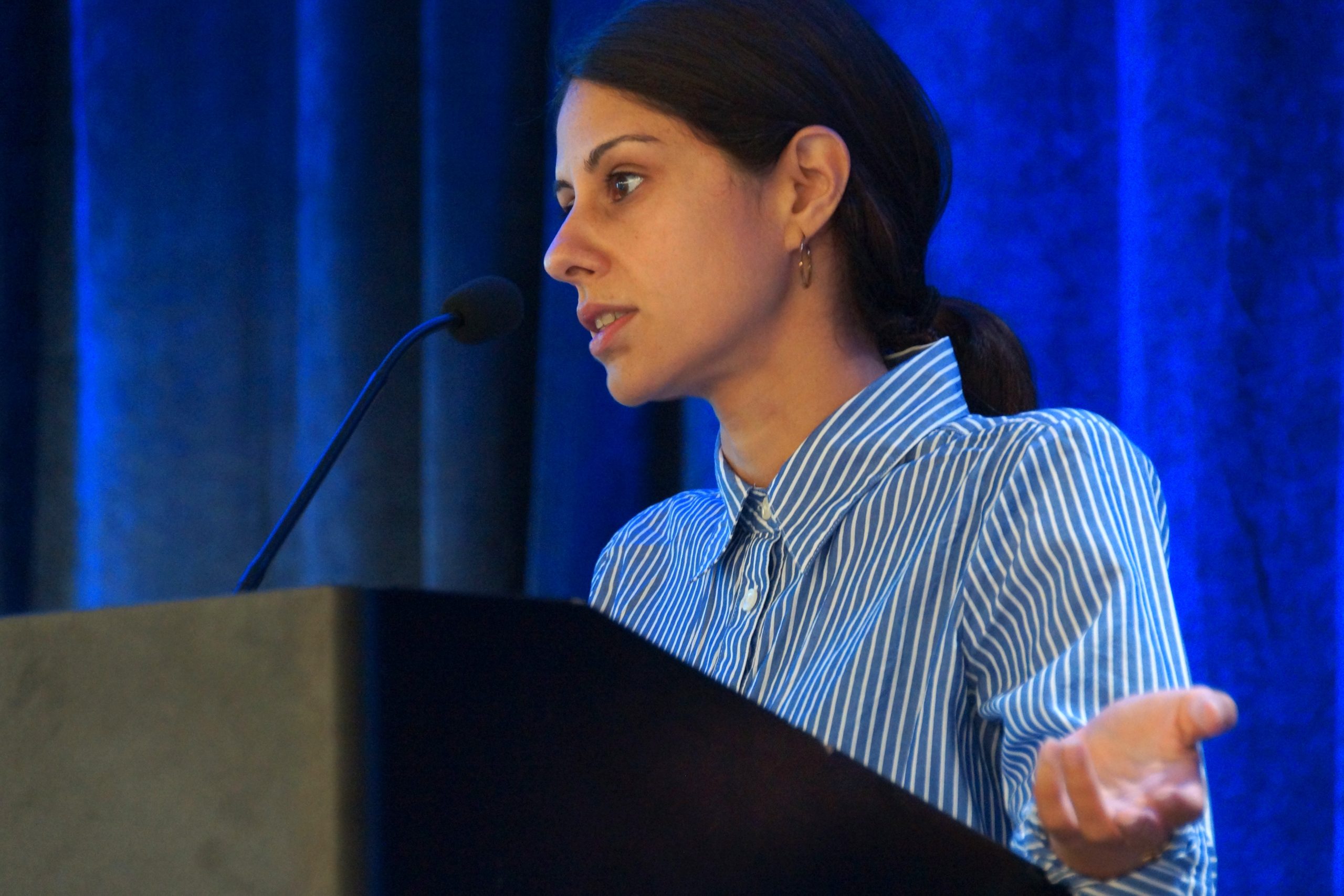
AI and the health care workforce | Fall Summit 2026
Health care organizations are deploying artificial intelligence tools within a federal regulatory vacuum. This lack of guardrails risks harming clinicians, according to panelists at AHCJ’s fall summit in Los Angeles.
Tech companies and health care executives promise that tools like generative AI, which summarizes clinic visits and chart notes, will reduce staff burnout and alleviate administrative burdens.
“‘Home for dinner’ is the phrase used in trainings,” said Sukhbir Singh, D.O., a hospitalist and board member of the Union of American Physicians and Dentists.
But Singh said the reality is different.
Clinicians must review, correct, and sign AI-generated chart notes, leaving full legal liability with the physician while adding an extra layer of cognitive work. Health system administrators then interpret these automated notes as efficiency gains, using the metrics to assign larger patient panels and cut support staff, he explained.
If AI gives us time back, the fundamental question running through all of this is: Who gets to decide what happens with that time?
Dr. Sukhbir Singh
Singh added that administrators use electronic medical records to monitor metrics like patient length of stay, discharge times, and precise physician chart usage “down to the minute.” These tools act as a “productivity ratchet” that continually raises performance benchmarks for doctors, he said.
Harms to workers
Panelists advised journalists covering the story to avoid treating AI as an abstract, catch-all concept. Instead, reporters should investigate and ask workers about the concrete systems and platforms they interact with on a daily basis.
Nurses and other staff face potential harm from AI tools and algorithms that are often “untested and unregulated,” said Mishal Khan, a senior researcher at the UC Berkeley Labor Center.
“Even if we do not lose a single job to AI, that does not mean that there will be no harms to workers,” she said.
Khan added that employers increasingly rely on data-driven algorithms that impact wages, working conditions, gender equity, and collective bargaining power.
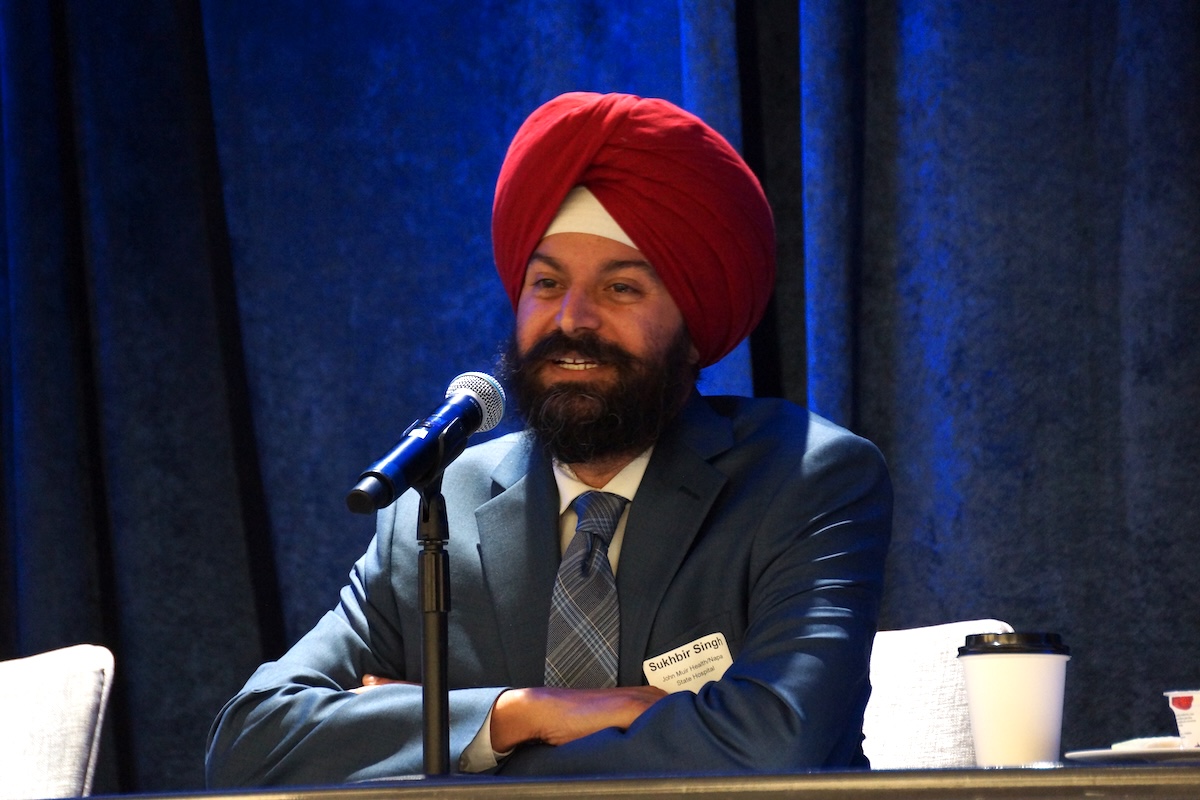
Dr. Sukhbir Singh, D.O., speaks at a panel on AI and the health care workforce at AHCJ’s 2026 fall summit. Photo by Erica Tricarico 
Medscape Editorial Director Barbara Feder Ostrov moderates a panel on AI and the health care workforce at AHCJ’s 2026 fall summit. Photo by Erica Tricarico 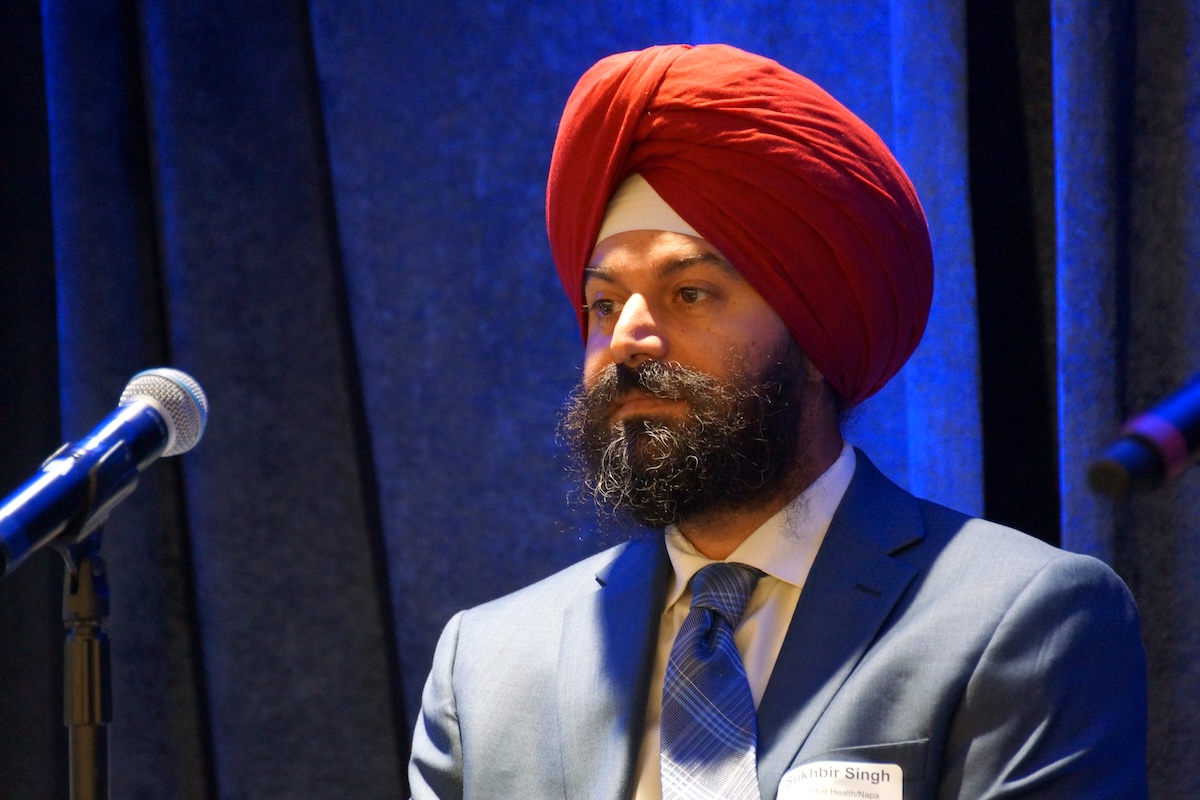
Dr. Sukhbir Singh, D.O., at AHCJ’s 2026 fall summit. Photo by Erica Tricarico 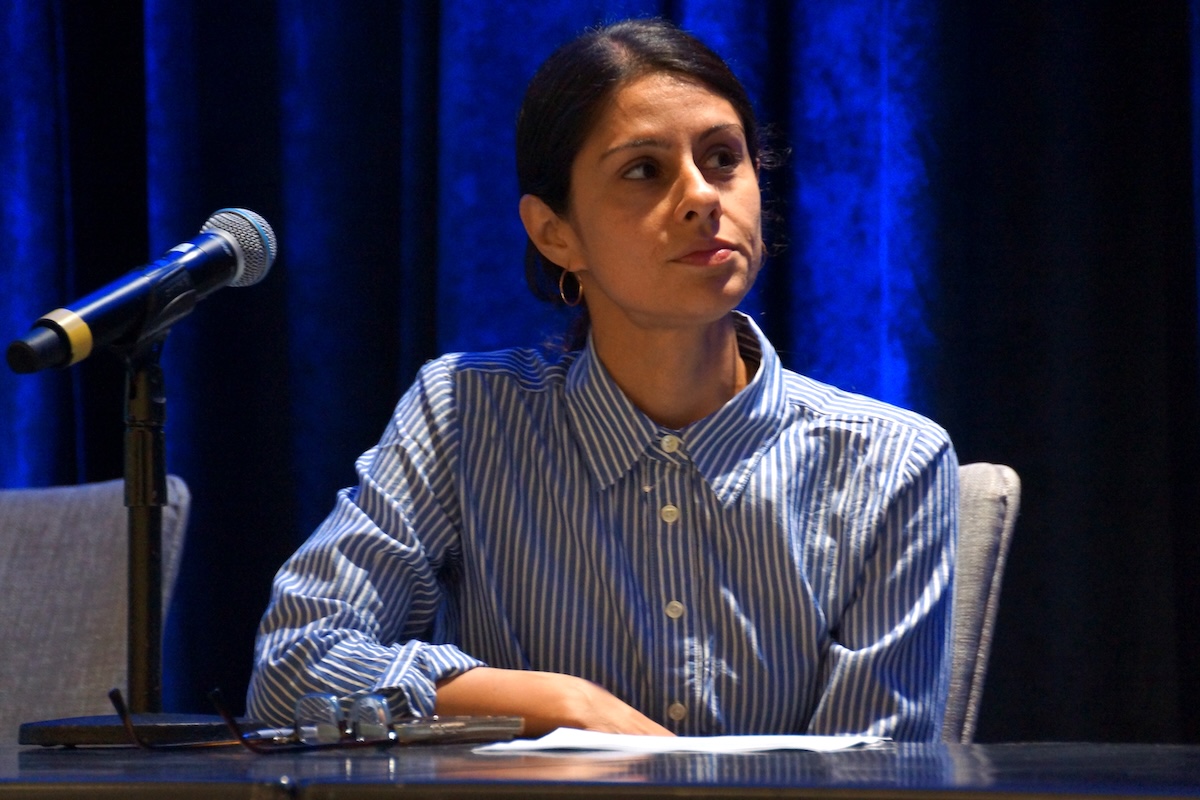
Mishal Khan, Ph.D., at AHCJ’s 2026 fall summit. Photo by Erica Tricarico
For example, digital staffing platforms are introducing gig-economy practices to nursing. Nurses on these platforms must bid for shifts through algorithms that adjust pay based on worker data, mirroring ride-share pricing models.
Khan said some automated systems — such as those designed to manage sepsis, a life-threatening condition responsible for one in every three hospital deaths in the United States — strip decision-making authority from nurses, which can lead to de-skilling and alert fatigue. Nurses also express concern that AI tools will alienate them from their patients.
Regulatory vacuum
Amid this federal regulatory void, some nursing groups are establishing their own “bill of rights” for workplace AI integration.
There are efforts underway at the state level as well.
The California legislature recently passed a law prohibiting employers from making employment decisions without human oversight. The state will also soon ban workplace monitoring in restrooms and prohibit neural data collection.
Other legislation aims to protect clinical decisions within a healthcare worker’s official scope of practice from being overridden by AI. Pending nursing legislation in Illinois specifies that AI cannot automate core clinical duties such as triage, care planning, and patient discharge.
Other states are making it illegal to advertise AI chatbots as licensed healthcare professionals.
Khan said that current “human in the loop” provisions — requiring that a human review and greenlight decisions made by AI tools — are not sufficient to protect workers and patients. She said these provisions can easily become corporate rubber stamps if clinicians are pressured to accept algorithmic decisions.
“What we need now, very urgently, is to establish a new sense of common sense guardrails around technology — what we call the labor standards for the 21st century,” Khan said.
Suggested reading for reporters
- MIT Sloan: Partnership on Al
- JAMA Network Open: Ambient Al, administrative burden and burnout
- Annals of Emergency Medicine: Scribes and physician workflows
- AMA: Physician Al sentiment research
- OECD: Algorithmic management in the workplace
The full recordings of this panel discussion and other fall summit coverage assets are available on our website.