
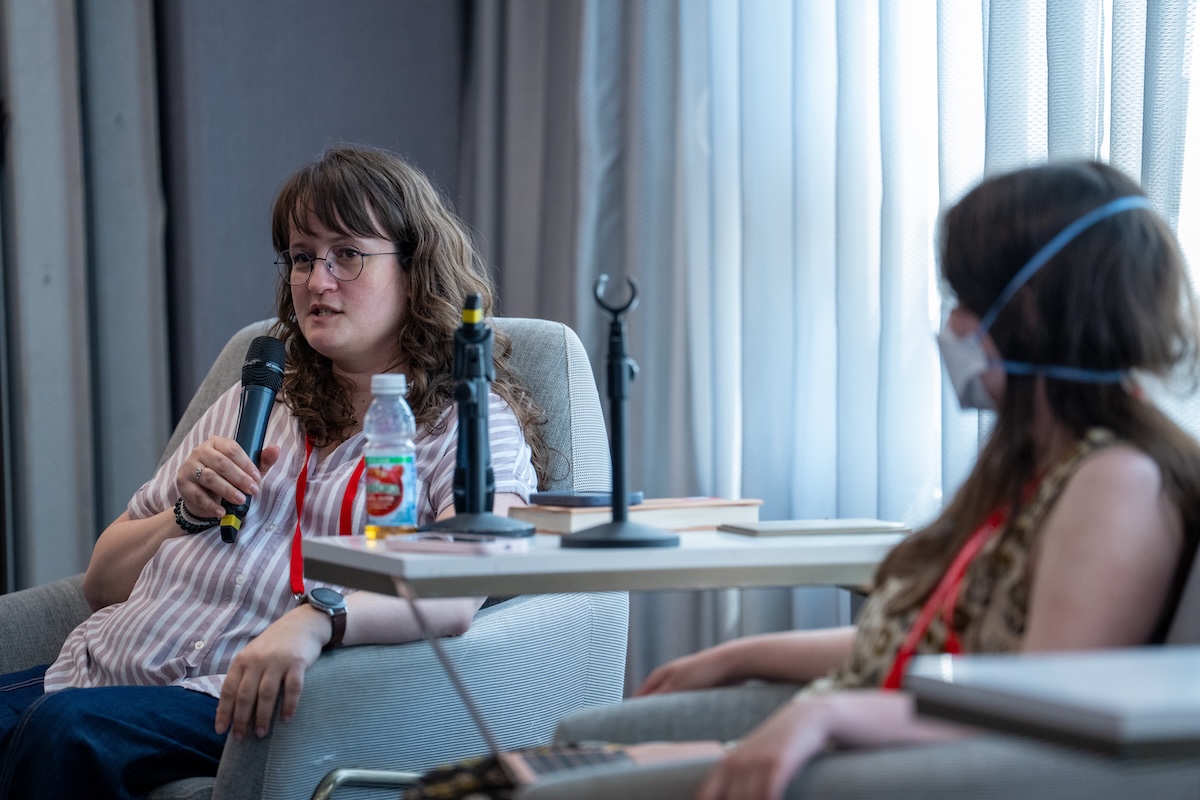
Reporting on autism through a neurodiversity lens
By Kristen Hwang, California Health Journalism Fellow
In the face of government-sanctioned misinformation campaigns about autism, journalists must do more to include autistic voices in stories and recognize the nuance in each person’s disability experience, panelists at Health Journalism 2026 said.
Autism and other forms of neurodiversity are normal variations in brain function and should not be framed as a condition that needs to be “cured,” Milena Bates, speaker and co-founder of the Minnesota Autistic Alliance, said during the session.
“Neurodiversity is just a fact, same as diversity in general,” Bates said.
That means a universal autistic experience doesn’t exist and that reporters should seek out a variety of perspectives for their stories. People require varying levels of interventions and support, and a therapy that is helpful for one person may be harmful for another. Without neurodiverse voices, stories about the community are often “wrong about a lot of things,” Bates said.
Speaking with autistic people is particularly important, argued Bates and Julia Métraux, disability reporter for Mother Jones, at a time when Trump administration officials have pushed a narrative that erases the dignity of people with disabilities.
In 2025, U.S. Health and Human Services Secretary Robert F. Kennedy Jr. declared the country would “eliminate” the “autism epidemic” within five months. Kennedy has supported policies casting doubt on vaccine safety and insisted, despite decades of evidence to the contrary, that vaccines cause autism.
The over-medicalization of autism, the implication that it is a disease that can spread, and the suggestion that autistic people need to change is harmful, disability advocates say.
The way you hear RFK Jr. talk about autism, he’s acting like it’s a life-threatening condition — that it ruins lives. It doesn’t ruin your life. It’s just part of people’s lives.
Julia Métraux
Disability reporter, Mother Jones
People with autism and other forms of neurodiversity often need more support than they are given in the form of home and community-based services, the panelists noted. Recent federal health care cuts put these services at risk, Métraux said.
Reporters should also keep in mind that autistic people often live with other conditions or disabilities and that their support needs should not always be attributed solely to their autism. “Chances are it’s probably a complex constellation of disabilities,” Bates said.
Tips and best practices
- Don’t write “inspiration porn.” If you wouldn’t write an article about a non-autistic person graduating high school, why would you write one about an autistic person?
- It’s best to ask people how they self-identify their disability.
- It’s best to describe someone’s disability in terms of their support needs rather than severity.
- Question the systemic issues that make it challenging to live with a disability.
- Asperger syndrome is no longer a diagnostic category.