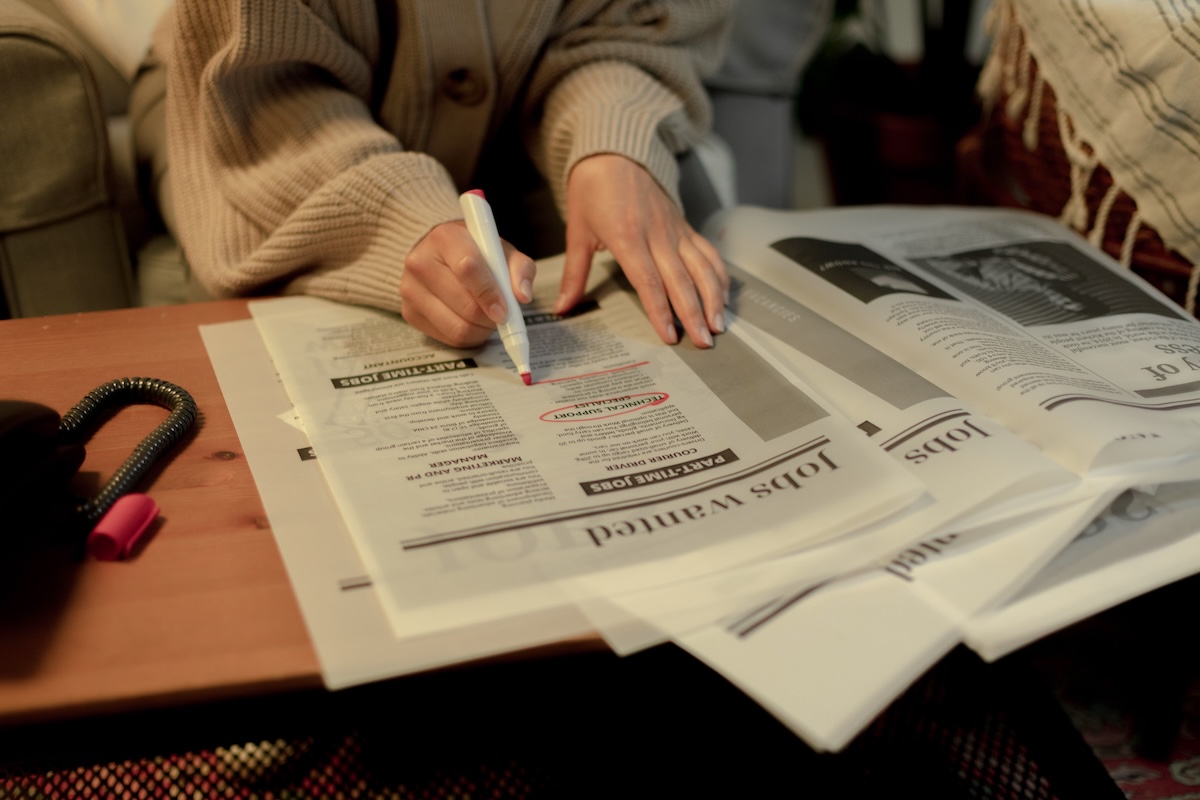
If you’ve recently been laid off, I’m sorry. Losing a job is emotionally, practically and financially destabilizing — especially when your identity and sense of purpose are closely tied to your work, as they are for many writers and editors.
But let me offer some hope. When I took a last-minute buyout after 15 years of staff roles in the summer of 2023, I felt something I hadn’t expected: freedom. Learning to run a freelance business is an ongoing process, but I’m enjoying the ride. You just might, too.
So, after you’ve had a good cry, scream, vent session or all of the above — here are my best tips for accidental freelancers.
Find community
While the go-to image of a freelance writer might be someone isolated at their desk (and in their head) day in and day out, the reality is that there are hundreds of thousands of us out here — and many regularly congregate in various online communities to swap advice, editor contacts, calls for pitches and more. There are Facebook groups and Slack communities, podcasts and books for and by people like you and me.
Here are some of the groups and resources I found particularly motivating and comforting in my first few months of freelance life:
- AHCJ’s Freelance Center.
- Study Hall.
- UPod Academy.
- The SPJ Freelance Community
- Freelancers Union.
- Freelance Writing Direct Podcast.
- Deliberate Freelancer podcast.
Sure, you’re the only one who can write your stories, but you don’t have to do it alone or reinvent the wheel. There’s almost always someone else who’s been there before.
Put it out there
Within a week of my departure from my last in-house job, I announced my transition on social media. I called old colleagues and friends in the field. I didn’t ask for sympathy or beg for work. I did include some of the flattering things editors had said about my work and expressed my genuine excitement for the change ahead.
Just hours after one social post, I had a DM from a New York Times editor inviting me to pitch her (though I still haven’t broken in). An old acquaintance from the National Press Club introduced me to his editor at a medical trade, where I soon had a few assignments. I had a former colleague toss me some short-term editing work at a regional magazine where the editor was on vacation.
So, if you’re newly and unexpectedly freelancing, put it out there on all the platforms — even, and maybe especially, the ones like Facebook where you may have let your presence collect dust. You never know what high school classmate has a friend or cousin or former boss in need of a strong health writer with an open schedule.
Lean on old connections
When I started freelancing, it quickly became clear that I’d been unintentionally weaving myself a safety net of connections all along. I’d been active in the National Press Club when I lived in DC, I’d served on the board of various journalism organizations and I’d made friends at conferences like AHCJ’s. I’d taken calls from friends of friends who’d been laid off in the field and didn’t burn bridges when I left jobs of my own.
I never did any of that with the goal of “using” these connections in case I one day went freelance — I did it because I’m a people person who cares about this work and community by nature. But it’s paid off.
Forge new connections
That’s not to say you need a decade of experience and an extroverted personality to make freelance life work. Engage with editors and writers you admire on social media. Go to events you’ll genuinely enjoy. My first Vox byline, for example, came through a string of connections that trace back to a holiday party. My first New York Post story — truly one of my favorite reporting and writing experiences ever — came after sitting next to an editor at a media dinner.
Aim to get assignments — not land pitches — at first
A lot of new freelancers spin their wheels developing and sending out pitches that, more often than not, get ghosted. That’s demoralizing, and it’s not sustainable.
For me, what worked at first was saying “yes” to all kinds of assignments that came my way through (again) connections. Only after I’d built up relationships with editors and learned publications’ styles and systems did I ask if they were open to pitches from me. Most were.
After six months to a year, instead of 100%, about 75% of my pieces were assignments. I pitched when I had gaps in my schedule because I love fleshing out my ideas and reaching for new bylines, but I didn’t rely on those pieces to pay the bills.
Now, three years into freelance life, at least half of my published stories are my ideas. The cycle has reversed: Rather than accepting assignments and then pitching the same editor, I more often pitch my ideas and then find the editors come back to me with assignments of their own.
Read the publications you want to write for
It seems obvious, but it’s practically difficult to make time to thoroughly read all the publications you’d like to write for and keep tabs of their style, sections and special issues. But it’s also a very fun aspect of the job I definitely didn’t have time for when I was writing for only one place.
Embrace it! If you don’t know a site that seeks voices from particular backgrounds or publishes first-person takes of certain experiences, you won’t go about your daily life with the same story-seeking curiosities — and could miss great opportunities along the way.
For instance, as a long-time reader of New York Magazine, I knew it published a “How I Got This Baby” series featuring people who became parents in unconventional ways or under unusual circumstances. So, I was able to land two stories for the column. Had I not been aware of the series, it wouldn’t have crossed my mind that the friends I knew who fit the mold would make great “How I Got This Baby” sources.
Break the rules
If you’re used to being tethered to a computer 9 to 6, do things to teach your body and brain who’s in charge now. For me, that meant taking a yoga class at my local YMCA at 10 a.m. on a Tuesday. Or, drinking an espresso martini at 2 p.m. on Wednesday, shutting down my laptop on a sunny Thursday and opening it on a rainy Sunday.
If you can wipe the slate clean of how you’ve been conditioned to think it means to “work,” you can make mental space to imagine — and start building — a life and career you love on your terms.
Think like an entrepreneur
I never thought I wanted to be an entrepreneur, but as soon as I had to be, I realized it’s fun to think of ways to make money.
Ask yourself: How can I apply my interviewing, reporting and writing skills to gigs outside of journalism? Who might pay for my ability to understand and translate complex medical topics? What other interests do I have that could bring in some cash? What else did I want to be when I grew up? There’s still time!
I, for one, loved working in admissions and new student programming throughout college, but I’ve rarely thought about it since. Now, I’m considering pairing that latent passion with my storytelling experience to offer college essay coaching to high schoolers.
I also know freelance writers who make a substantial portion of their income speaking, teaching yoga or working in marketing. Instead of seeing these side gigs as necessities to support a more unpredictable writing career, see them also as opportunities to acquire fresh story ideas, angles and sources.
Think outside of the mainstream box
While most of us would love to write for the big-name legacy publications, a more realistic plan is to mostly aim for the thousands of other publications and websites that need strong health writers.
For example, almost all universities — and often schools within those universities — publish magazines and online content like faculty profiles. Every medical specialty has at least one association, many of which put out newsletters or magazines. Some fitness franchises like Equinox and Lifetime produce magazines, as do many hospitals and trade organizations.
Just like you can use a side gig as a story-idea generator, sometimes writing for more niche outlets can lead you to sources and concepts that hatch your next big mainstream idea.
Deliver
It should go without saying that you need to nail the basics: Meet your deadlines and word counts, don’t submit a copy with typos or grammatical errors, follow the publication’s style guide and be warm and professional to work with. Write original, engaging and well-sourced stories. In sum: Make the editor’s job easy.
Again, there are a lot of us out here, and you’d be surprised how quickly the basics can help you rise to the top of the crop. Do good work, and you’ll get good work. Good luck!