Finding and effectively using remote personal assistants to save time
By Wendy Wolfson, California Health Journalism Fellow
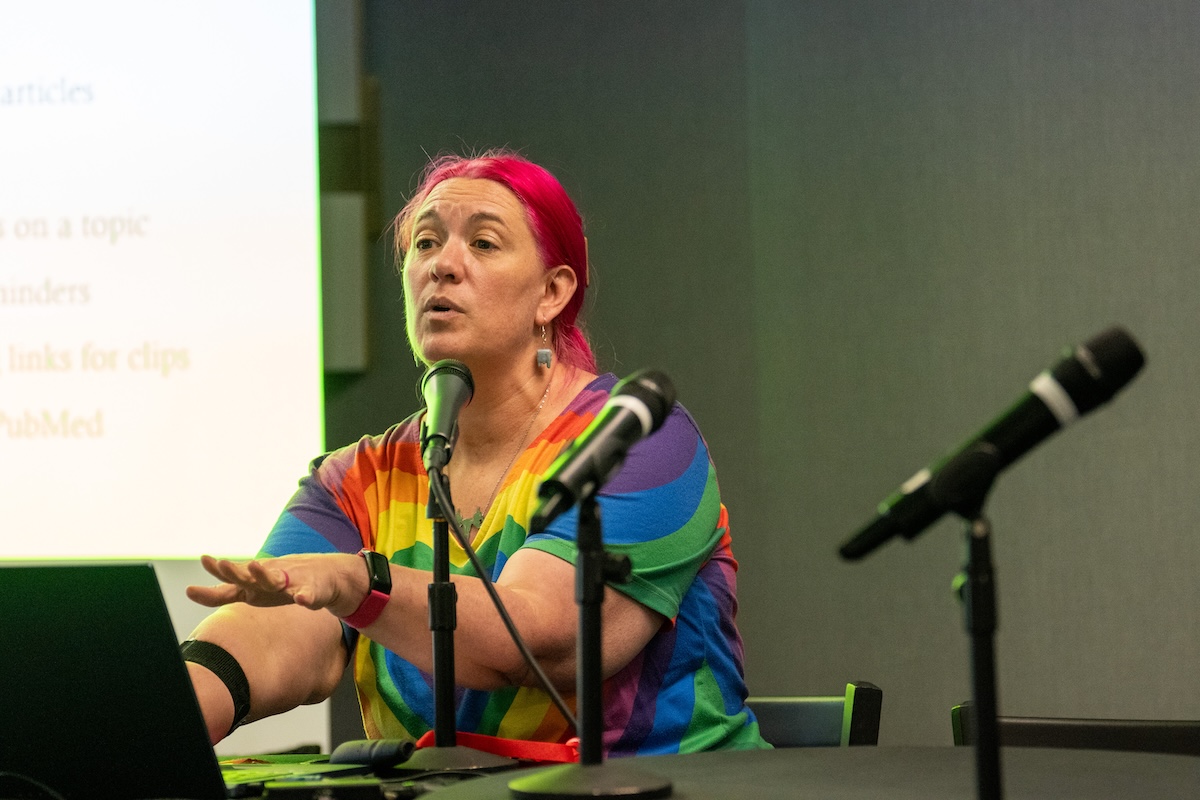
At Health Journalism 2026, independent journalist Tara Haelle explained how a remote personal assistant (PA) enables her to be more efficient and productive. Her remote assistant is not AI but is a live human she hires through an agency. This is because a human can show judgment in interacting with editors and clients and make phone calls on her behalf.
The primary function of an AI virtual assistant is to predict the next likely word in a sequence of words, based on training gained by scraping the web, Haelle noted. AI will not protect personal information or story sources, and is liable to hallucinations and repeated mistakes.
“Menial tasks that I have my personal assistant do are also costly in terms of not only money but cognitive energy,” Haelle, who is also AHCJ’s Health Beat Leader for Infectious Diseases and Medical Studies, said. “I offload all the other tasks that would drain my energy.” Haelle advises calculating your hourly rate for time spent on interviews, research, writing, and editing. If the rate is greater than $25-$50/hour, hiring a personal assistant can make sense.
She uses a personal assistant to submit travel expenses, identify expenses for tax deductions, send invoices and request follow-up payments. A personal assistant can also be trained to do journalism-adjacent tasks such as basic research, finding sources and previous coverage of a topic, and maintaining links for clips.
A personal assistant updates her contact spreadsheets, reminds her of deadlines in advance, checks her email for missed inquiries or connections, handles administrative aspects of conference and work travel, updates her website, sends clips to sources, and fills out onboarding paperwork. However, Haelle negotiates her own contracts.
In addition, she uses her personal assistant for personal and family tasks such as planning trips or finding a doctor.
Haelle contracts for a monthly package of 20 hours of personal assistant support through an agency, so the personal assistants are vetted, bonded, and insured. The assistants sign NDAs or non-compete agreements. Questions to ask the agency include how they find and vet the PA and how the agency deals with disputes.
However, training a personal assistant is a time investment. Haelle estimates that it takes weeks to months for her to train a personal assistant, and she only advances them to more complex tasks after she builds trust and a working relationship. When ready, the PA gets their own email with a shared password and receives assignments via Dropbox or Google Drive.
To hire a personal assistant, Haelle makes a list of tasks and the skills required. Haelle looks for people who can think critically, follow instructions, engage in two-way communication about workflow, and with whom she feels personally comfortable. Eventually, they can handle her financial and medical information. Haelle vets personal assistants for political views in the initial interview, as she cannot compromise sensitive information and sources.
Wendy Wolfson is a freelance writer based in Irvine, CA, who has always dreamed of having a PA, but thought she lived too far from Hollywood.