‘Why should I trust you?’: Reporting at the intersection of mistrust and MAHA
By Josh Archote/Texas Health Journalism Fellow
Reporting on the rift between the Make America Healthy Again (MAHA) movement and mainstream public health experts requires a delicate balance between empathy and facts, panelists at HJ26 said.
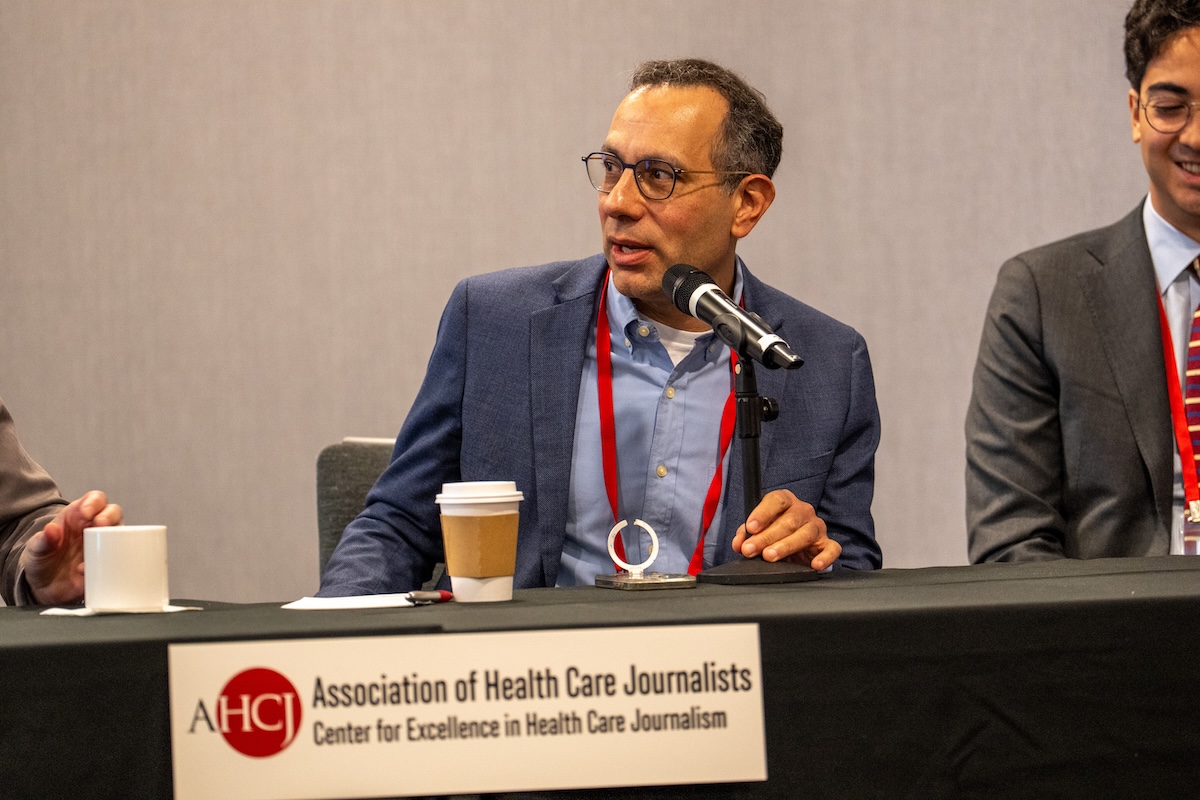
Mark Abdelmalek, M.D., and Tom Johnson, hosts of the ABC News podcast “Why Should I Trust You?”, bring public health experts and MAHA proponents face to face to discuss their disagreements and find common ground.
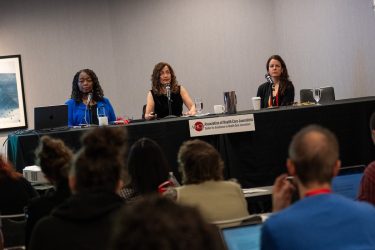
During a panel discussion moderated by POLITICO’s Amanda Chu and Simon J. Levien, Abdelmalek and Johnson spoke about the challenges and opportunities in reporting on this rift and the importance of bringing compassion and genuine curiosity to the table.
Johnson said that the idea for the podcast was spurred by the growing mistrust in public health institutions that escalated during the COVID-19 pandemic, and has now found a home in U.S. health secretary Robert F. Kennedy Jr.’s administration and MAHA.
The podcast’s goal is to bring the debate out of echo chambers on social media into a long-form discussion between MAHA supporters and folks from traditional science, medicine and public health institutions on topics such as vaccines, nutrition and research cuts.
“There is a form of epistemic collapse that’s occurred in this country,” Johnson said. “We are not all seeing the same information, perhaps in a way that we did 20 years ago.”
Very often, people are coming to the information now and they’re skipping the facts. They’re just going straight to the opinion.
Tom Johnson
Co-host, ‘Why Should I Trust You?’
The core message Johnson and Abdelmalek reiterated was bringing genuine curiosity and compassion to conversations with MAHA supporters: trying to understand how they came to their conclusions and not immediately going into debate mode.
“As soon as someone realizes you’re interviewing them to diagnose them, they’re going to hang up the phone,” Abdelmalek said.
It has been interesting to see people on opposite sides start the conversations by simply seeing each other as human beings, Johnson said. Of course, reporters also have a responsibility to provide factual information and context, the panelists said, especially when guests misleading claims.
Johnson and Abdelmalek frontload their podcast episodes with evidence and context for the topic, occasionally jumping in during discussions with fact checks as well.
For regional and local reporters, reporting on this rift largely boils down to sourcing, the panelists said.
“Get slightly out of your comfort zone,” Abdelmalek said so that you can tap into this audience and eventually build trust. “The problem with journalism now is that we’re trying to report on mistrust while living it ourselves, and so that is actually making it very difficult sometimes to even get somebody to answer your call.”
Johnson advised trying to build a relationship with a few sources in the MAHA movement.
“It takes smaller amounts of sources that you’re building a natural relationship with, and that’s where the trust factor comes in,” he said. “You’re not just pulling them up quick for a quote and you’re gone.”
Josh Archote covers health at the San Antonio Report.