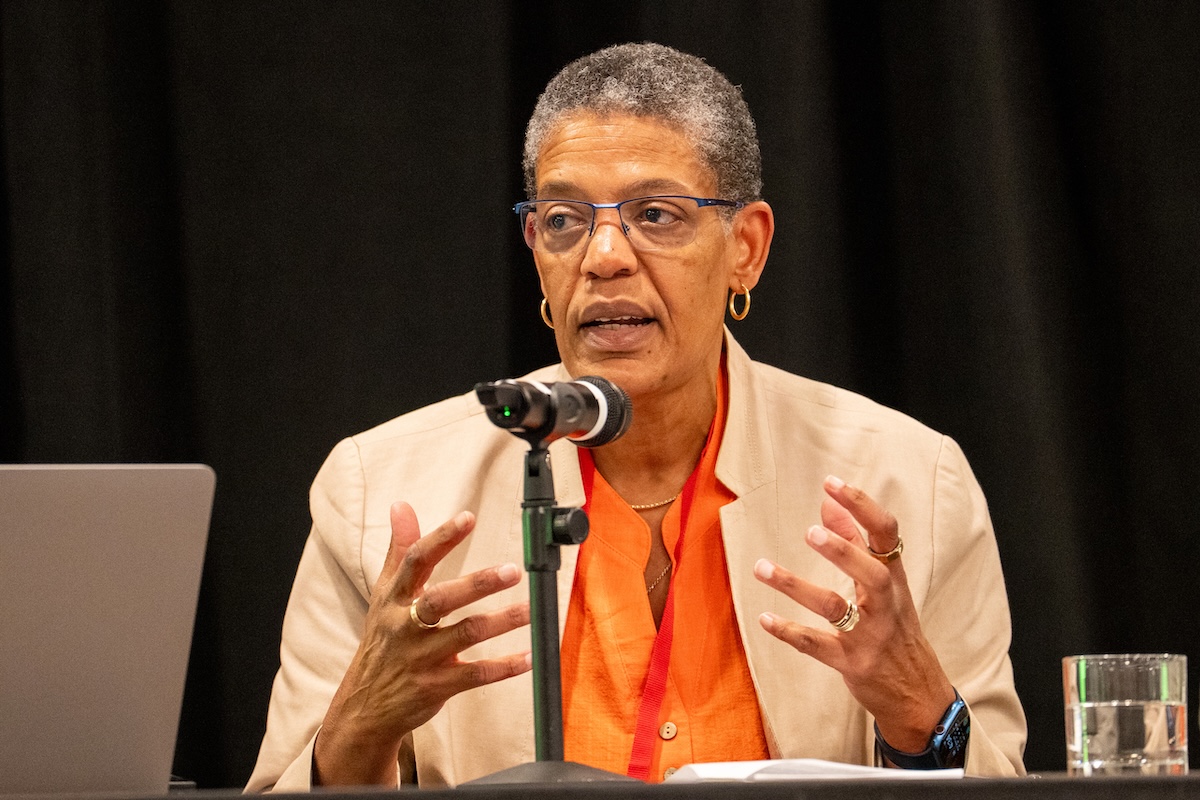
The 10-year public health story in a 24-hour news cycle
In an era when audiences can scroll past a story in seconds, a panel of public health leaders, journalists and communicators at HJ26 argued that long-form storytelling remains one of the most powerful tools for helping the public understand complex health issues — if reporters can connect policy and data to the people whose lives are shaped by them.
The discussion brought together public health and journalism experts, who shared strategies for sustaining audience interest in stories about public health programs, emerging threats and the often-invisible infrastructure that shapes community health outcomes.
Think of the decades-old initiative to place protective window guards in apartment buildings to keep infants and small children from falling to their deaths, said moderator Elizabeth Green, communications director for Big Cities Health Coalition. When there isn’t a crisis at hand — because these programs are successful — it falls on the journalist to elevate the critical nature of these programs so readers understand their importance.
Williams, a professor of epidemiology at Stanford, cautioned the audience that stories of public health victories may be complicated to nail down due to the invisible nature of their successes, similarly to Green’s window-guard example.
The Clean Air Act has prevented hundreds of thousands of deaths annually, but the program has come under recent threat by President Donald Trump and his administration’s rollback of air pollution and PFAS regulations, Williams said. The health impacts of these policy changes may not be visible for years, making them difficult to cover in the 24-hour news cycle, she added.
Johnson, a Pulitzer Prize-winning independent journalist, says it may be easier to reach readers in the daily news environment by sewing emotional narratives into your health reporting.
“These are issues that are actually very emotional,” Johnson said. “This is about life and death.”
For Olson, a reporter with the Minneapolis Star Tribune, strong reporting on public health means digging through data to find a gold nugget that may shock and activate audiences. Olson outlined his work examining child deaths in family homes as compared to licensed childcare facilities.
Similarly, Chaplin, commissioner of the Minneapolis Health Department, says language choice is crucial to whether a reader engages with reporting or passes it by.
“You’ve heard quite a bit about encampments in Minneapolis,” Camplin said. “But what happens when we change the term from encampments to open drug markets? The conversation changes; people start to think about this differently,
In the end, the general consensus among the collection of experts was that public health is working when nothing happens. This makes it hard to find a flashy headline, meaning reporters have to do the hard research to find the human stories of suffering avoided by successful programs or the pain that may come to be by their political dissolution.
Erin McGroarty covers health and health policy for the Capital Times in Madison, Wisconsin.