Bringing global health stories home: USAID cuts and beyond
By Cecil Egbele/2026 California Health Journalism Fellow
As sweeping cuts to U.S. foreign aid reshape global health programs, veteran health journalists warned at HJ26 that many of the world’s most important health stories may never be reported — and American audiences may never realize what they’re missing.
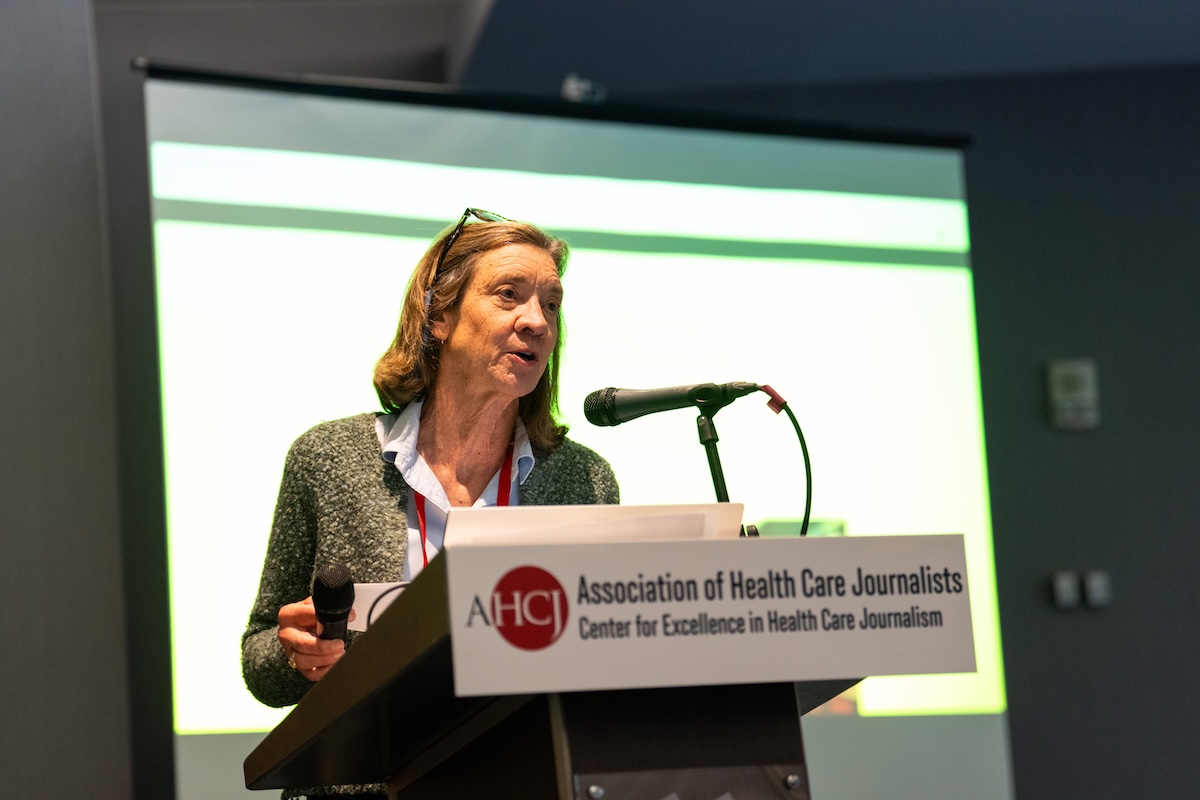
The session, “Bringing global health stories home: USAID cuts and beyond,” featured moderator Eli Cahan, a contributing writer at Rolling Stone and fellow in neonatal intensive care at Stanford University; Susan Ferriss, senior editor at the Pulitzer Center; Deborah Becker, health reporter at WBUR radio in Boston; and Lisa Krieger, an independent journalist who has reported for the San Francisco Chronicle.
Ferriss said the Pulitzer Center has significantly ramped up funding for stories documenting the fallout from USAID cuts across Africa and other regions. She cited teams from Science magazine and PBS NewsHour that received grants to travel to multiple African countries and report firsthand on the humanitarian consequences.
“We’re looking for stories that really stand out,” Ferriss said, emphasizing the importance of strong pre-reporting, clear story anglesand on-the-ground reporting.
The panelists emphasized that framing is everything when selling global health stories to domestic audiences. Cahan, who traveled to Ukraine to report on antibiotic-resistant infections for Rolling Stone, said his reporting drew attention from Congress because the threat had direct implications for U.S. military personnel. Krieger echoed that point, noting that after COVID-19, infectious disease stories are an easier sell: “It’s just a plane trip away.”
Becker traveled to Italy to examine a residential addiction treatment program that Health and Human Services Secretary Robert F. Kennedy Jr. has proposed as a model for the United States. She said the Pulitzer Center grant made the trip possible after years of editors saying, “no.”
Her findings were eye-opening — though the program builds community and long-term structure, it lacks the medication-assisted treatment, which U.S. experts consider the gold standard.
Panelists agreed that successful global health reporting requires extensive planning, relationship-building and sourcing. They encouraged journalists to work with local reporters, advocacy groups and researchers to gain access and context.
“Anecdote clearly is not enough anymore,” Cahan said.
When asked why American audiences should care about international stories, Ferriss highlighted the interconnected nature of modern health threats. Krieger echoed that sentiment, noting that “the world is a smaller place than it used to be.”
The panel agreed that the strongest global health stories often combine a clear international problem with a domestic stake, helping audiences understand that what happens overseas can quickly shape outcomes at home.
The panel closed with a clear consensus: in an era of reduced foreign aid and shrinking newsrooms with almost no travel budgets, the reporters who find a way to tell these stories — and connect them with someone in the U.S. — are performing an essential public service.
Cecil Egbele is a multiplatform journalist with the Bakersfield News Observer under the California Local News Fellowship and a reporter with the USC Center for Health Journalism.