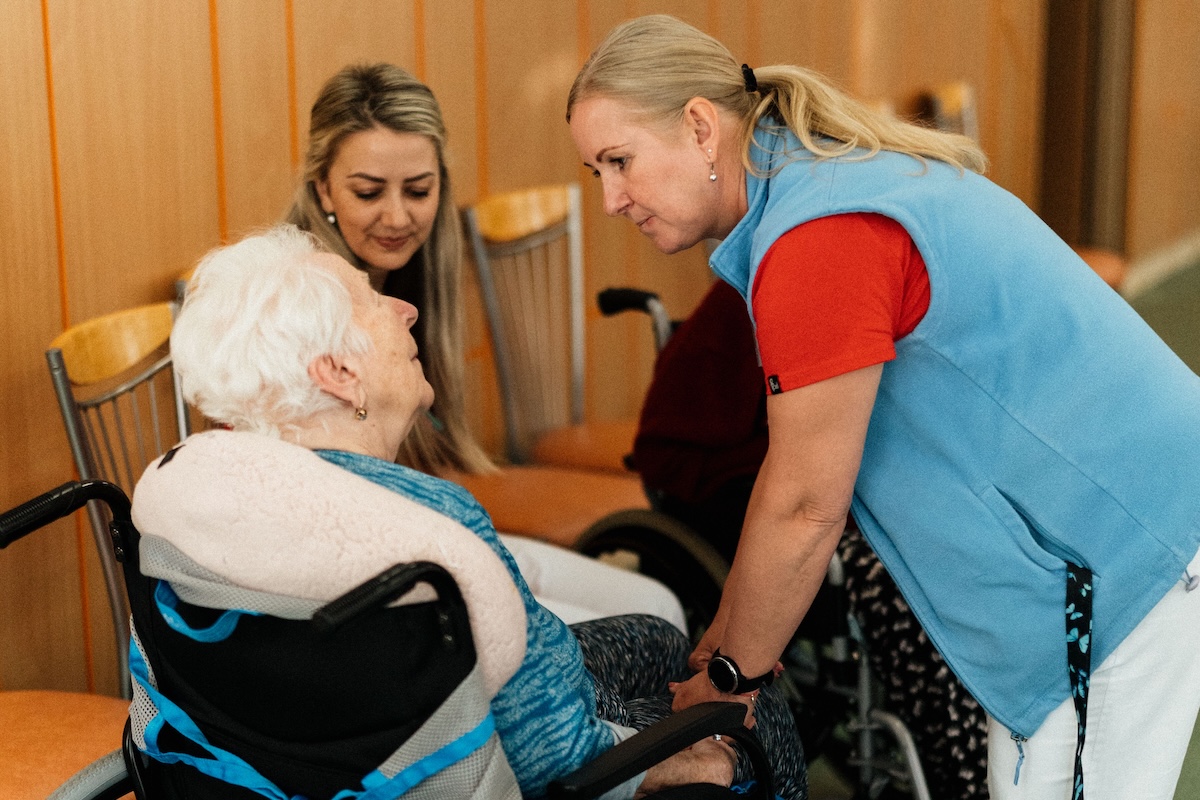
Dementia can rob people of impulse control as well as memory — and in nursing homes and assisted living facilities, the result can be violence between residents, sometimes fatal.
In a recent KFF Health News investigation, reporter Jordan Rau examined how warning signs are repeatedly missed and safeguards often fail, drawing on court records, police reports, and an original analysis of federal inspection data.
What first convinced you that resident-on-resident violence in dementia care was a systemic story rather than a string of isolated tragedies?

In 2024, we published an article about a lawsuit over a resident-to-resident altercation in a Wyoming memory care facility. In the court file I found roughly thirty pages of the facility’s nursing log for Jeffrey Dowd, a resident with dementia who fatally shoved another resident named Dan Shively. After Shively died, Dowd remained at the facility for nearly three years.
The notes revealed how the facility struggled, often unsuccessfully, to stop him from berating, threatening, hitting and groping other residents. They also disclosed that he was on the receiving end of assaults. A Cornell researcher told us that there was “a real problem with endemic violence” in these facilities. All this made us wonder what level of dementia behavior was considered too excessive for a resident to remain, and whether the long-term care industry was resigned that clashes were unavoidable.
Walk us through how you mined CMS inspection reports to identify resident-to-resident altercations. You took both a broad look back to 2024, plus more specific categorization of Jan-March 2026 reports. Why is it important for reporters to spend the time doing that deeper dive?
We wanted to push the reporting beyond what we had established in our 2024 piece by looking at the warning signs of trouble before an altercation and how facilities handled them. We also wanted to try to establish the scope of the problem. The academic literature on resident-to-resident altercations is limited, so without some kind of new data findings, the reporting might be dismissed as a handful of anecdotal outliers.
CMS doesn’t have a violation tag for resident-to-resident incidents. I searched the database of inspection surveys for variations of “resident-to-resident” and found incidents were most frequently cited with an F-0600 deficiency tag. That’s also what CMS’s inspection guidance manual tells surveyors to use. F-0600 means the home failed to “protect each resident from all types of abuse such as physical, mental, sexual abuse, physical punishment, and neglect by anybody.” (CMS posts and updates its Full Statement of Deficiency database each month on the Five-Star Quality Rating System webpage, under the related links section.)
Each deficiency is listed on its own row, so one survey may take up multiple rows. I combined all the deficiency files — there are 11 of them, covering each region of the country — and filtered them to rows in the Freedom from Abuse, Neglect, and Exploitation Deficiencies category — mostly F-0600 through F-0610 tags. I further limited the data to rows with a Scope and Severity code of “G” or higher. Those are deficiencies where someone was harmed or where inspectors identified systemic shortcomings known as immediate jeopardies.
I examined every inspection report for the first three months of 2026 and categorized each by whether it was a resident-to-resident altercation, staff abuse, staff neglect, or something else. For the older surveys going back to the start of 2024, I searched by keywords and read the texts of the F-0600 deficiencies to see if they were resident-to-resident incidents. Often, I could tell from the first few sentences.
How did you go from data to specific families? CMS data doesn’t include assisted living facilities, which are state-regulated. How did you work around that to bring in cases like The Vero at Chesapeake in Virginia? Did you start with inspection reports and work backward to find people like the Cecchettos and Rebecca Norton, or start from lawsuits and court filings and work forward?
Concurrently with the data work, I searched Courthouse News Service and Courtlink lawsuit databases, using keywords like “memory care” and “dementia.” I also asked dementia care experts and plaintiffs’ lawyers to refer us to families and cases.
You can try it from the other direction by first identifying inspection surveys that fit your story and then search lawsuits by facility name in the civil court of the county where the home is located. But it’s laborious when you’re looking in dozens or hundreds of counties. And while some counties have put lawsuits online, many are still in the dark ages with paper records, or charge fees for every search.
The Gladys Lynch scene draws on video footage described in police and state reports. Did you view that video yourself, and how did you and your editors decide how much detail to include from something so disturbing?
I did review the videos from Gladys Lynch’s room. It was far more jarring to watch than to read about in the documents. We didn’t hold back any key details, but we did not publish any images from the video, which would have felt gratuitously invasive.
Persuading relatives to relive a loved one’s violent death is hard. What convinced the Cecchetto and Norton families to open up and share documents, photos, and video with you?
Families either had no interest in talking or were eager to share their story because they wanted to warn others of these dangers. Generally, plaintiffs are more likely to talk to a reporter and share documents before there’s been movement toward a settlement. The ideal time to reach them is when their lawyers have conducted depositions and received discovery documents. It’s harder after a settlement because facilities usually insist on including non-disparagement clauses. We were lucky to locate and interview Linda Twiddy’s family in May because they settled their lawsuit the next month and could no longer talk with us.
How did you approach PACS Group, Sinceri Senior Living, and Presbyterian Homes for comment given active litigation, and did legal sensitivities shape how you reported or framed the story?
We reached out directly to the companies. We explained the thrust of the article and made it clear that the story was about more than just the incident that involved them. The fact that there were lawsuits didn’t change what we asked. We provided specific questions about the incidents and inspection reports, not just a generic request for comment on the lawsuit. Regardless of litigation, we always strive to rely on documents—police reports, emails, inspection surveys, medical records, texts, invoices, etc. — whenever possible. Under the fair reporting privilege, when we write about litigation, we include the plaintiff’s most recently amended complaint, the defendant’s legal answer (when filed), the current status of the case, and relevant material developments.
What can reporters take away from your investigation to look into potential dangers at assisted living facilities in their communities?
It’s important to remember that most instigators of violent incidents in long-term care facilities are also victims, given the cognitive damage they’ve suffered. After I turned in my draft, my editor, John Hillkirk, wisely suggested I include more information about their diagnoses and cognitive states, which enriched the story.
Assisted living facilities are regulated by states, and those inspection surveys are often less accessible than nursing home surveys. Some states post them online, some post only summaries, and some post nothing at all. Some states require a FOIA, and some charge fees. I can’t think of a state where you can download them all in a batch and have access to the complete inspection text like you can with the CMS files.
There are more than 30,000 assisted living facilities in the country — twice as many as nursing homes. They contain lots of material for stories.