Glymphatics: Explaining the brain or red herring?
By April Dembosky/California Fellowship
When independent journalist Emily Sohn was asked to write a story for The Transmitter about the emerging field of glymphatics, she recalled feeling excited and nervous.
Scientists had coined the term “glymphatics” in 2012 to describe a network of channels that flushes waste from the brain – a “dishwasher for the brain” – and believed their discovery could eventually lead to new treatments for neurodegenerative diseases like Alzheimer’s and Parkinson’s. But critics said the research was fundamentally flawed and giving it a name was premature and irresponsible.
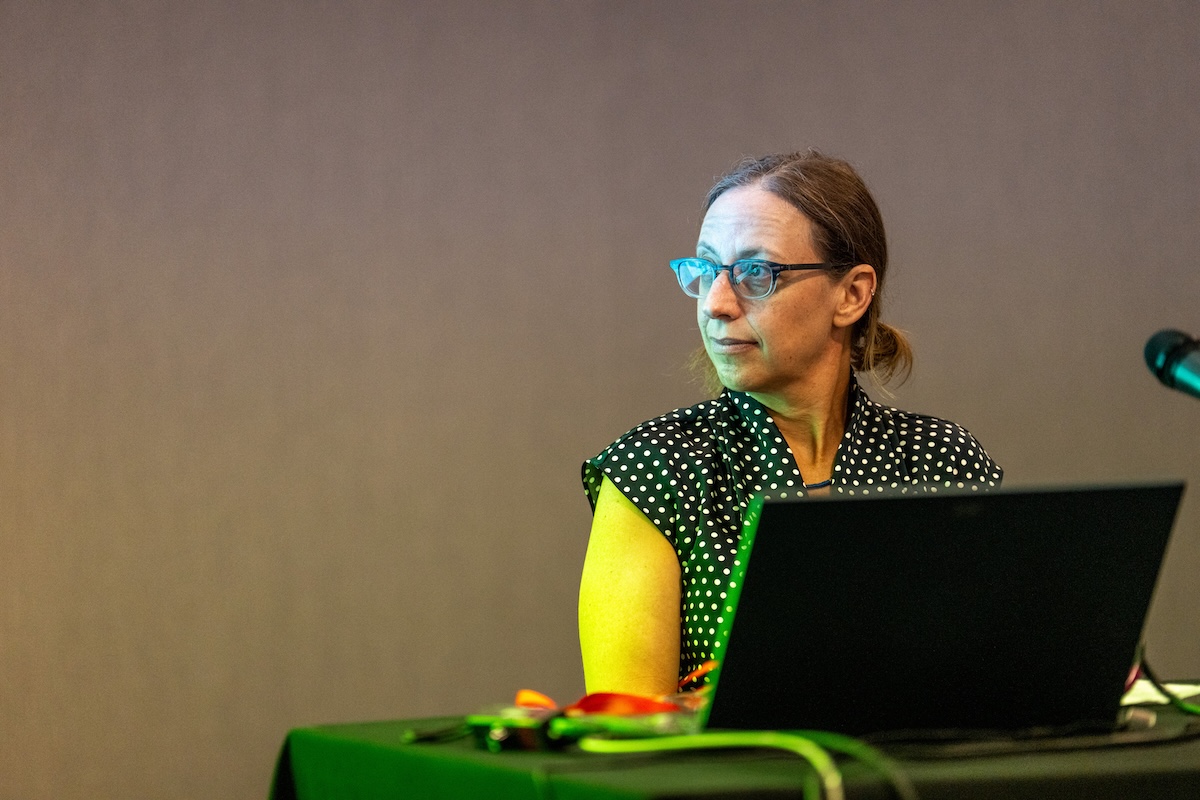
 Patrick Drew, assistant professor of engineering science at Penn State, speaks at the HJ26 panel “Glymphatics: Explaining the brain or red herring?” Photo by Zachary Linhares
 From left to right: Emily Sohn, Patrick Drew, and Jeff Tithof at HJ26. Photo by Zachary Linhares
Sohn wondered how she would write about this and the more contentious debate surrounding the researchers’ latest work on a purported brain membrane they called SLYM, when she realized the research was so complicated, she would need a doctorate to truly understand it.
“How do you cover a niche science topic for which there is no consensus and in fact a lot of controversy over whether this thing even exists?” she asked attendees at her HJ26 session: “Glymphatics: Explaining the brain or red herring?”
Sohn decided to focus her article on how scientists name their discoveries and coin terms in ways the public can understand and the media can embrace. She also highlighted the pitfalls this creates, quoting skeptics who said such “advertisements” legitimize faulty science and can derail careers as young scientists devote their Ph.D. theses to unproven theories.
Do the research
The two scientists on the panel emphasized that journalists still needed to delve into the fine details of the research. Jeff Tithof, assistant professor of mechanical engineering at the University of Minnesota, recommended calling outside experts who have no conflict of interest to ask them if a new paper is a big deal.
Unfortunately, there’s no shortcut besides knowing the science as best you can.
Patrick Drew
Professor of engineering and biology
Penn State University
Drew added that it’s not enough to ask researchers what they think of a colleague’s work, but rather, ask what they think other scientists in the field would say. This could yield a less-biased, more nuanced answer, the same way political polls tend to be more accurate when voters are asked who their neighbor is voting for.
“Science really needs trailblazers who challenge the status quo,” Tithof said. “But at the same time, I think that great claims require great evidence. And it takes time.”
April Dembosky is a health correspondent at KQED public radio in San Francisco and the author of the forthcoming book, “Tell Me I’m Your Man” (Scribner, May 2027).