Access to health care depends on more than whether someone has insurance. In many communities, finding a primary care doctor, dentist or mental health professional can be a challenge because there simply aren’t enough providers.
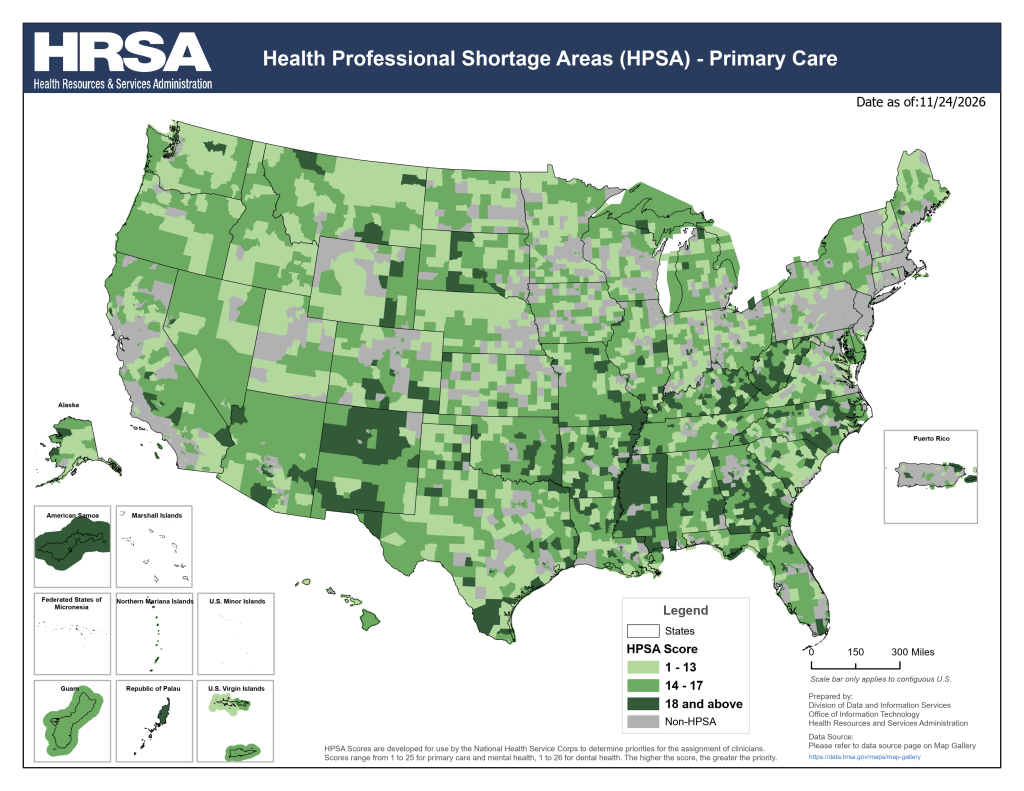
The Health Resources and Services Administration (HRSA) maintains a searchable database identifying Health Professional Shortage Areas (HPSAs) across the country. For reporters covering health equity, the resource offers a way to identify communities and populations facing provider shortages—and investigate how those gaps affect access to care.
What’s in the database
HRSA’s Bureau of Health Workforce identifies shortage areas in three categories: primary medical care, dental health and mental health. Shortage designations can apply to geographic areas, specific population groups or individual health care facilities.
The interactive dashboard allows reporters to filter designations by state, discipline, location, score and status. Users can examine the number of shortage designations, populations affected and practitioners needed. The data are refreshed daily, and HRSA provides downloadable CSV and Excel files.
HRSA also maintains information on Medically Underserved Areas and Populations (MUA/P), which identifies communities or groups facing barriers to primary care. More than 34 federal programs use HPSA and MUA/P designations to determine eligibility or funding preferences.
What reporters could do with it
- Find local provider shortages: Search your state or county to identify communities designated as primary care, dental or mental health shortage areas.
- Investigate mental health access: Identify communities with shortages of mental health professionals and examine how those gaps affect access to treatment.
- Look beyond geography: Explore designations affecting specific populations, including people facing economic, cultural or linguistic barriers to care.
- Connect shortages to federal funding: Investigate how HPSA designations affect eligibility for federal programs, including provider recruitment and loan repayment initiatives.
- Track changes: Because the data are refreshed daily, reporters can monitor changes in shortage designations and investigate what prompted them.
A note about the numbers
A shortage designation does not necessarily mean a community has no providers. HRSA uses specific criteria to determine whether an area, population or facility qualifies for a designation. HPSA scores reflect the severity of the shortage under those criteria; they are not a direct measure of appointment availability, wait times or the quality of care. Reporters should examine the underlying designation and population served before drawing conclusions.
- Go deeper: Download HRSA’s shortage-area data or explore its Medically Underserved Areas and Populations dashboard.
- Human guide: HRSA’s Bureau of Health Workforce provides additional information through its shortage designation program. Reporters can also contact their state’s Primary Care Office for information about local shortage designations and applications.