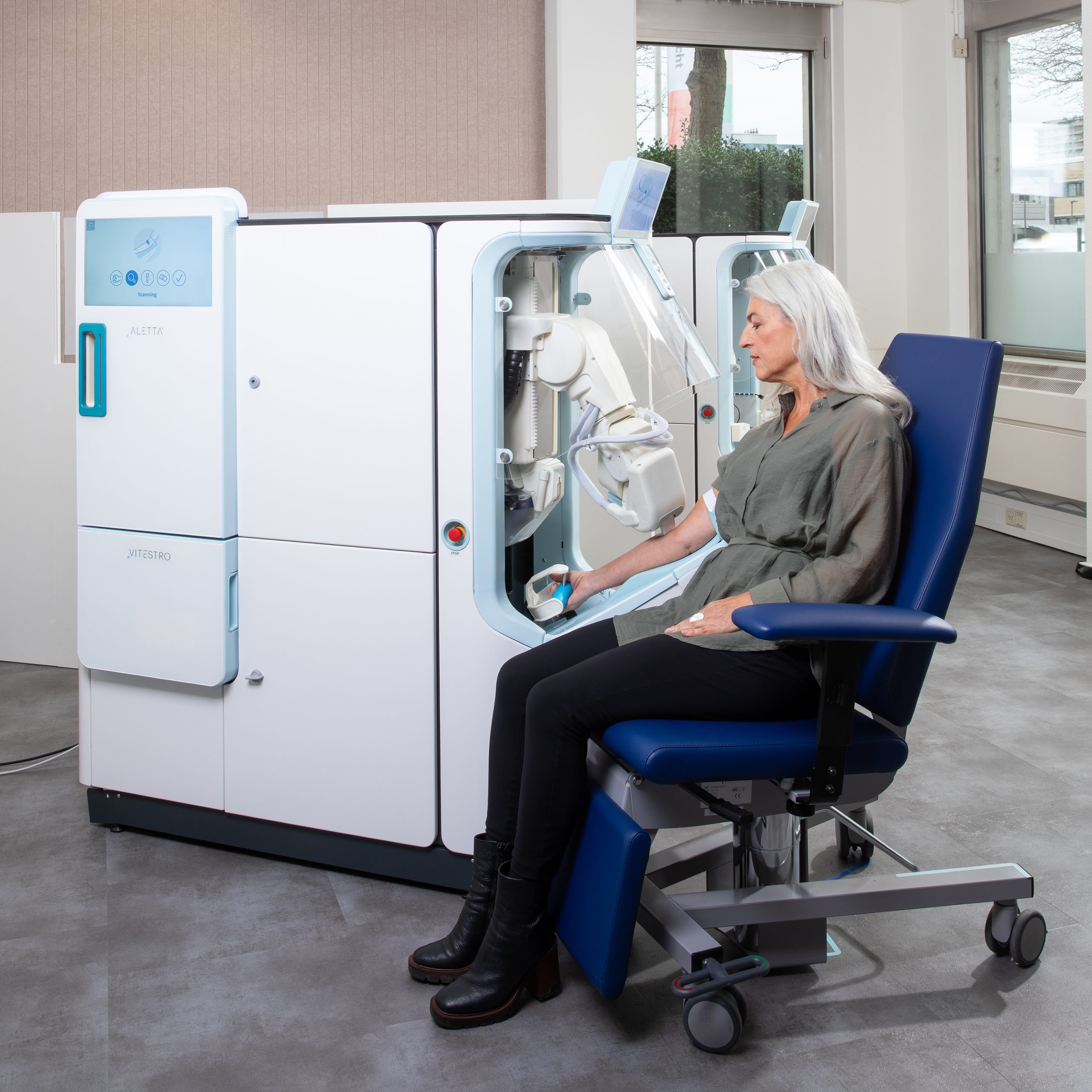
Florida health system BayCare plans to pilot Aletta, the first standalone robotic blood draw device cleared by the FDA this summer, at two outpatient locations in the fourth quarter of 2027. The device is approved for use in adults in outpatient settings and must be operated under the oversight of a supervisor trained in phlebotomy.
However, a single phlebotomist can supervise up to three of the machines, which potentially could help with a shortage of phlebotomists, according to an article in IEEE Spectrum. The profession has a median annual turnover rate of nearly 25% and a vacancy rate of close to 10%, the article noted.
The instrument handles each step of a blood draw, guiding a patient to position their arm, applying a tourniquet, and using near-infrared light and AI-powered ultrasound to locate a suitable vein. Then, it prepares the skin, inserts and removes a needle, changes collection tubes and even places a bandage afterward. A video is available here. The device is designed to prevent patients from seeing the needle as it is inserted.
What about safety?
The device has some built-in safety features, including applying disinfectant to a patient’s skin during the ultrasound scan, or detaching and stopping if a patient moves too much. If no appropriate vein is found, the device will not attempt the procedure. Additionally, the patient or a human supervisor can abort the procedure at any time.
Clinical trials of the device in Europe, where it already had been approved, included over 1,600 patients and demonstrated a 94.5% first-stick success rate, comparable to human phlebotomists, and better in challenging circumstances like for people who are obese or have difficult veins, Forbes reported. Most patients reported similar or less pain, and 82% were open to future robotic blood draws.
Northwestern Medicine in Chicago, Mayo Clinic in Minnesota, and Baylor Scott & White Health in Texas were among the first health systems to use the machine, serving as premarket clinical study sites, CAP Today reported.
A replacement for phlebotomists?
Two laboratory leaders told Becker’s Hospital Review that they view the technology as a means to extend phlebotomists’ capacity — not eliminate their roles.
Pamela Sun, executive director of pathology and laboratory medicine at Cleveland Clinic, said in an outpatient setting, a trained phlebotomist could oversee and supervise more than one device at a time. And, humans are still needed for the front-end parts of the workflow, she said, like registration, check-in and patient verification.
Devices like this could help health systems keep pace with demand while making testing more accessible and convenient for patients, said Diana Cardona, M.D., chief clinical officer for Advocate Health clinical laboratories in Charlotte, N.C. Both experts said devices like this had the potential for use in direct-to-consumer collection sites where patients could get blood drawn outside of a traditional appointment, like they use labs today.
Meanwhile, there are several limitations to the device, according to a blog post by the Center for Phlebotomy Education. In its current form, it can’t handle blood draws for pediatric patients or those with certain amputations or disabilities; perform blood draws on alternate sites like the hand; manage complications like fainting that occur mid-procedure, and it isn’t designed for difficult vein access like on infected or scarred skin.
Potential story ideas
Journalists can find a range of stories to write on the device:
- Ask patients/phlebotomists using the device about their experiences.
- Talk to phlebotomists and clinical laboratories to see where they see this robotic device best fitting into workflows.
- Find out if insurance will cover blood tests performed by the device. Check the pipeline to see what other devices might be in testing.
- Check with the device’s manufacturer, Vitestro, to see what next-generation features they are working on. Price was not mentioned in any of the stories I found online, but it could be interesting to see what that runs, too, and the estimated lifespan of such a machine.
Resources
- FDA authorizes first-of-its-kind robotic blood draw device – a FDA news release
- The robot phlebotomist will see you now – Forbes
- Will robots replace phlebotomists? Advocate Health, Cleveland Clinic leaders weigh in – Becker’s Hospital Review
- Aletta: An update about Vitestro’s robotic blood draw device – Center for Phlebotomy Education
- Too few phlebotomists – Is Aletta the answer? – CAP Today
- This robot will draw your blood now – IEEE Spectrum
- Robotic phlebotomy trial: What the patients said – The Pathologist
Robotic phlebotomy trial: What the patients said – The Pathologist