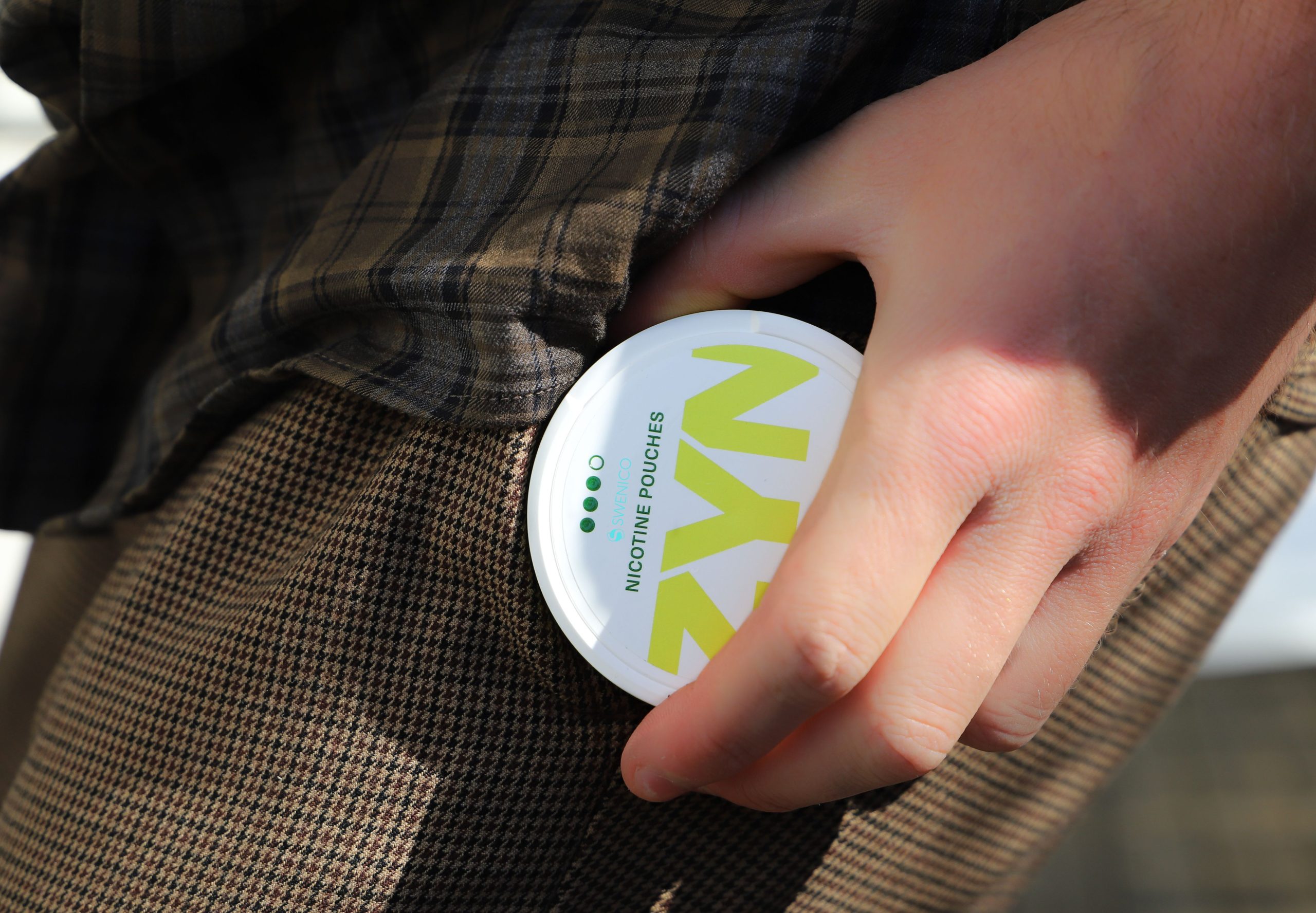
People tend to assume investigative journalists do one big investigation at a time that can take months or years, says Matthew Chapman, a senior reporter at The Examination. But often it can encompass smaller, incremental stories that achieve big results.
One recent example is the story Chapman and colleagues worked on last year about the impacts of layoffs by the former Department of Government Efficiency (DOGE) on the Food and Drug Administration’s (FDA’s) Center for Tobacco Products. They posted messages on Reddit seeking interviews with government workers, and co-author Maria Pérez directly emailed some 1,600 employees to request an interview.
A year later, they received a hot tip from a former FDA toxicologist, concerned that the agency had approved Zyn nicotine pouches without knowing what materials they contained. She remembered seeing the journalists’ prior interview requests and reached out.
In an extensive new investigation, Chapman and colleague Kathryn Kranhold brought scientist Christy Leppanen’s claims to light. Their story, published in July, not only describes Leppanen’s disputes with former FDA colleagues about approving the product but explains the pouches’ most likely ingredients and how those could expose users to microplastics.
Chapman spoke to AHCJ about the painstaking work behind the story, which reinforces that even smaller stories can reveal your dedication to a topic among potential sources.
Responses have been lightly edited for brevity and clarity.
How did Christy contact you?
She reached out — out of the blue — over email, and outlined what her concerns were, principally that she was working on a team for the Center for Tobacco Products, which authorized these Zyn nicotine pouches, and they didn’t actually know what the pouches were made of. That instantly grabbed our attention because it’s crazy to think a regulatory agency would approve something and not even know what the full ingredients are. Also, she was a microplastics expert. She had worked specifically on a microplastics project during her time at the FDA, so she flagged the issue of microplastics to us, which is still an area that requires a lot more research. Her allegation — that the FDA didn’t actually know what the pouch materials were made out of — we felt was worrying in and of itself, but we also wondered: what does this mean theoretically from a harm perspective? Can it lead to any actual harms, or is the material benign?
How did you reenact part of Christy’s story?
There was a lot of work behind that because as you can imagine, even though Christy was on the record, we had to verify the claims. The key was that Christy had kept pretty meticulous records of her time at the FDA. She had been recording a lot of her meetings and was able to provide those recordings to us, so we could double-check that what she was telling us was indeed accurate. She also had a lot of emails between colleagues, which she had kept upon leaving the FDA. Through those, we were able to check the claims were credible.
We also reached out to people named in the story. They wouldn’t provide any comments, but we did put all the allegations to them so they had a chance to respond. It was a lot of time-consuming work but luckily, we had a lot of time. Her allegations checked out against the supporting material, so we were very confident when we came to publishing the story that they were legitimate.
How did you go about trying to determine the pouches’ materials?
The information wasn’t publicly available [from the FDA or other sources], and there is just a scarcity of research on what the pouch was made of. The manufacturer uses language like it’s cellulose-based, but cellulose can be modified into lots of other chemical compositions. We spent a great deal of time trying to figure out what it’s made out of. We were thinking about commissioning our own research, hiring laboratories and paying for them to carry out research on the material using Fourier transform infrared (FTIR) testing, which gives you a chemical fingerprint of a substance.
Then we learned some Danish researchers had discovered what the material was made out of, and they said it most closely resembled cellulose acetates, which is the material used to create cigarette filters. There has been an increasingly large body of work on how cellulose acetates can expose users to microplastics, so we felt there is a credible health risk here that deserves further research. We took the Danish researchers’ work and cross-referenced it. We asked other materials science experts to check the findings of the Danish researchers, and they all agreed with the conclusion that it most closely resembles cellulose acetate.
Then we were fairly confident that the findings were likely to be accurate, and that there was a credible health risk so we pursued the story. For me, the story is not just about Zyn and microplastics — it’s more about the wider issue of potential failings of the FDA’s process, because Christy told us about how management allegedly shut down attempts to find out extra information about the pouch materials from Philip Morris International, the manufacturer. It concerned us that this allegation spoke to perhaps a wider culture at the agency, where credible scientific concerns were perhaps not being given the attention they should be.
At The Examination, we’re very much focused on global stories. We try not to always just focus on the U.S., but the FDA is so influential globally that regulators across the world follow suit when they make a decision, and people view it as a gold standard of regulation. We felt it was a very important story because it raised serious questions about whether this reputation was justified.
Did you reach out to the FDA?
We reached out to a number of individuals at the FDA. None of them responded, but an FDA spokesperson provided a statement saying they were happy with their decision-making and they believed it was a rigorous process.
What was more revealing for me is that I asked them on three separate occasions if they could provide the full chemical composition of what the pouch material was, rather than just them saying it’s cellulose or derived from cellulose. I wanted to see if they would tell me if it was cellulose acetate or if they even knew what it was made out of, because the central allegation was they didn’t know. But they wouldn’t respond to that question.
How did you find sources to discuss the potential contents and risks of the pouches to human health?
We were doing some regular internet searches but couldn’t find anything that gave proper detail until one of my colleagues came across a blog by a tobacco control organization based out of France, that had written an English version of the Danish report. If we hadn’t had this English language report by this French tobacco control organization, we probably never would have found the Danish researchers because this is the only research that has been done, as far as I can see, on what the material is made out of.
Once we found that, I was able to speak to researchers behind the Danish report. To double-check their findings, I was searching for a materials science expert. I spoke to a very helpful academic based at Oxford University, who gave me a lot of guidance. After that, and after speaking with a few other experts, we were pretty certain that the material is made of cellulose acetate.
The final step was determining that, if the pouches were made out of cellulose acetate, was that a credible microplastics risk? Then we had to find experts in microplastics. I focused my search for those on people who had done research already on cigarette filters because they’re made of the same material, and people who had done research on both cigarette filters and microplastics. I found published research on that, and reached out to the researchers directly to ask their opinion if these patches are made out of cellulose acetates, could there be a microplastics risk, and could that in turn be potentially harmful to humans? The experts said yes, there’s a potential for shedding of microplastics.
What kind of response have you had to the article?
We have received very positive reader feedback via email. We often don’t receive direct reader feedback via email but I did for this one, so this story seems to have struck a particular chord. My favorite feedback was from a retired researcher who emailed to say when she was working, she always ensured her research, at least in her words, was complete, had integrity, and was accurate before a product hit the market for human consumption. She questioned the human cost of the FDA’s decision-making, and she pointed out how she was concerned with company profits being prioritized over human health.
That really struck a chord with me because that’s at the heart of what The Examination’s work is about. It’s about investigating corporations and individuals placing profits over health, and really digging out stories around that. It’s very nice when you get a reader email like that, which kind of justifies what you’ve been doing.
One of the academic researchers we spoke to said he hoped our reporting would spark more research funding for potential nicotine pouches to be a microplastics risk. The story did expose how there’s a lack of research in this area, and if it results in renewed interest, I think that would be a really positive, real-world impact.
What advice do you have for journalists working on this kind of story?
It’s so important in journalism to make people aware you’re interested in a particular subject area. That might be by doing a small story. It might not have the biggest revelations in it, but the very fact you’re doing a story in that area will alert potential sources to the fact you’re the person to approach. A terminology I use, which I think is pretty accurate, is it’s about planting a flag in the ground and saying this is the subject I’m interested in. Please come to me if you’re interested in this.
This story also underlines the importance of whistleblowers. I think that’s where the best stories come from. I’m always so grateful when they come forward because it requires a lot of courage. They’ve got the hardest job. You always have to treat them with respect and make sure you’re not rushing them too much and allowing them to tell their story as best they can in their own time. But you also have to do due diligence, because they can make all sorts of on-the-record allegations, but you’ve got to work hard to verify the details, and that takes a lot of time.
We were in constant contact [with Christy] over the Signal secure messaging app, constantly firing questions at her. We were making sure we dotted all the i’s and crossed all the t’s by asking probably hundreds and hundreds of questions over a period of months, but by the time we published the story, we were very happy. We had a meaty, substantial story, which hopefully will have a lot of impact.