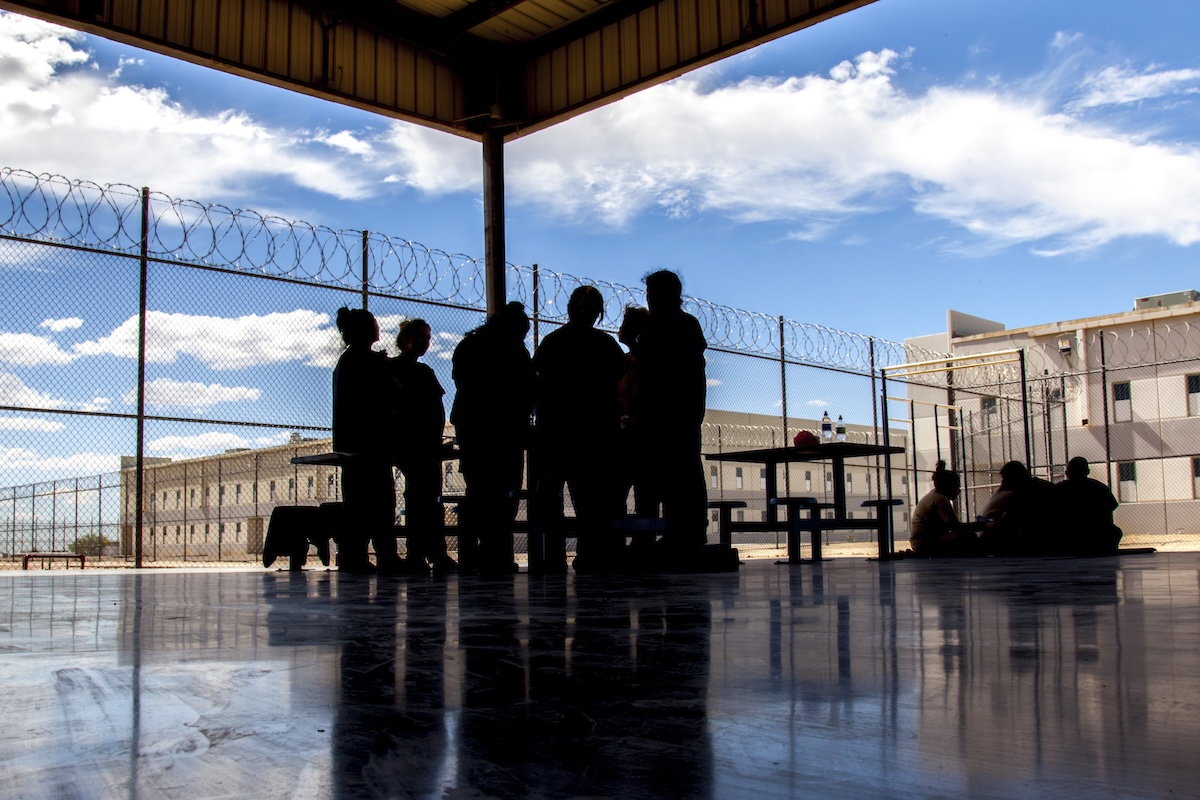
KFF Health News and The Associated Press’s investigation into medical neglect in ICE detention facilities documents a pattern that had never before been quantified nationally. Through their collaboration, reporters found that more than 300 immigration detainees in at least 33 states alleged in federal court filings that they experienced delayed, denied or deficient medical care while in custody — from missed cancer treatments and untreated chronic illnesses to emergency conditions that worsened behind bars.
The investigation combined AI-assisted document analysis with months of traditional reporting. Using an open-source semantic search tool, reporters then manually reviewed more than 1,000 potential cases, interviewed detainees and their families, and corroborated findings with attorneys before building a database of confirmed allegations. The project also included an interactive map showing detention centers where court filings alleged medical neglect.
Increasingly, journalists are working in environments where government data and oversight are becoming less available. That means we sometimes have to get more creative about finding alternative paper trails and accept that the available data may never be complete. The important thing is being transparent about what your data can and cannot show.
Maia Rosenfeld
KFF Health News
AHCJ spoke with Rae Ellen Bichell, then Colorado correspondent at KFF Health News (now broadcast collaborations editor); Maia Rosenfeld, data reporter at KFF Health News; and Aaron Kessler, data reporter at The Associated Press, about how the collaboration came together, and how AI helped accelerate — but not replace — reporting.
The interview has been edited for clarity and brevity.
How did this project begin?
Bichell: We kept seeing isolated reports about detainees struggling to access medical care at individual ICE facilities. The question became: Was there a way to examine this nationally instead of reporting on one facility or one person’s experience at a time?
Immigration attorneys pointed us to Habeas Dockets, a project of the Immigration Transparency Justice Initiative. Their volunteers physically collect habeas corpus filings from courthouses around the country because these records generally aren’t available online. Those filings gave us a unique window into detainees’ claims about conditions inside detention facilities.
How did AI fit into the reporting?
Rosenfeld: We used an open-source semantic search tool called Semantra. Unlike a traditional keyword search, semantic search looks for concepts and themes rather than exact words.
If you only search keywords, you have to know exactly what you’re looking for. Someone might describe being denied treatment for ulcerative colitis, but unless you thought to search for that specific condition, you’d miss it. Semantic search allowed us to search for broader ideas like medical neglect or inability to obtain prescribed medication.
The tool converted the text of thousands of court filings into mathematical representations of meaning, allowing us to search by concepts instead of individual words.
Did AI replace manual reporting?
Kessler: Not at all. It simply narrowed the universe of documents to something humans could actually review.
We couldn’t realistically read 10,000 court filings. AI helped identify the most promising cases, but every filing still had to be reviewed by reporters.
Aaron Kessler
Associated Press
Rosenfeld: More than half of the cases flagged by the semantic search ultimately met our criteria, but every case was manually verified. Two reporters reviewed each filing, and we spent weeks discussing borderline cases before deciding whether they qualified.
How did you define ‘medical neglect’?
Bichell: We counted only cases describing a specific delay, denial or deficiency in medical care. If someone generally complained about poor medical treatment but didn’t provide enough detail to document what care was delayed or denied, we didn’t include it.
That made our final count intentionally conservative.
How did you find people willing to speak?
Bichell: Many detainees were understandably afraid of retaliation against themselves or family members. We contacted numerous attorneys asking whether their clients would be willing to participate. Some interviews were conducted by phone, while others involved family members in person. Ultimately, we had more compelling interviews than we could include in the final story.
What surprised you most?
Rosenfeld: Early on, we thought we might identify a few dozen cases. Instead, we documented more than 300.
At the same time, we know it’s an undercount. Habeas petitions are only one avenue for people seeking relief; many detainees don’t have attorneys, and some courts won’t consider medical neglect claims through habeas petitions. We came away believing the true number is likely much higher.
One lesson for me was that even an incomplete count can be incredibly valuable if it’s carefully documented and transparent about its limitations.
This was a collaboration across multiple organizations. How did that work?
Bichell: It really became one reporting team.
KFF Health News had begun reporting the project when we learned that AP was pursuing similar work. Instead of racing each other, we joined forces.
Rae Ellen Bichell
KFF Health News
Bichell: We held weekly meetings with reporters, editors and data journalists from both organizations, maintained a shared Slack workspace and developed common definitions for every case we counted.
Kessler: Beyond reporters and editors, visual journalists, photographers and graphics teams collaborated as well. It was remarkably seamless.
What advice would you give journalists pursuing accountability stories?
Kessler: Think about where complaints would naturally be documented.
In this case, the answer wasn’t obvious. We eventually realized that people challenging detention conditions might describe medical problems in habeas petitions. Once we identified the right records, we could build an entirely different story.
Rosenfeld: Increasingly, journalists are working in environments where government data and oversight are becoming less available. That means we sometimes have to get more creative about finding alternative paper trails and accept that the available data may never be complete.
The important thing is being transparent about what your data can and cannot show.