Quality of life: The next frontier in pediatric cancer care
For many children, surviving cancer is only the beginning of a lifelong health journey.
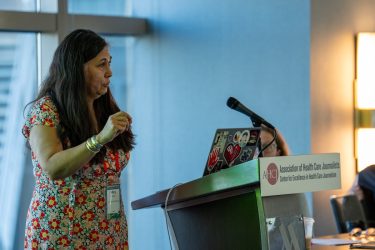
At Health Journalism 2026 in Minneapolis, Lynn Tanner, PT, Ph.D., scientific director of Physical Medicine and Rehabilitation at Children’s Minnesota, traced her work back to a pivotal encounter in 2002 with a 4-year-old cancer patient struggling to walk.
The child’s parents had urgent questions: Did cancer treatment cause the delay? Does this happen to other children? Will it improve on its own? Could therapy help? Would problems continue into adulthood?
“The answer to all of these is yes, sometimes,” Tanner said.
That experience launched decades of research into the long-term quality of life of pediatric cancer survivors and the role rehabilitation can play in improving outcomes.
Childhood cancer survival has improved, but chronic conditions remain common
About 15,000 children and adolescents in the United States are diagnosed with cancer each year, Tanner said. Advances in treatment have dramatically improved survival, with approximately 85% of pediatric patients surviving at least five years after diagnosis.
But survival often comes with lasting health consequences.
“By age 45, 90% have developed a chronic health condition,” Tanner said.
Physical limitations can emerge early and persist for decades. Tanner emphasized that neurocognitive outcomes are also tied to physical activity levels later in life.
“If you can easily do stairs or run across the field, you’re more than likely to continue playing sports in college,” she said.
The challenge, Tanner noted, is understanding how to move from a cancer diagnosis at age 4 to a healthier quality of life decades later.
Chemotherapy-related nerve damage is common
Among children with acute lymphoblastic leukemia, or “ALL,” more than 86% experience physical impairments, Tanner said.
One major contributor is chemotherapy-induced peripheral neuropathy — nerve damage that affects the ankles, feet, wrists and hands.
Tanner and colleagues developed a measurement tool called the ped-mTNS score to assess neuropathy severity in pediatric patients. Their research found that more than 78% of children undergoing cancer treatment experience nerve damage.
Fatigue also remains a major issue long after treatment ends.
“We know the only evidence-based therapy for cancer-related fatigue is physical activity,” Tanner said.
A proactive rehabilitation model
Rather than waiting for children to develop severe mobility issues, Tanner’s team begins rehabilitation interventions early — often at diagnosis.
“When we provide rehab to cancer survivors, we treat them prospectively,” she said.
Clinicians also work closely with families to help them support mobility during treatment without overprotecting children.
“Rather than saying, ‘The stairs are going to get harder,’ we ask them to ‘hold the rail when they walk,’” Tanner said.
Maintaining routines and encouraging movement can become part of a child’s ongoing physical and occupational therapy, she added.
The Stoplight Program
In 2004, Tanner and colleagues launched the Stoplight Program, a proactive physical therapy intervention for children with acute lymphoblastic leukemia. The program has since expanded to children with cancers that do not involve the brain.
“We see them from diagnosis to long-term survivorship,” Tanner said.
Research on the program found significant improvements in physical outcomes among participating children. Tanner said children who completed therapy tested within healthy norms.
“It isn’t just that they can run,” she said. “They can run similar to other healthy kids.”
The benefits appear durable. Twenty months after treatment ended, children who received physical therapy had better motor skills and physical outcomes than those who did not. More than five years into survivorship, patients who participated in therapy remained stronger than peers who had not received rehabilitation services.
Geography still shapes access to care
Despite the evidence supporting rehabilitation, Tanner said more than one-quarter of children with ALL never receive physical therapy services.
Access often depends on geography, with the Midwest showing the highest participation rates.
Her team also found that 22% of children left the program because of geographic barriers, highlighting disparities in access to specialized pediatric rehabilitation.
Tanner argued that rehabilitation remains relatively inexpensive compared with cancer treatment itself.
“Rehab is affordable,” she said. “It is not the cost of chemotherapy visits.”
A broader culture of mobility
Tanner said the next frontier in pediatric cancer care is embedding mobility and wellness throughout the cancer journey rather than treating rehabilitation as an afterthought.
“The next frontier is one that brings a culture of mobility and wellness across the cancer journey,” she said.
The session highlighted an increasingly important dimension of cancer coverage: survivorship is not only about cure rates, but about the long-term physical realities patients face years — and decades — after treatment ends.