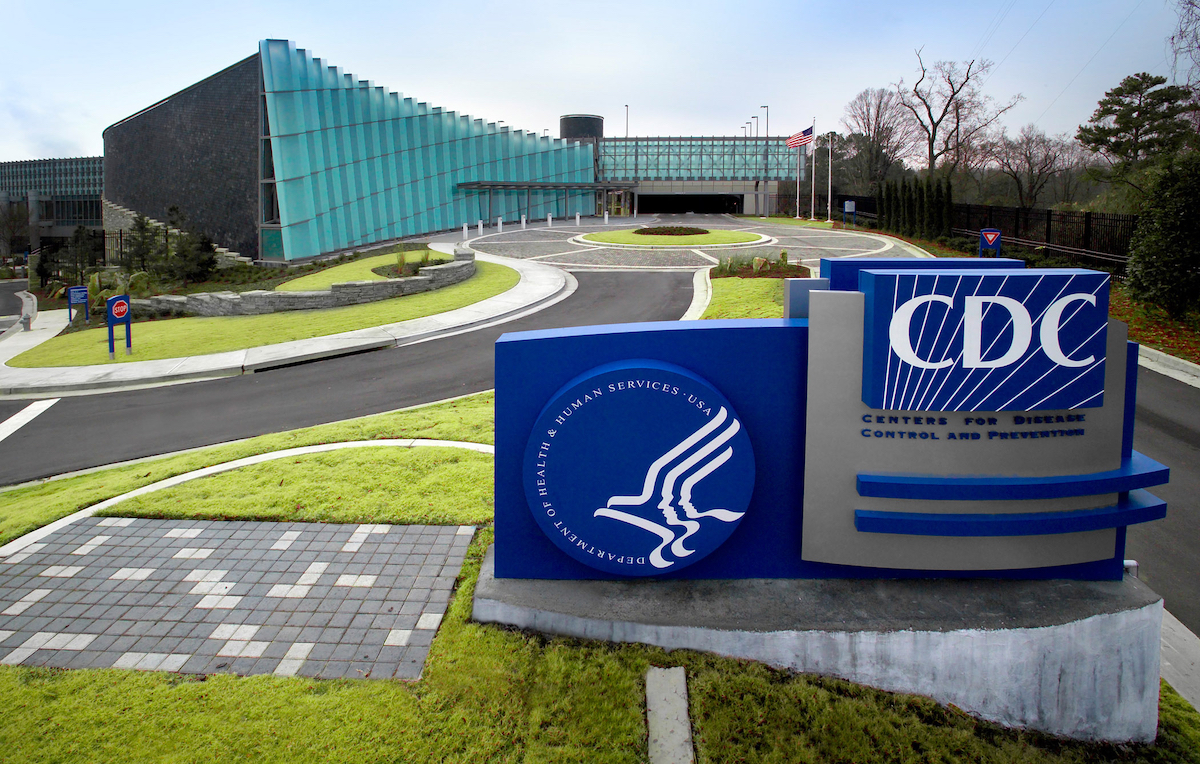
The public health community is reeling after HHS Secretary Robert F. Kennedy Jr. dismissed all members of the CDC’s Advisory Committee on Immunization Practices (ACIP) on Monday. The initial reporting has been excellent in explaining what ACIP does — make recommendations for vaccine policy that the CDC director nearly always formally adopts without changes.
But it’s now time for journalists to go deeper on ACIP (a Q&A with an expert, as Scientific American did, can be a great fast way to do this).
This tip sheet provides bullet points of information you can use to expand your coverage and help people make their voice heard about what Kennedy has done, if they want to take action. A separate post will cover what it would mean if the newly formed panel were to remove vaccines from the current recommended immunization schedule, and another will provide background on new members, including several established anti-vaccine advocates, whom Kennedy has already appointed to the panel.
Highlight the timing of the move
The next ACIP meeting is scheduled for June 25-27, and so far, Kennedy has not rescheduled or canceled it. According to the federal register, the meeting is scheduled to discuss several important issues, including:
- COVID-19 vaccines.
- HPV vaccines.
- Influenza vaccines.
- RSV vaccines.
- Specific recommendations for RSV in pregnant women.
- Specific recommendations for each of these vaccines in children.
It’s unclear if ACIP will be fully formed enough to hold any votes by the time the meeting arrives. Kennedy has already appointed eight new members. Official ACIP policy and procedures statutorily require that voting can only occur if more than half of voting members are present. (Search “quorum” here.) If at least half of ACIP members are not present, then Kennedy, as Secretary, or a Designated Federal Officer (DFO), can designate any of the six to eight ex-officio members to vote in place of the missing members.
However, it’s not clear if half of the total current committee (such as the eight Kennedy has appointed so far) have to be present or if half of the total possible members (19 members) must be present. It would appear that it needs to be at least half of 19, since the ex-officio designation option exists. But again, it’s not clear, and legal experts on vaccine statutes that I have consulted aren’t sure either.
Let people know how to be involved with the ACIP meeting
ACIP meetings are required by law to be public and to allow public attendance and comment. Make sure your audience knows they have the option to watch the meeting (in person or virtually) and comment. They can submit online comments ahead of the meeting here, which must be received by June 20. People can also register here to request to make oral comments at the meeting, with a registration deadline of June 20.
Question the spin by HHS and other policymakers regarding the ACIP changes
One of the main pretexts Kennedy cited for removing all ACIP members was their conflicts of interest. All conflict-of-interest disclosures for ACIP members dating back to 2000 are publicly available. Journalists can review them and conduct independent research on each ACIP member to assess conflicts and to inform their audiences. It’s also crucial to consider what conflicts of interest the newly appointed members may have — conflicts of interest do not only refer to industry ties and can also be ideological.
And, U.S. Sen. Bill Cassidy (R-La.) was key to confirming Kennedy after extracting several promises. One of those promises, still listed on Cassidy’s website at time of publication, was that Kennedy “will maintain the Centers for Disease Control and Prevention’s Advisory Committee on Immunization Practices without changes.” Cassidy has not publicly acknowledged Kennedy’s breach of this agreement, instead attempting to reassure the public that he’s keeping a close eye on the situation.
Finally, Kennedy’s recent screed on X, in response to what he calls “claims” by CNN, about the ACIP dismissals warrants extensive fact-checking.
Watch the ACIP meeting — and be ready for potentially dubious data
Data presented to the ACIP during meetings primarily comes from the CDC, but Kennedy has, in addition to removing all ACIP members, also removed the CDC supportive staff responsible for overseeing ACIP’s work and appointment of new members. That means we don’t know yet where information presented at the ACIP meeting will come from.
The slides with all the data will become available on the CDC website during or after the meeting, so journalists will have to play catch-up to check that the science is legitimate or, as was the case with the MAHA report, if it includes fake citations or mischaracterizations of real studies.
Does the public have a voice?
Members of the public may have the ability to influence what happens next, and journalists can explain how they can do that without necessarily appearing to encourage advocacy. (A 2023 survey by the American Journalism Project found that people want information they can act on and that, too often, journalists don’t make that possible through their work.)
In addition to commenting on the ACIP meeting, members of the public can call their state and national representatives to do any of the following:
- Express to their U.S. senators and representatives how they feel about Kennedy’s actions and possible consequences.
- Let their national representatives know how they feel about Kennedy’s performance so far as Secretary of HHS.
- Let their state representatives know how they feel about the possibility of vaccines being removed from the CDC schedule and what state laws or state responses they would like to see if that occurs. States have the ability to determine vaccine policy separate from CDC recommendations.
Consider public perception risks if vaccines are removed from the schedule
Walter Orenstein, M.D., professor emeritus of medicine, pediatrics epidemiology and infectious diseases at Emory University and Emory’s former associate director of their vaccine center, has spent his long career researching or managing outbreaks, most recently focusing on international polio cases.
“We’re not going to have huge outbreaks right away,” he told me. “It takes time for susceptible individuals to accumulate, and with each susceptible [person], the risk of an outbreak increases.”
But while those susceptible people are “accumulating,” anti-vaccine advocates could use the absence of immediate outbreaks to claim vaccines don’t actually prevent outbreaks. Even with a disease like polio, which could return fairly quickly, “quickly” could still mean a few years before a major outbreak occurs.
Tip
If a vaccine recommendation is removed, be prepared for false claims that reflect a misunderstanding of how soon disease outbreaks might occur.
Additional resources
- An open letter to Kennedy from Democrats on the Committee on Oversight and Government Reform regarding the ACIP dismissals
- This document has compiled official statements in response to the ACIP dismissals from dozens of national and state medical associations, vaccine advocacy groups, state immunization coalitions and other stakeholders. The AAP link is broken, but their statement is here.
- KFF’s fact sheet on federal advisory committees is rich with helpful links about ACIP.
- The text of the statute regarding ACIP’s role in making changes to vaccine recommendations.
- Comments from the Children’s Health Defense, the anti-vaccine advocacy group Kennedy founded, are here and here. Another anti-vaccine perspective is here. It may or may not be appropriate to include coverage of these anti-vaccine perspectives in a story, depending on what the story covers, but be conscientious of the risk of false balance with vaccine reporting.
- Vaccine Policy In Crisis: Secretary Kennedy Dismisses Entire Advisory Committee On Immunization Practices, in Health Affairs, by legal experts Richard Hughes IV and Sara Rosenbaum. Hughes, Rosenbaum and Dorit Reiss are excellent sources for vaccine policy questions.