Artificial intelligence has been making its way into many areas of health, but experts at AHCJ’s fall summit, AI in Health Care: Reporting What’s Real, expressed cautious optimism, noting the continued need for human oversight of these applications.
In the 1980s or around that time, if an engineer wanted to build a program to help detect breast cancer on a mammogram, they would interview expert radiologists about what they look for and then manually program methods to detect those features, said Curt Langlotz, M.D., director of the Center for Artificial Intelligence in Medicine and Imaging (AIMI Center) at Stanford University, in the opening panel discussion.
“What really changed, and this was back in about 2012, is that we started to realize that these neural networks could learn from the data itself. We no longer had to talk to the expert,” instead asking experts to label what is and isn’t cancer on imaging scans, and feeding the data to a program that “learned” from these examples.
The next transition, he said, happened around 2022, when ChatGPT (a form of self-supervision) came out that can train itself on large datasets. “We’re now at a very different place, and it’s a very exciting place for medicine,” Langlotz said.
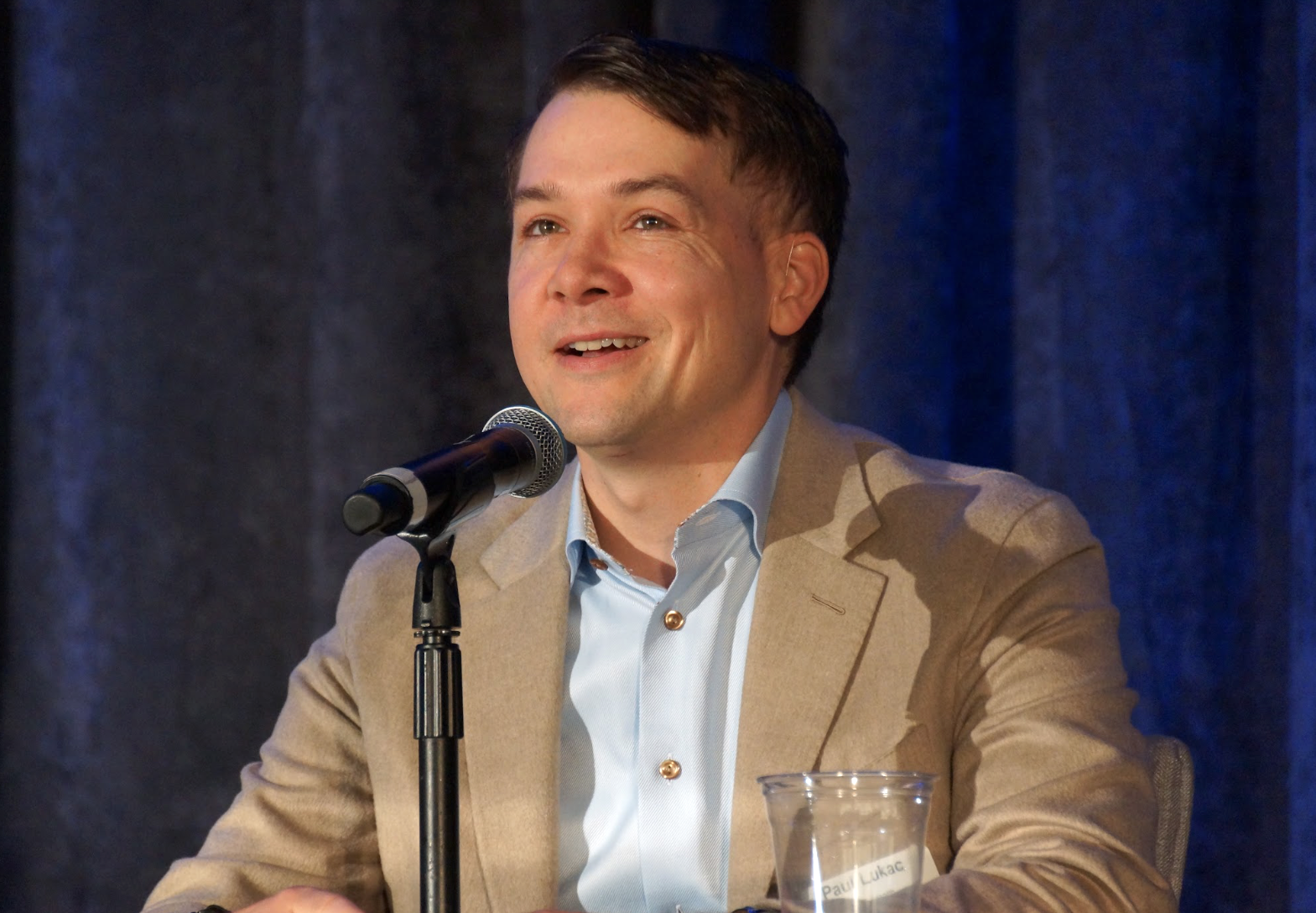
The most common use of AI has been to summarize information such as in a chart or from a doctor’s visit, said Paul Lukac, M.D., the chief AI officer at UCLA Health.
Many medical centers use AI to help with diagnostics and prevention, searching electronic health records for changes in patient vital signs and symptoms so they can intervene, or helping predict health outcomes.
Lily Lai, M.D., a surgeon with City of Hope, a comprehensive cancer center near Los Angeles, discussed a risk calculator she is using to predict postoperative complications for cancer patients before they head to the operating room. After implementing this machine learning model, she and her colleagues observed a 7% drop in complication rates among high-risk patients.
Other panelists discussed tools that monitor for life-threatening sepsis infections and ensure that patients found to have lung nodules during other medical workups get needed follow-up care.
AI also can be helpful in disaster relief. Climate disasters are becoming more intense and geographically widespread in the U.S. and worldwide, said Amir Behzadan, Ph.D., a professor of civil, environmental and architectural engineering at the University of Colorado Boulder. Despite this, many communities still lack detailed hazard mitigation plans from the Federal Emergency Management Agency (FEMA).
“AI can offer a very low-hanging opportunity to help close this gap by circulating research, organizing community hazard data, identifying potential mitigation strategies, drafting plan components and helping communities move more efficiently toward a complete, locally informed plan,” he said, with the idea of giving resource-strained communities a “powerful tool to do more with the resources they have.”
His lab aims to tap into the power of AI, coupled with community engagement, to design human-centered solutions for measuring, mapping and communicating the impact of disasters.
AI can play a significant role in rebuilding trust in science by making complex information more accessible, understandable and transparent for communities, said Behzadan. Some of his team’s efforts included using AI to estimate building damage and using visual analytics to better understand how disease transmission can occur in complex, densely populated areas. AI models are also being tested to predict the spread of wildfires.
But for all of its promise, speakers said, there is still need for caution and for ensuring human experts have the final say in whether to adopt suggestions from AI. The adoption of AI and other technologies can result in harms for workers, said Mishal Khan, Ph.D., a senior researcher with the Technology and Work Program at UC Berkeley Labor Center. This can include deskilling, or a reduction in the level of skill needed to complete a job.
“This is one of the key concerns, especially for nurses,” Khan said, noting a worry that algorithms are taking over decision-making. With increasing remote monitoring of patients and automated handoffs, “health care workers are really concerned about what this is doing to the quality of in-person care and their connection with their patients.”
And these systems are not necessarily offering time savings, she added, in some cases adding time for humans to correct issues caused by technology.
Other concerns include liability (who is responsible if a patient is harmed by an algorithmic decision), alert fatigue (becoming immune to the pinging and beeping of system alerts), and monitoring and surveillance (how data will be used in employment or discipline decisions).
Laws are emerging to address these issues, Khan said. For example, California Gov. Gavin Newsom in September signed legislation including state bill 951, which in part prohibits employers from making employment decisions about workers without a human in the loop. AB 1883 and AB 1331 ban workplace surveillance tools that read workers’ emotions and monitor them in bathrooms. Legislation in other states such as Oregon and Washington state make it illegal to advertise a chatbot as a licensed health care professional, she said.
Attendees also heard updates in areas like AI chatbot technology, how AI is changing drug research and development, the evolving role of AI in medical education, and efforts to ensure rural and safety-net hospitals don’t fall behind.
In an interactive exercise, Graham Walker, M.D., co-founder of MDCalc, an online medical reference tool, walked attendees through the following scenario: A woman presents to the emergency department with “the worst headache of her life.” An initial CT scan, with an accuracy of 98.7%, tests negative for a brain bleed, but an AI radiology system disagrees, flagging possible bleeding. Attendees worked in small groups and used ChatGPT to help decide what to do next.
As an illustration of just how variable AI can be, depending on how people prompted the system, the answers included proceeding with additional testing, noting it was OK to discharge the patient without further testing, and asking the doctor in charge.
Attendees also participated in a field trip to Cedars-Sinai Medical Center to learn more about topics such as AI ethics, sudden cardiac arrest prevention, and AI in robotic surgery.
Audio recordings of the sessions are available online.