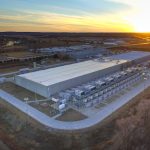

The U.S. houses the most data centers by far compared to any other country — with more than 5,000 centers running, and many more under construction or planned within the next few years to power the artificial intelligence boom.
Panelists at an Association of Health Care Journalists webinar said that emissions from these campuses — sometimes unmeasured and unpermitted — are a growing public health threat.
“Some [data centers] use as much as 1.5 times the electricity of Seattle,” said Michael Cork, CEO of EmPower Analytics Group, during the webinar. “Are these data centers, or is it better to think about them as power plants with servers attached?”
The power consumption, though massive, is one of many concerns communities have, and the pushback crosses traditional political divides, said Neha Gour, a researcher at George Mason University’s Center for Climate Change Communication. She said 56% of registered voters oppose data centers in their local communities, according to a recent survey.
“This is not a clear traditional divide of climate change,” Gour said, noting that disapproval of data centers crosses partisan lines and that news reporting should reflect this nuance.
Broken promises
Lack of trust in tech companies is a big driver of people’s opposition to data center projects. Evan Simon, an investigative producer with the nonprofit newsroom Floodlight, investigated DataOne, a Microsoft-backed data center in New Jersey, which promised net-zero emissions. After Simon got a tip from community members, he used satellite imagery and a thermal drone to uncover 45 unpermitted gas-powered generators operating on-site. Following Floodlight’s reporting, New Jersey regulators issued a $1 million fine against DataOne.
Simon added that some developers bypass public notice and environmental oversight by applying for “minor source” air permits that cap self-reported emissions beneath legal thresholds, a loophole journalists should watch for in their local communities, he said.
Quantifying the health damage
The public health toll of these emissions is staggering, according to Cork, who used Environmental Protection Agency modeling tools to estimate it. For example, a 135-megawatt facility in Loudoun County, Virginia, contributes $33 million to $63 million yearly in negative health effects, according to Cork’s analysis.
Radiologist and founder of Greenwell Project Dr. Reed Omary, who lives with asthma alongside two of his children, said for him the health toll of air pollution is personal. But, he added, it’s important to not lose sight of the potential clinical benefits AI can bring, pointing out that the FDA recently authorized around 1,600 AI medical devices — with the vast majority being in radiology.
He called for a “reflective pause” and more transparency to allow the public to have a say in the data center construction process and to hold big tech accountable.
Story ideas and tips for health reporters
The data center story has been front and center, but much of the coverage has focused on water consumption. The webinar panelists highlighted a need to investigate the impact of data centers on air pollution, which can contribute to a wide array of serious health issues.
Here are some tips to get you started:
- The local air permit trail: Investigate whether proposed or existing data centers in your region are using “minor source” permits or claiming “temporary construction exemptions” to bypass public notice and environmental impact hearings.
- Put a number on it: Journalists can use EPA open-source tools like the Benefits Mapping and Analysis Program, or BenMAP, to estimate the health impacts and economic value of changes in air quality — including cardiovascular disease burden and premature death. This 2026 report, backed by hundreds of former EPA employees, dives into the health consequences of data centers and can also be a useful reference for context.
- Energy poverty: Examine how local electric utilities plan to pay for infrastructure upgrades for data centers, and report on whether residents will absorb higher electricity costs. Lower-income families may be deciding between paying their utility bills to keep the heating and cooling on or paying for their medication.
- Routine testing: Track mandatory diesel generator testing schedules in your state. For example, Gour said, in Virginia alone, approximately 4,000 backup generators undergo 10 to 30 minutes of monthly testing, which adds up to 35,000 to 50,000 hours of cumulative combustion per year just for routine maintenance.
- Water contamination risks: Look beyond water consumption volumes to investigate chemical treatment runoff and potential PFAS leaks in local watersheds surrounding data center cooling towers.
- File public records requests: Look for air permit applications and enforcement logs. You can also request residents’ complaints to find human sources for your stories.
- Use satellite and thermal imaging: Platforms like Planet Labs can help identify unlisted generator fleets, paired with thermal drone inspections to capture heat signatures from the equipment.
- Professional analytics firms: Organizations like Cleanview, Epoch AI and Semi Analysis are dedicated to looking at AI-related data and impacts and can provide useful insight to your data center and environment-related stories.