Native American health: Stories beyond the headlines
By Jeanette DeDios (Jicarilla Apache/Diné Nations)/New Mexico Fellow
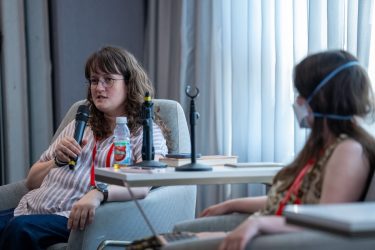
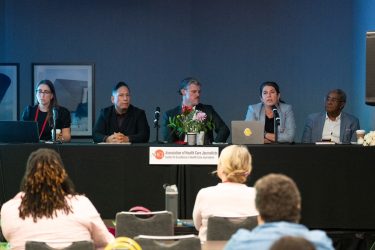
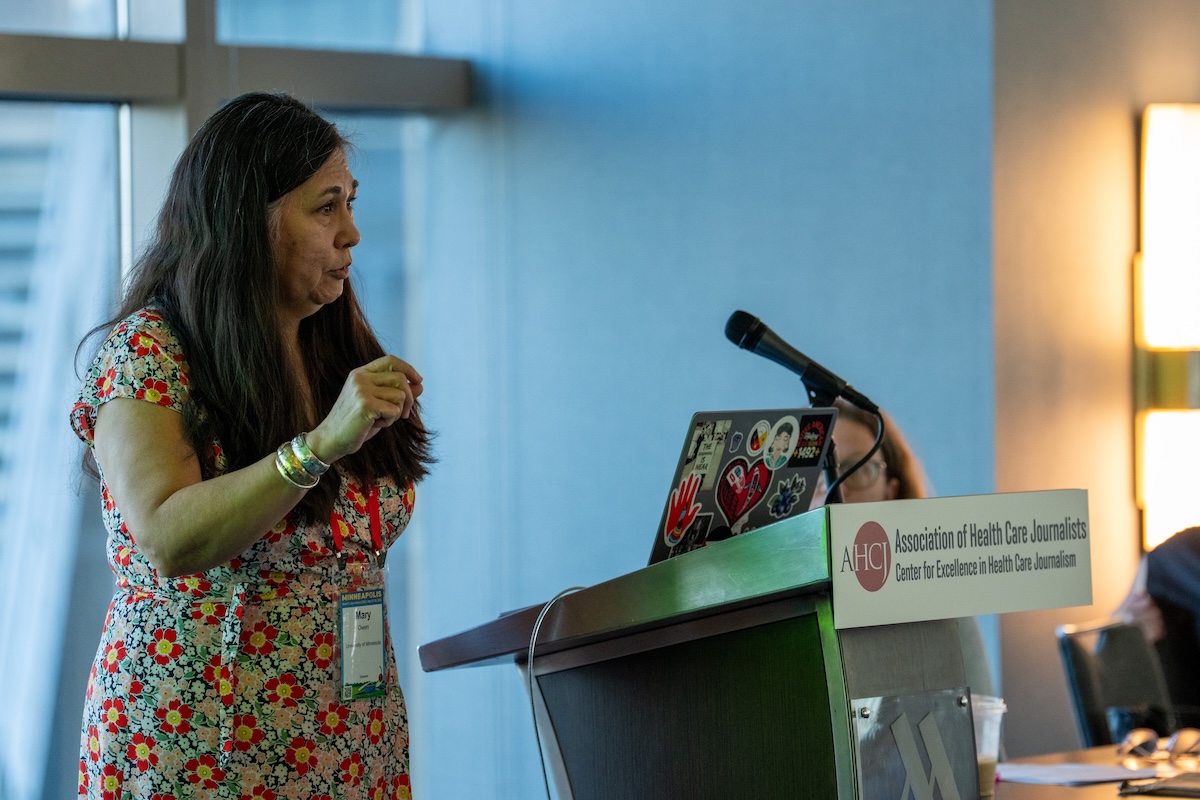
Although Native Americans make up only 2% of the U.S. population, they remain one of the nation’s most underserved groups in health care. At Health Journalism 2026 in May, panelists discussed how physicians, researchers and journalists can better serve Native communities by approaching health care through an Indigenous lens.
Native American physicians already have the historical and cultural knowledge required to care for their community — but their expertise is often discounted, said Mary Owen, M.D., the associate dean of Native American Health at the University of Minnesota.
“It happens all the time in academia. I try to explain to people that those Native students know so much more than any of these white students, because they’ve had to learn both worlds,” she said.
Cultural and historical awareness is key
Owen discussed the multi-layer history and culture that non-Native physicians — who make up 99.6% of the workforce, according to a 2018 American Medical Association report — should know. This includes the history of boarding schools, extended family relations, and the cultural understanding that everything is alive, we are all connected, and we are all related.
Remember that Native American communities are sovereign, Owen said. She recommended that physicians take the time to research which treaties are in place before visiting and to be aware of the currency of reciprocity. These are signs of respect from the physician to the patient that can go a long way toward working together to best tend to the patient’s needs, Owen said.
Some examples include taking the initiative to connect to a patient’s community, meeting a patient’s family, respecting their elders and making sure they are fed first at meals.
“You will see people (in the community) make sure that they stand up and go get the food for the elders. That’s the tradition. … We understand that they have been here for a long time, and they are sharing just by being. Their sharing of their knowledge with us is a privilege,” Owen said.
Conducting mindful research
Native American Community Clinic Research Director Meghan Farley Webb, Ph.D., said one of the clinic’s goals is to give its patients recognition by providing “a place where you can be treated as a whole person, where your knowledge, your insights, your way of life are respected.”
Webb also highlighted the Community Engagement for Decolonizing and Advancing Research (CEDAR) within the Native Research and Evaluation Center (NAD). Webb called CEDAR a necessity, as research has historically been extracted from Native communities. Though they are not in partnership, Webb said they’re working to revitalize interest in principles and practices within research.
“We’re turning to research as an act of sovereignty,” Webb said, emphasizing that research tells a story that belongs to the community.
“We have to be good stewards of that (data),” she said.
Tips for covering Native American communities
Webb offered some helpful tips to non-Native physicians and journalists when working with Native communities:
- Know when certain spaces are not your spaces and respectfully withdraw.
- Question the goal of research: Will it actually help Native communities, or is it just to advance people’s careers?
- Trust and respect are everything. Native communities have years of experience built on mistrust and broken promises.
- Collecting data has historically been used to criminalize or create policy to paternalize or pathologize Native communities instead of showing what’s really going on.
- As reporters, show both the good and the bad instead of sensationalizing the bad.
- If you don’t know, always ask questions and work with the community you’re reporting on to get a more accurate depiction.
Jeanette DeDios is a radio reporter for KUNM Public News based in Albuquerque, where she covers government, Indian affairs, and public health.