Category Archives: Pharmaceuticals

Medicare data shows dangerous prescribing habits, lack of oversight

Pia Christensen

About Pia Christensen

Pia Christensen (@AHCJ_Pia) is the managing editor/online services for AHCJ. She manages the content and development of healthjournalism.org, coordinates social media efforts of AHCJ and assists with the editing and production of association guides, programs and newsletters.

ProPublica’s Tracy Weber, Charles Ornstein and Jennifer LaFleur, in an analysis of Medicare prescription records, found that “some doctors and other health professionals across the country prescribe large quantities of drugs that are potentially harmful, disorienting or addictive,” with no attempt by the federal government to monitor or deter the practices.

“… officials at the Centers for Medicare and Medicaid Services say the job of monitoring prescribing falls to the private health plans that administer the program, not the government.”

Continue reading

Drugs remain on market despite fraudulent research; FDA withholds information

Pia Christensen

About Pia Christensen

Pia Christensen (@AHCJ_Pia) is the managing editor/online services for AHCJ. She manages the content and development of healthjournalism.org, coordinates social media efforts of AHCJ and assists with the editing and production of association guides, programs and newsletters.

Despite concluding that a drug research lab’s violations “were so ‘egregious,’ and pervasive that studies conducted there between April 2005 and August 2009 might be worthless,” the FDA didn’t pull the drugs tested there from the market, according to a ProPublica piece by Rob Garver and Charles Seife.

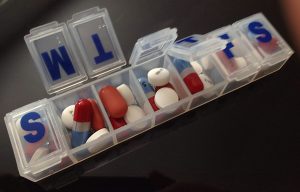
pills

Photo by Grumpy-Puddin via Flickr

The FDA is refusing to release information about those drugs, saying that “We believe that this did not rise to the level where the public should be notified.”

A statement from the agency said, “The issue is not a lack of transparency but rather the difficulty of explaining why the problems we identified at Cetero, which on their face would appear to be highly significant in terms of patient risk, fortunately were not.” Continue reading

Growing challenges to safety, adequacy of drug supply #ahcj13

Keldy Ortiz

About Keldy Ortiz

Keldy Ortiz is a health reporter at the Victoria (Texas) Advocate. He is attending Health Journalism 2013 on an AHCJ-Rural Health Journalism Fellowship, which is supported by the Leona M. & Harry B. Helmsley Charitable Trust.

Essential, commonplace drugs are in short supply, including morphine, epinephrine and chemotherapy agents. Those shortages have led to a greater reliance on compounding pharmacies, such as the one blamed for contaminated steroid injections that sickened more than 700 people, of whom 50 died.

In the AHCJ conference session, “From compounders to drug shortages: Covering pharmacies and pharmacists,” pharmacists described the growing challenges to the safety and adequacy of the U.S. drug supply.

Michael R. Cohen, R. Ph., M.S., president of the Institute for Safe Medication Practices, gave several reasons for drug shortages, including Medicare payment restrictions that reduce profits and FDA actions that take manufacturing plants off line. Meanwhile, people have been sickened by contaminated drugs from compounding pharmacies for years before the fungal meningitis outbreak of that resulted from the contaminated steroids. Continue reading

Pharmaceutical industry influence starts with the doctor’s prescribing pen #ahcj13

Tracey Drury

About Tracey Drury

Tracey Drury is a reporter at Buffalo Business First. She is attending Health Journalism 2013 on an AHCJ-New York Health Journalism Fellowship, which is supported by the New York State Health Foundation.

Can a doctor’s prescription be bought for a tuna sandwich?

Whether it’s a tuna sandwich, steak dinner or a four-figure payment, there’s always the possibility of influence. And that’s how conflicts of interest begin in the medical field.

That was the message this morning from reporters Peter Whoriskey of The Washington Post and John Fauber of the Milwaukee Journal Sentinel during their panel on reporting on medical and financial conflicts of interest during AHCJ’s Health Journalism 2013 in Boston.

“Their job is to sell as much product as they can and maximize profits,” Fauber said of the pharmaceutical companies. “One of the ways they do that is by creating financial relationships with various stakeholders, which can be doctors, medical societies or medical schools. While this may be good for the bottom line of the drug companies, it may not work out for the patients.”

Fauber advised journalists to be on the watch for several things: promotional speaking gigs by physicians; participation in continuing medical education (CME) events; financial relationships between medical journal editors and drug companies; and royalties that come back to hospitals and physicians.

“It struck me very quickly that all the cynicism the media brings to politicians or companies, anybody, is held in abeyance for doctors and anybody that wants to heal you,” Fauber said. Continue reading

Ruling has potential to impact patient care, advertising

Pia Christensen

About Pia Christensen

Pia Christensen (@AHCJ_Pia) is the managing editor/online services for AHCJ. She manages the content and development of healthjournalism.org, coordinates social media efforts of AHCJ and assists with the editing and production of association guides, programs and newsletters.

The Milwaukee Journal Sentinel‘s John Fauber explains what a federal appeals court ruling this week might mean for patient care, television advertising and many other issues.

The case of United States vs. Alfred Caronia, a pharmaceutical company representative, “involved the right of commercial free speech, applying it to the complicated world of pharmaceutical industry promotion of prescription drugs.”

Caronia was prosecuted for making off-label promotional statements about Xyrem, a drug approved in 2002 to treat narcolepsy patients. He contended his statements were protected by the First Amendment, saying that the government couldn’t “prohibit or criminalize a drug company’s truthful, non-misleading off-label promotion to doctors.”

Fauber notes that “The appeals court essentially agreed, noting that Caronia never conspired to put false or deficient labeling on the drug.”

In his article, Fauber – no stranger to covering conflicts of interest in the medical industry – outlines the surprisingly far-reaching potential effect of the ruling – called a “watershed moment” by one source.

Fla. database intended to stop prescription drug abuse is largely unused

Andrew Van Dam

About Andrew Van Dam

Andrew Van Dam of The Wall Street Journal previously worked at the AHCJ offices while earning his master’s degree at the Missouri School of Journalism, and he has blogged for Covering Health ever since.

After years of increasing scrutiny as it sat at what appeared to the epicenter of the national prescription painkiller abuse epidemic, Florida implemented a law requiring that every prescription filed for controlled substances such as prescription painkillers be recorded in a statewide database. A year later, Tampa Bay Times reporter John Woodrow Cox has followed up to see what difference the law has made.

The answer appears to be “hardly any.” Because there is no requirement to use the system when writing prescriptions, Cox writes, “the vast majority of medical practitioners have never touched the much-touted database.” He has assembled some damning numbers to back that observation up.

  • Since the system’s inception on Sept. 1, 2011, more than 48 million prescriptions have been written in Florida for controlled substances — that’s about 2.5 for every man, woman and child in the state. Prescribers, however, checked the database before writing just 2 percent of them.
  • Among physicians in the Tampa Bay area permitted by the federal government to prescribe these potent drugs, fewer than one in 12 has ever used the database.
  • A Times reporter surveyed all 91 local pain-management clinics registered with the state and that appeared to be in business. Fewer than half reported using the program. Employees at 46 of the clinics declined to answer questions or did not respond to calls. One acknowledged never using the program.

Cox digs pretty deep into the issue, but in the end it comes down to a simple observation: When it comes to enforcement, there is neither carrot nor stick. Scrupulous voluntary use of the database would only mean less business for the “pill mills” which account for so many of the state’s prescriptions, so they have no incentive to check it and face no punishment for not doing so. The experience of other states indicates that requiring prescribers to reference the database would make it more effective, but such a mandate appears impossible given Florida’s current political climate.

Health care watchdog agency provides ideas for stories in coming year

Len Bruzzese

About Len Bruzzese

Len Bruzzese is the executive director of AHCJ and its Center for Excellence in Health Care Journalism. He also is an associate professor at the Missouri School of Journalism and serves on the executive committee of the Council of National Journalism Organizations.

The HHS Office of Inspector General (OIG) has unveiled its FY 2013 OIG Work Plan , a blueprint for the watchdog agency’s work in the upcoming year and beyond.OIG 2013 Outlook Webcast at oig.hhs.gov

For enterprising health care reporters, this publication is like a catalog of story ideas, featuring hundreds of summaries of OIG’s upcoming reports, descriptions of its investigative and legal work, plus an overview of guidance it provides to the health care provider community.  Topics of upcoming reports include same-day hospital readmissions, oversight of poorly performing nursing homes, and FDA’s process for investigational new drug applications.

Also, on Oct. 24, OIG will launch its OIG Outlook 2013 webcast.  The free online event will include OIG’s senior leadership discussing emerging trends in combating fraud, waste and abuse in federal health care programs, OIG’s top priorities for 2013, and upcoming projects outlined in the Work Plan.

OIG’s mission is to protect the integrity of HHS’s 300+ programs – including Medicare and Medicaid – and the well-being of beneficiaries by conducting audits, evaluations, and investigations; providing guidance to the health care industry; and imposing civil monetary penalties, assessments and administrative sanctions.

OxyContin’s early poster children: Where are they now?

Andrew Van Dam

About Andrew Van Dam

Andrew Van Dam of The Wall Street Journal previously worked at the AHCJ offices while earning his master’s degree at the Missouri School of Journalism, and he has blogged for Covering Health ever since.

More than a decade into America’s new age of opiates, the long-term effects of the ubiquitous prescription painkillers are starting to be felt on a real, measurable scale. As part of an evolving investigation for the Milwaukee Journal Sentinel and MedPage Today, John Fauber and Ellen Gabler drive this home by following up on seven patients – and one physician – featured in an early promotional video for OxyContin maker Purdue Pharma.

Originally conceived as a teaching aid, the video was ultimately used in a marketing campaign in which Purdue sent it to about 15,000 doctors. A Purdue subsidiary has since paid $634 million in penalties for misbranding OxyContin in its various promotional campaigns but, as the reporters found, the patients who used the drug sometimes paid an even steeper price, as demonstrated by the subsequent lives of the seven “poster children” featured in that video. I’ll let Fauber and Gabler take it from here.

The subjects who spoke glowingly of their experiences with OxyContin in the video 14 years ago offer a case history of sorts.

Two of the seven patients were active opioid abusers when they died. A third became addicted, suffered greatly, and quit after realizing she was headed for an overdose. Three patients still say the drug helped them cope with their pain and improved their quality of life. A seventh patient declined to answer questions.

The doctor who enlisted his patients for the video and played a starring role, now says some of the statements went too far.

Within this broad sketch, the reporters find much room for story and nuance, touching upon everything from the impact of the drug on patients with a history of addiction to the legitimate success stories of patients who had their lives changed by the powerful narcotic. It’s a well-drawn, big-picture portrait of the swath opiates have cut through modern American, told through the lens of a unique and fascinating narrative device.

Reporter tracks top prescribers’ ties to drugs they prescribe

Andrew Van Dam

About Andrew Van Dam

Andrew Van Dam of The Wall Street Journal previously worked at the AHCJ offices while earning his master’s degree at the Missouri School of Journalism, and he has blogged for Covering Health ever since.

A while back, Sen. Charles Grassley wrote to state health officials, asking for lists of top Medicaid prescribers of certain drugs. When her state released its, Lisa Chedekel of the Connecticut Health Investigative Team took it and ran with it, using all manner of public data to assemble a portrait of Connecticut’s prolific prescribers and the conflicts of interest that may drive them.

Speaking of conflicts of interest, Chedekel found that 43 of the 108 high prescribers (some broke into the top 10 for multiple drugs) earned money, meals or other benefits from the very companies whose drugs they were subscribing in such large quantities. She profiles a number of these physicians, but my personal favorite is one whose records show a curious correlation:

Dr. Kathleen Degen of Norwich was not among the top prescribers of Eli Lilly’s Zyprexa in 2008, but was the seventh-highest prescriber in 2009 (with 255 prescriptions), when Eli Lilly paid her $24,950 in speaking fees. Her prescribing fell off slightly in 2010, and she received $5,291 from Eli Lilly for speaking and travel. She disappeared from the high prescriber list in 2011 and received just $16 in meals from Eli Lilly, records show.

To better understand the problems that could arise from situations like these, Chedekel talked with academics, as well as a number of physicians named in the story. She also took a look at the drugs themselves, many of which Grassley had selected due to their controversial nature. The piece is a blueprint for reporting state-by-state on similar lists. The story also aired on Fox Connecticut.

Faced with shortages, paramedics turn to expired drugs

Andrew Van Dam

About Andrew Van Dam

Andrew Van Dam of The Wall Street Journal previously worked at the AHCJ offices while earning his master’s degree at the Missouri School of Journalism, and he has blogged for Covering Health ever since.

Reporting on how drug shortages are impacting paramedics, The Associated Press’ Jonathan Cooper discovered things had deteriorated to the point that, he writes, “Paramedics reported asking some of those facing medical emergencies: ‘Is it OK if we use this expired drug?’

Based in Oregon, Cooper found that, in fact, paramedics around the northwest have been forced to dig up supplies of expired drugs to meet critical needs. He writes that, while manufacturers don’t seem to be willing to discuss drug effectiveness beyond declared lifespans, “Medications are only guaranteed to work as intended until their expiration date. When stored properly, most expired drugs won’t be harmful to patients but will become less effective with time, according to medical professionals.”

State public health officials, who license ambulances and in some cases dictate the medications they must carry, are loosening their rules to help emergency responders deal with the various shortages. Oregon health officials last week began allowing ambulances to carry expired drugs, and southern Nevada has extended the expiration dates for drugs in short supply. Arizona has stopped penalizing ambulance crews for running out of mandated medications.

Some agencies have reported keeping their drug kits fully stocked by substituting alternative medications, some of which have additional side effects or higher costs, or by diluting higher dosages to get the less-concentrated dose needed.

Past shortages have included key painkillers and sedatives. Current critical needs include epinephrine and morphine – and you don’t have to be a pharmacist to imagine why a shortage of those might be problematic for front-line medics.

Manufacturing quality lapses, production shutdowns for contamination and other serious problems are behind many of the shortages, according to manufacturers and the FDA. Other reasons include increased demand for some drugs, companies ending production of some drugs with small profit margins, consolidation in the generic drug industry and limited supplies of some ingredients.