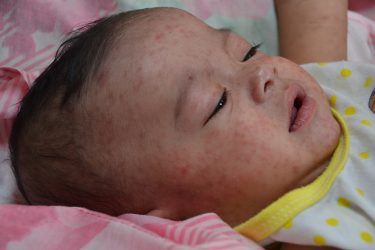
The day ranchers and animal health and agriculture experts have been worried about for over a year arrived in early June, when the first case of New World screwworm was confirmed in the U.S. This threat crosses multiple large health beats, from infectious disease in humans (though it’s actually a parasitic infection) to the food supply to environmental and agricultural damage.
Journalists whose audiences include farmers, ranchers, and hunters will particularly want to follow this story closely. This tip sheet provides resources for reporting on New World screwworm.
What is New World screwworm?
New World screwworm is a parasitic fly that lays its eggs in warm-blooded animals’ exposed soft tissue, flesh wounds, and orifices, including the eyes, ears, nose, mouth, and genital areas. The eggs hatch into maggots that burrow into and feed on the flesh. Though this parasitic infection can occur in people, it’s uncommon in the U.S. The biggest risk is to livestock and wild deer populations.

The U.S. had eradicated New World screwworm from the U.S. and Mexico in the 1960s by breeding millions of male flies, sterilizing them with radiation, and then releasing them for mating with females, who only mate once in a lifetime. But New World screwworm began creeping back north from Central America in 2023. The USDA dashboard of confirmed detections lists 19 animal cases as of June 24 in Texas and New Mexico, but it’s plausible that many more cases have gone undetected or unreported.
The potential cost of widespread infestation is substantial. Though not an unbiased source or an official authority, the survivalist company My Patriot Supply has a very well-referenced article about the threat of New World screwworm to the U.S. beef supply. CNBC has also covered the threat to beef prices. NWS can also harm the hunting industry and game populations.
What is the federal government doing to prevent the spread?
The federal government first took action in response to the northward spread of New World screwworm (NWS) in May of last year, when the U.S. agriculture secretary suspended livestock imports along the U.S. southern border. Those ports were gradually being reopened nearly two months later before being re-closed just over a week after that.
Soon thereafter, money was appropriated to increase capacity in Mexico and Texas to produce sterile New World screwworm flies. The APHIS newsroom has a record of the various facilities being built, renovated, or expanded for releasing sterile flies.
The FDA has conditionally approved a topical drug in cattle and issued multiple Emergency Use Authorizations (EUAs) for preventive and therapeutic agents: an ivermectin injection for cattle, a doramectin injection for various livestock and deer, and a topical powder, an ointment, and a topical spray for livestock and captive wild and zoo mammals (the latter two also in birds).
Journalists will want to check with their state and county officials to see what they may be doing to prepare for and/or respond to the threat.

What consumers and everyday people need to know
There are a couple key messages that are important for journalists to convey about this parasite:
- The biggest threats are to U.S. beef prices, the hunting industry, and the ranching and livestock industries, but people will want to know that beef sold in the U.S. is still safe to eat since the threat is to the animals themselves rather than the food supply.
- Risk to people in the U.S. is very low but not zero, as a traveler-associated case from El Salvador showed in August 2025.
- Warm-blooded pets, including cats and dogs, may be at risk while they are outside in infested areas, particularly if they have open wounds or they have recently given birth or are nursing. An infected dog was reported on June 8 in Lea County, New Mexico. If dogs or cats do become infected, the FDA has conditionally approved Credelio Quattro-CA1 tablets for dogs and issued EUAs for the generic over-the-counter insecticide nitenpyram (a flea killer) in dogs and cats, afoxolaner tablets for dogs, and a topical solution for cats.
- Any reporting on this parasitic infection should include the link where people can report suspected cases. Outside Texas, that means an accredited veterinarian for livestock or pets, the local USDA Wildlife Services Office for wildlife, and the local or state health department for people. Animal health professionals should report those to the Animal and Plant Health Inspection Service (APHIS) Area Veterinarian in Charge. All of these places can also serve as useful sources for journalists.
- It wouldn’t hurt to remind people that prevention of infestations like New World screwworm require investment in public health and science programs that have been substantially reduced under the current administration. There have been questions in Congress over whether cuts by DOGE at the start of the Trump administration left the U.S. more vulnerable to New World screwworm’s arrival. While NWS began heading north a few years after the pandemic, DOGE cuts to the USDA included about a quarter (23%) of the agency’s Animal Plant and Health Inspection Service (APHIS).
Talking with ranchers about the threat
Journalists will likely want to talk with those most directly affected by New World screwworm — ranchers trying to keep their herds safe. Amy Mayer, news director at KAZU Public Radio in Monterey, Calif., has previously covered a lot of agriculture stories in Iowa and shared what she found helpful in talking with ranchers.
I try to frame it from the perspective of, ‘This pest has now arrived. What are you worried about? What are the things you’re paying attention to?’
Amy Mayer
News director, KAZU Public Radio
Ranchers may be concerned about feeling demonized and blamed for something that’s outside their control, potentially putting them on the defensive when initially approached. A good approach, therefore, is to ask them what they most want the public to know, she says.
“The first thing they’re going to tell you is your beef is safe to eat, and then you can ask, ‘Can you talk me through how you care for your herd? Now that you’ve been told that this pest is in this country, are you going to change any of the ways that you monitor the well-being of your herds?’ You want to know what they’re watching out for,” she said.
It’s worth talking to ranchers far from Texas, too, because they may stand to gain if ranchers in Texas lose individual animals or entire herds to quarantine. They may not say outright that somebody’s rainy day is somebody else’s drought, but reporters can ask ranchers far from the threat not only whether they’re worried about the spread of New World screwworm but also what the spread in Texas right now means for their own business.
Resources
- This extensive backgrounder from North Carolina State University includes two experts who would be great sources. Texas A&M University also has a helpful backgrounder from experts based in Texas, where the cases are currently.
- The AP story after the first U.S. case further provides an excellent background for those needing a quick catch-up before reporting on New World screwworm.
- The federal government is maintaining updates at screwworm.gov, which includes a dashboard of confirmed detections, a more detailed map of specific geographic infested zones, an emergency response site with tools and resources for responding to an outbreak, and port closures for livestock trade, which currently include all southern border ports. Lower on the page is a map of outbreaks in Mexico.
- The American Veterinary Medical Association has an New World screwworm overview page.
- This APHIS fact sheet is specifically about the threat to wildlife that may be of interest to hunters.
- The CDC site has a basic info page that’s helpful to link to in written articles.
- The U.S. Animal Health Association also provides a list of State Animal Health Officials.
- The USDA released a five-point plan for responding to the threat in June 2025, along with a more comprehensive Foreign Animal Disease Preparedness and Response Plan. They also produced a detailed Response Playbook for officials, which was last updated in April 2026.
- Here’s a very comprehensive history of New World screwworm eradication in the U.S. from 1958-1969. This abstract has a briefer overview, and the University of Washington has a slightly longer but more digestible history.