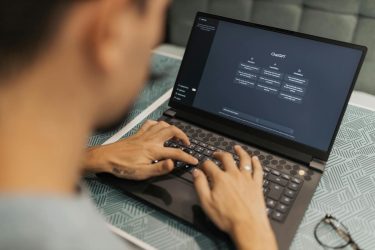
By now, many of us have become familiar with AI scribes – programs doctors use to audio-record clinical encounters and create notes for patient charts. More than a quarter of U.S. medical practices use them, according to a recent article in STAT.
Some patients have also been making their own recordings of medical visits, Katie Palmer reported for STAT. A growing number of consumer-facing mobile apps, such as VisitRecall, Advoca, Medcorder and AlignCare – some free, some for a monthly fee – use AI to record and summarize these appointments. Some apps break down the discussion into simple medical terms, provide next steps, such as scheduling blood tests, and allow easy sharing with other family caregivers.
While it’s unclear what percentage of patients are recording their visits, it’s an interesting trend for journalists to follow, and it raises important privacy and legal concerns.
Benefits — and cautions — for patients
As anyone who has ever felt nervous or emotional during a medical visit can attest, you’re not always listening carefully, which is why it’s often helpful to bring along a trusted friend or family member to take notes for you or help ask questions.
“We forget up to 80% of what’s discussed during the visit,” said Paul Barr, Ph.D., a professor at The Dartmouth Institute for Health Policy and Clinical Practice, who has been researching the value of audio and video recordings of health care visits for the past 11 years as part of the OpenRecordings group of researchers.
“So now we’re at home, and we can’t really remember what it was that we discussed,” he told AHCJ. “Our patient portal notes are helpful — they’re summaries of what was discussed, but they don’t capture all the value that a patient has from the visit,” such as treatment options talked about and decided on, and even the social interactions and jokes with their doctors.
If a patient records the visit, they can listen at home at their leisure to help improve their recall and understanding of their health conditions or follow-up instructions. They can also share the recordings with partners/caregivers. Recordings can be especially helpful for people with chronic conditions or cognitive/memory issues, Barr said.
Patients don’t need to use these specific apps, as they can use their own digital recorder or other basic phone recording and transcription apps such as Otter.ai, Barr said.
But if they do, one serious concern is patient privacy. As Palmer’s article explains, while the Health Insurance Portability and Accountability Act (HIPAA) does cover any recordings made by health care providers, it does not cover recordings made by patients. Therefore, anyone using these apps should study the app’s user agreements or ask questions about data storage before employing them.
Some patient apps claim to treat health data as if it were regulated by HIPAA to keep it private and secure, Palmer reported. In contrast, others don’t store recordings or transcripts, or delete them after a certain amount of time. Be mindful that consumer products can change their terms and privacy policies at will. Also watch for any apps that sell patient information to third parties for targeted advertising.
“I would be very mindful about how these companies are using your data,” Barr said. “Who are they sharing your data with? There is a real reckoning coming of the depth and breadth of this information and how, with AI, it can be analyzed instantaneously at scale for benefit but also certainly for harms.”
There is also a risk of inaccurate or incomplete information, so users should always compare summaries from these apps with those entered in patient records by providers. If anything doesn’t match up, patients can contact the provider’s office to double-check the correct information.
What does the law say?
Another concern is legality. Some 39 states and the District of Columbia are single-party jurisdictions, meaning only one party needs to agree to a recording, according to a recent article by Naveed Saleh, M.D., in Verywell Health. That means patients in these states can legally record a clinical encounter without a doctor’s consent. In the other 11 states — California, Florida, Illinois, Maryland, Massachusetts, Michigan, Montana, New Hampshire, Oregon, Pennsylvania and Washington — both the patient and health care provider must consent to recordings. Otherwise, recording without permission is a felony.
If a patient wants to record a visit in a single-party state, even if the doctor declines, the patient can still record, Saleh wrote. The doctor can then choose to continue or end the appointment. In all-party states, if a patient records without a provider’s consent, the doctor can report the violation to authorities, which could lead to potential consequences such as compensation for harm, legal fees or other penalties. Sharing the recording online would be considered an additional offense.
It is common courtesy to ask. “I am a big advocate for open recording,” Barr said. “You have a relationship with the clinician, and there’s a lot of trust in there. I don’t think you want to violate that trust by secretly recording.”
If you record in secret and the clinician does find out, they may believe they were denied the right to consent to the recording, Saleh wrote, or feel vulnerable to scrutiny and become distrustful of the patient, he said.
To make providers feel more comfortable, patients can ask to use a “note-taker” instead of recording, Palmer said in her article. Patients might also explain that they sometimes have difficulty remembering all the details from an appointment and ask if they can record the appointment to share information with their family member/caregiver, according to a blog post on Rev.com.
“You can record bad practice, and that will happen,” said Barr. “But 99% of the time, it’s just someone who’s struggling with a health condition who can’t remember all this stuff. They want to manage [their health] with their family, and they’ve found it really helpful to listen back.”
Story ideas
- Talk to patients who have recorded their encounters – why did they do so? What did they do with the recordings?
- Talk to physicians who have had patients ask to record (or found out they had been secretly recorded)? Did they encourage the recording? Did that change the nature of the interaction in the visit? If they were recorded in secret, what did they do after?
- Look into best practices/best ways to ask physicians about gaining access to their recordings or how patients can best use their own recordings.
- Talk to app developers – what kind of uptake have they had for their products? What features do they offer? What protections do they have in place to uphold patient privacy?
Resources
- After hospitals, patients get a turn to bring AI into the doctor’s office – STAT.
- Secretly recording your doctor’s appointments – Verywell Health.
- More people recording doctor’s visits – Arizona’s Family 3TV/CBS.
- All ears: What to know about ambient listening – AHCJ blog post.
- Can patients make recordings of medical encounters? What does the law say? – JAMA.