The toll of reporting on trauma: A workshop with yoga
By Nicole Villalpando, Texas Health Journalism Fellow
Reporting on trauma can take a toll on journalists, but mindfulness can go a long way to support you throughout your careers.
That was one of the takeaways from a workshop led by Margo Snipe at AHCJ’s annual conference in Minneapolis, titled, “The toll of reporting on trauma: A workshop with yoga.”
Snipe is a journalist who has covered mass shootings and has gone on to build a holistic practice of breathwork, yoga, writing and conversations around trauma healing. She now works with social workers, first responders and journalists.
Snipe led the group through exercises in dealing with trauma. To start, she asked participants to notice their bodies while doing light stretching and breathing.
“You really can’t get this wrong,” she said.
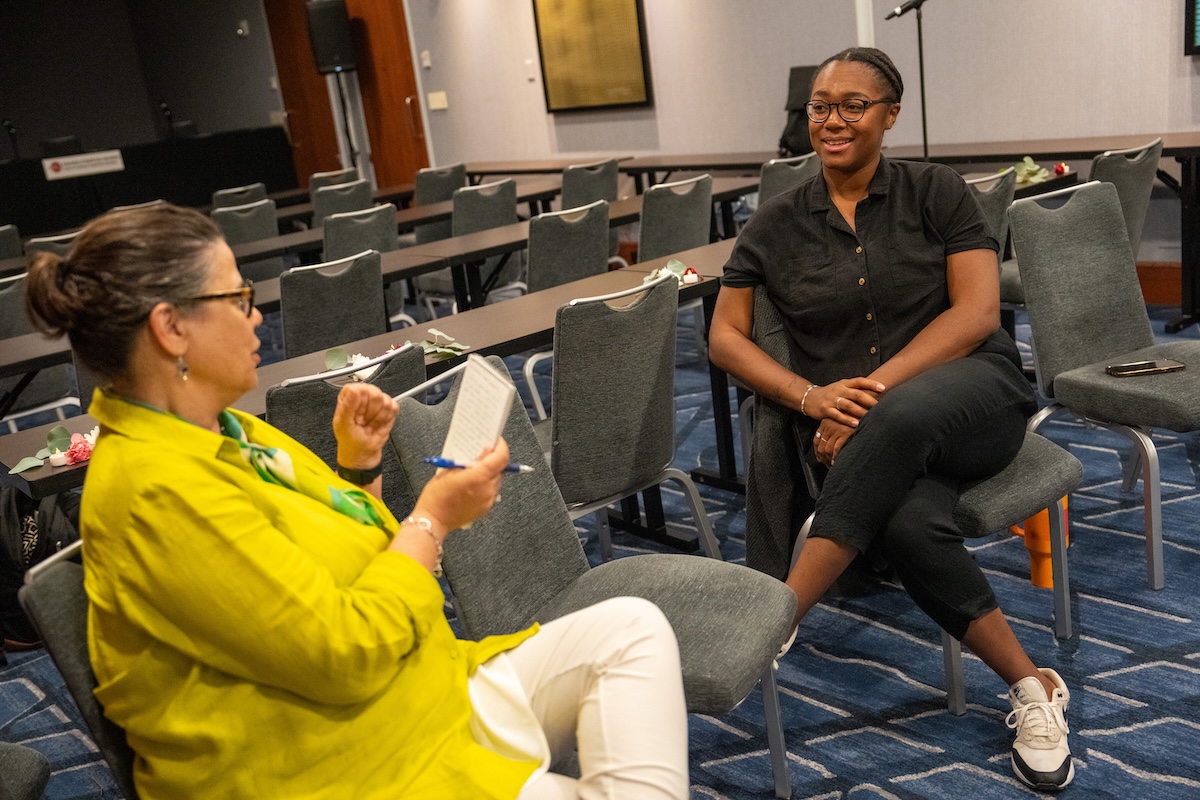
Snipe invited participants to focus on something in the room, including the flowers and LED candles she had placed — both in the middle of the circle and around the perimeter. She played soft guitar music while people took a moment to get in touch with their breathing and bodies.
She then asked participants to write about how their bodies were feeling. Participants then form groups to talk about how people deal with traumatic events,show up for themselves and for others, and the line between being a professional and being a human.
“It would be normal if there was some activation,” she said as attendees talked about feelings about covering difficult stories.
She reminded the group that as journalists covering health stories, “we are very trauma-exposed.”
So often as journalists, she said, we get through one trauma after another. We focus on deadlines; We focus on being professionals. We don’t often debrief on our experiences.
“The next story will erupt something,” she said.
Instead of pushing all the feelings down, “we actually need to grieve the thing.”
Grieving could involve giving yourself space, talking to someone, doing some angry dancing, punching a pillow or jumping jump rope, Snipe said.
If taking time off work is not an option, she recommends “microdosing” some trauma support by focusing on an object and doing some breath work for a few minutes or giving yourself a few minutes of space away from the job: “What can feel tolerable in this moment?”
Snipe encouraged attendees to listen to their body’s signals of what will feel safe.
“We are not supposed to do this alone,” she said.
Nicole Villalpando is a health reporter with the Austin American-Statesman.