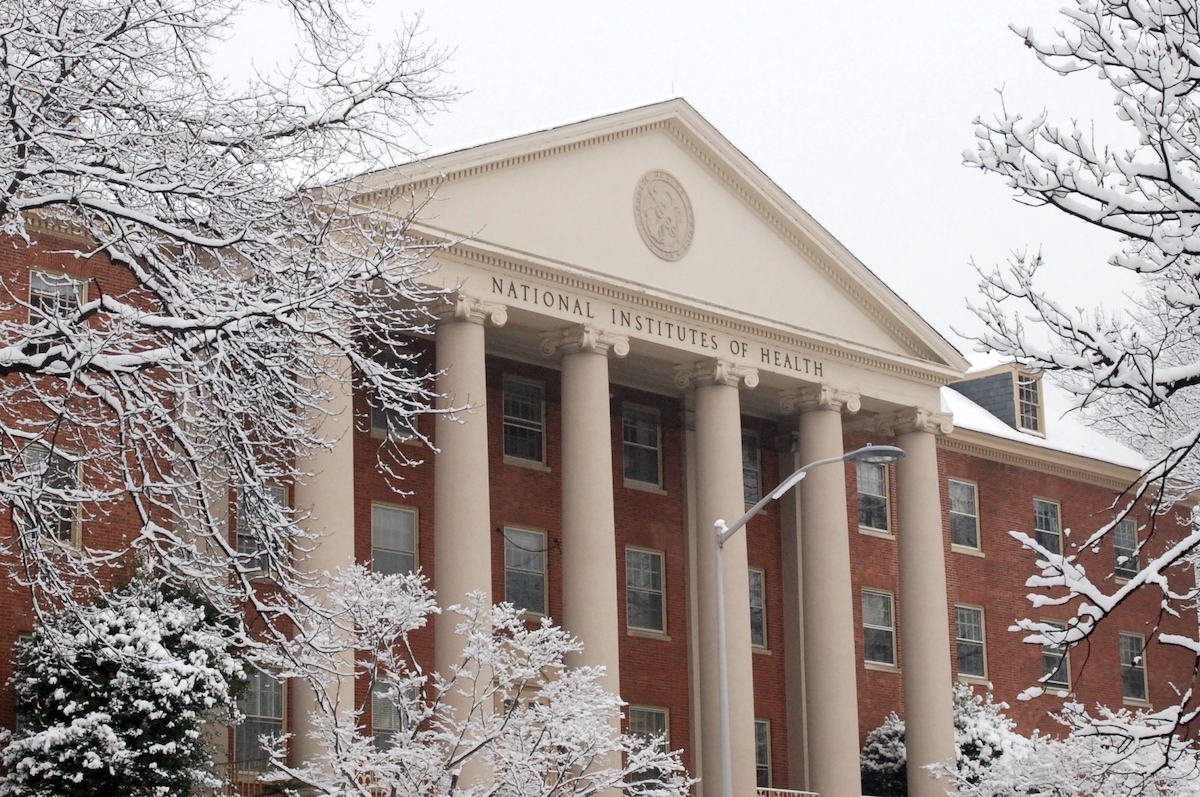
The U.S. National Institutes of Health, like many federal agencies, has experienced unprecedented restrictions on their operations in the new administration’s first week, including a communications pause that abruptly halted meetings and workshops, a hiring freeze, and a moratorium on travel.
Industries and sectors connected to the biomedical sciences are experiencing concern and disarray as NIH funding and research processes have stopped. Health care is the largest industry supporting the U.S. economy; every U.S. resident will be affected in some way.
While it’s unknown how long the hiring freeze and travel restrictions will last, a memo issued to Health and Human Services, NIH’s parent agency, paused communications through at least Feb. 1. A Monday memo clarified that ongoing studies can continue, and some mission-critical research is exempt from certain restrictions.
Journalists covering health care or medical stories may find it challenging to contact sources at the NIH, but they can nonetheless cover the widespread impact of these restrictions.
Economic effects of the NIH
NIH is the United States’ largest research agency, with a budget of nearly $48 billion, supporting more than 300,000 researchers at more than 2,500 research institutions, mostly universities and medical schools. The SBIR program funds thousands of small tech businesses that work on advances in health and medicine. The ripple effects of halting NIH’s operations, even for 10 days, are far-reaching.
“Labs with decades of irreplaceable domain and technique knowledge can break apart with a surprisingly short funding gap,” wrote science writer Tom Levenson of Massachusetts Institute of Technology on Bluesky. “When they’re gone, it’s not just the experiments they were running in January 2025 that go away. It’s that vast trove of knowledge about how to do their science. You don’t get that back in a month or a year.”
Spending cuts
Funding delays reduce science labs’ spending by 50% in the year they happen.
Generally, spending cuts reduce payments to employees, largely undergraduates and research staff, which reduces scientific productivity. Personnel working in labs with only one research grant from NIH that experience a funding interruption of more than 30 days are more likely to find work outside of the United States and 90% less likely to publish in a given year thereafter.
“Overall, funding delays account for about 5% of US nonemployment in our data, indicating that they have a meaningful effect on the scientific labor force at the national level,” wrote Wei Yang Tham, Ph.D., of the University of Toronto and his colleagues in a recent study on arxiv that has yet to be peer-reviewed.
These losses have long-term effects on the local, regional, and national economies. For example, the price of eggs has skyrocketed this month because of a surge in bird flu cases, which is expected to worsen with disrupted operations at the CDC, the FDA, and the NIH.
Story ideas
Reporters need to help audiences grasp the profound effect of this agency on their local economies and daily lives. Here are four angles to pursue:
- Look up NIH funding amounts. Ask what this funding means for the region. Explore what areas of health and biomedical research are affected, whether studies support a large number of trainees and regional effects. Places supported by poultry farming and processing may especially be affected by delays in information about the bird flu outbreak. “Someone’s writing the research story. I’d want to write the knock-on effect story,” North Carolina-based science communicator Matt Shipman wrote in a social media post. “You can’t pull the plug on an entire industry sector without causing significant economic damage.”
- Investigate the impact on patients. In a STAT exclusive, NIH clarified that ongoing clinical trials can continue, but — barring certain exemptions — no new studies are being launched. Speak with researchers conducting NIH-funded clinical trials and patients participating in them, for example, for cancer or rare diseases. Although recent news suggests some purchasing restrictions have been lifted, there are stories to cover about the impact of altering clinical trial protocols midway. Seek out patient-centered stories or speak with advocacy groups to learn how the new rules impact patients. The FDA removed last week its web page on clinical trial diversity, despite known issues with care stemming from study populations that do not reflect patient populations.
- Investigate ongoing domestic health crises. How will changes in NIH funding impact the opioid epidemic and the United States’ largest tuberculosis outbreak in recorded history? “Halting NIH funding will have a devastating impact on how we address the opioid epidemic,” said opioid researcher Erika Crable, Ph.D., of the University of California, San Diego, in a Bluesky post. For example, disrupting the NIH’’s Helping to End Addiction Long-Term (HEAL) Initiative, the agency’s response to the opioid epidemic, could harm research in progress. It is unclear if the meeting of the National Advisory Council on Drug Abuse scheduled for Feb. 4 will move forward and fund proposals for ongoing studies up for review.
- Explore stories about the social determinants of health. Consider reporting on the impact on household incomes and health insurance as NIH funding affects state economies. State-by-state statistics and information are available here.