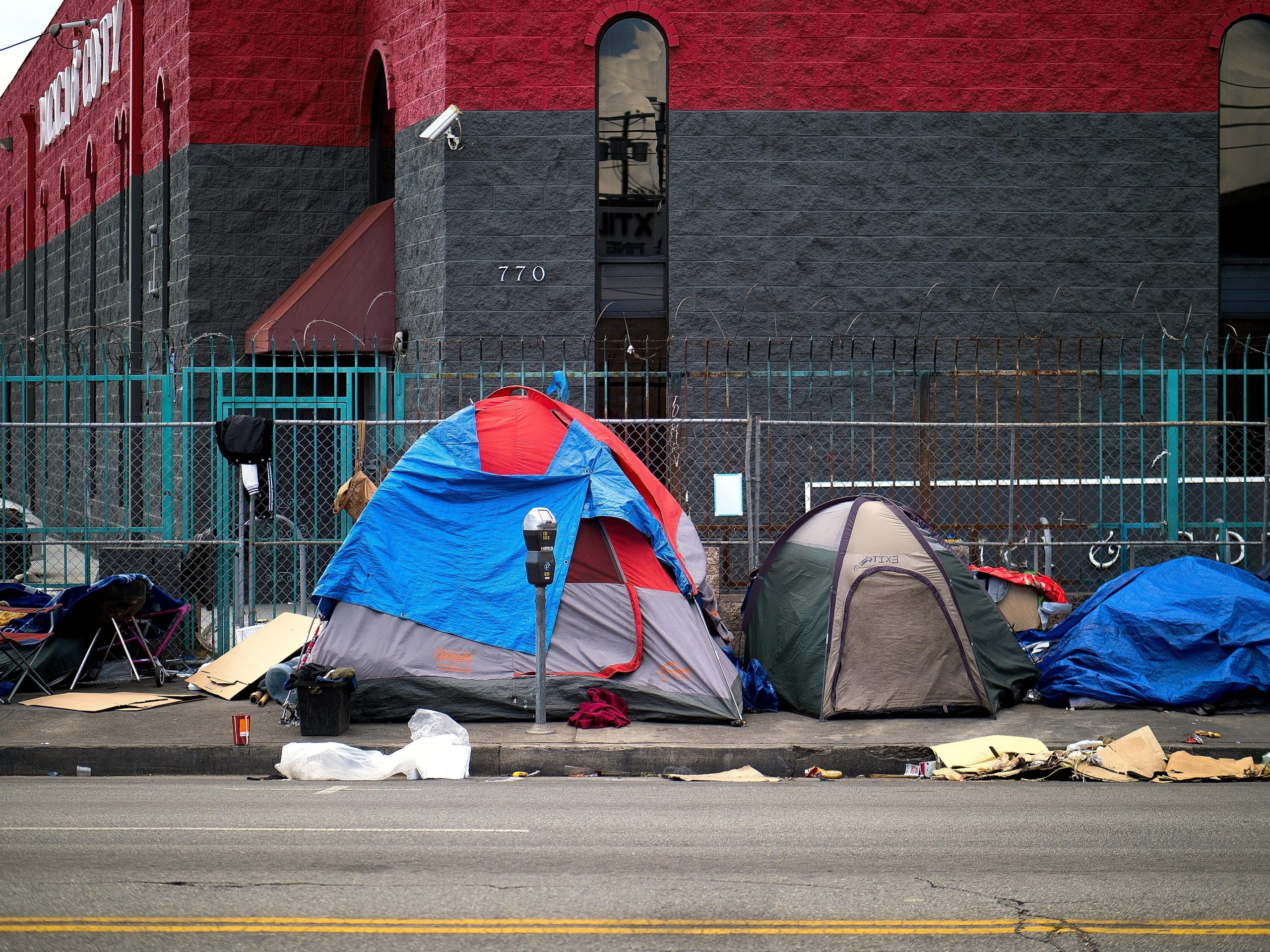
Red flag laws could be a way to help people who are both homeless and in crisis, a recent study found.
The laws, also called Extreme Risk Protection Orders (ERPOs), are used to temporarily take away someone’s weapons if they are at risk of harming themselves or others.
Housing instability was one of the stressors experienced by people who committed a mass shooting between 2016 and 2020, according to a study by the National Threat Assessment Center. Although the majority of mass shooters were not experiencing homelessness at the time they committed the crime, 39% had experienced eviction, foreclosure or some other kind of instability within 20 years of their crime.
Researchers examined ERPOs issued to homeless people in California and Colorado and found that homelessness contributed to their crises. They also found that while an ERPO helped to prevent harm, it didn’t address the other struggles facing the people experiencing homelessness.
That caveat is an important reality for journalists covering these laws. How are they being used? Which population is most often the subject of an ERPO? What are the other issues they’re struggling with?
Findings
Ari Davis, one of the study’s authors, wrote in a LinkedIn post about the study’s findings, which were published in Injury Epidemiology.
Davis and his colleagues reviewed hundreds of pages of court documents and found that ERPOs were used in response to “threats of suicides, mass shootings, and domestic violence; to protect parents, children, ex-partners and former employers, and the respondents themselves,” he wrote.
Researchers learned that several life stressors — like housing instability, mental health needs and substance use — contributed to why an ERPO was issued for the person.
“ERPOs appeared to be a necessary tool to mitigate harm but insufficient at providing support to address the underlying challenges individuals faced,” Davis wrote.
Researchers looked at 36 EPRO cases involving homeless people — 25 in California and 11 in Colorado. Most respondents were men, and roughly half were Black.
Of the reasons for the ERPO, domestic violence was a factor in 44% of cases, suicide in 42%; and mass violence threats in 25%.
Mental health challenges were present in most cases.
In their conclusion, the researchers point out that red flag laws have limited benefits for people in distress.
“Our findings underscore the need for ERPOs to serve not only as a protective measure, but also as a bridge to care,” Davis wrote. “Addressing the injustice of both homelessness and gun violence in our country ultimately demands large-scale strategies that provide housing and wraparound supports to those who are the most vulnerable.”
Resources
- Previous AHCJ coverage on red flag laws:
- This post about Maine passing the 22nd red flag law in the country has several useful details about ERPOs. We also covered a study that looked at the effectiveness of red flag laws being used for suicide prevention.
- The Safer Homes Collaborative is a great source and example of how to employ a credible messenger model when talking about firearm suicide prevention and safe gun storage. It’s a joint effort between firearm owners and suicide prevention advocates to raise awareness that suicide can be prevented through safe firearm storage.
- The BulletPoints Project was established in 2019 by the California Firearm Violence Research Center at UC Davis through a California State Assembly bill. The project was created to teach medical and mental health care providers how to reduce the risk of firearm injury in their patients.