‘The most powerful man in science’: The inside scoop on RFK Jr.
By Cheryl Clark, California Health Journalism Fellow
How does a reporter convince an embattled federal official to talk when the official thinks he’s “a scorpion,” “part of a conspiracy,” and biased against him?
When you’re Michael Scherer, a journalist for The Atlantic, and your profile subject is Secretary of Health and Human Services Robert F. Kennedy Jr., you try to think like him. You see Kennedy’s view of the world — that he sees himself as the hero in his own story, one that includes his recovery from addiction and his personal version of Camelot, “the son of the king.”
Kennedy wanted to get that vision out, so Scherer made the case he could help him do just that.
He promised Kennedy that he would be honest. He would let him know what he planned to publish and give him a chance to tell his side before he pressed send.
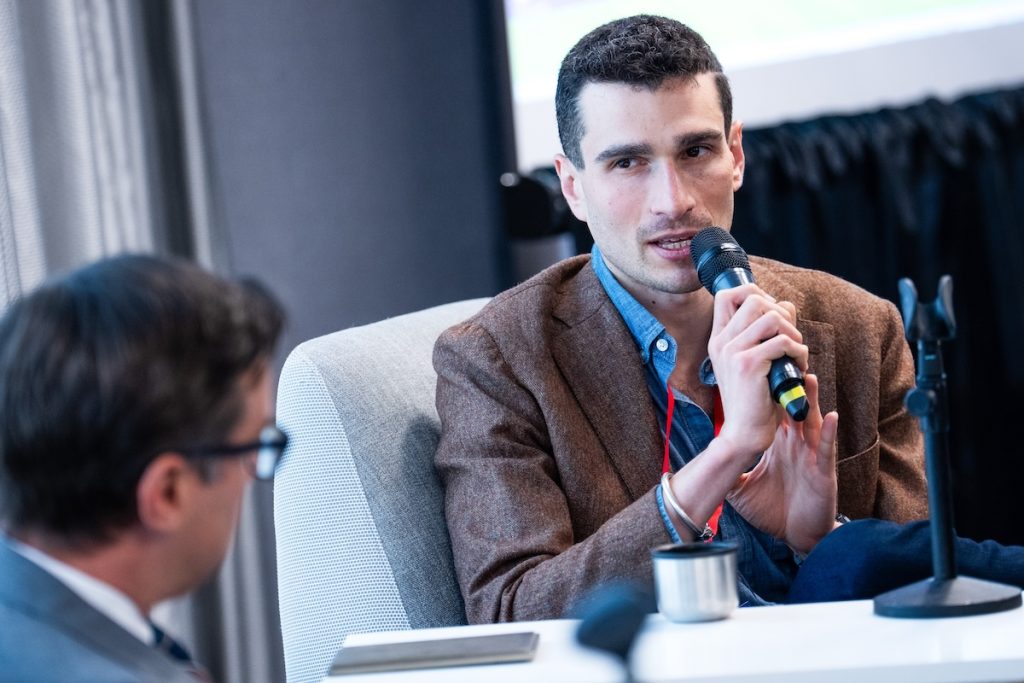
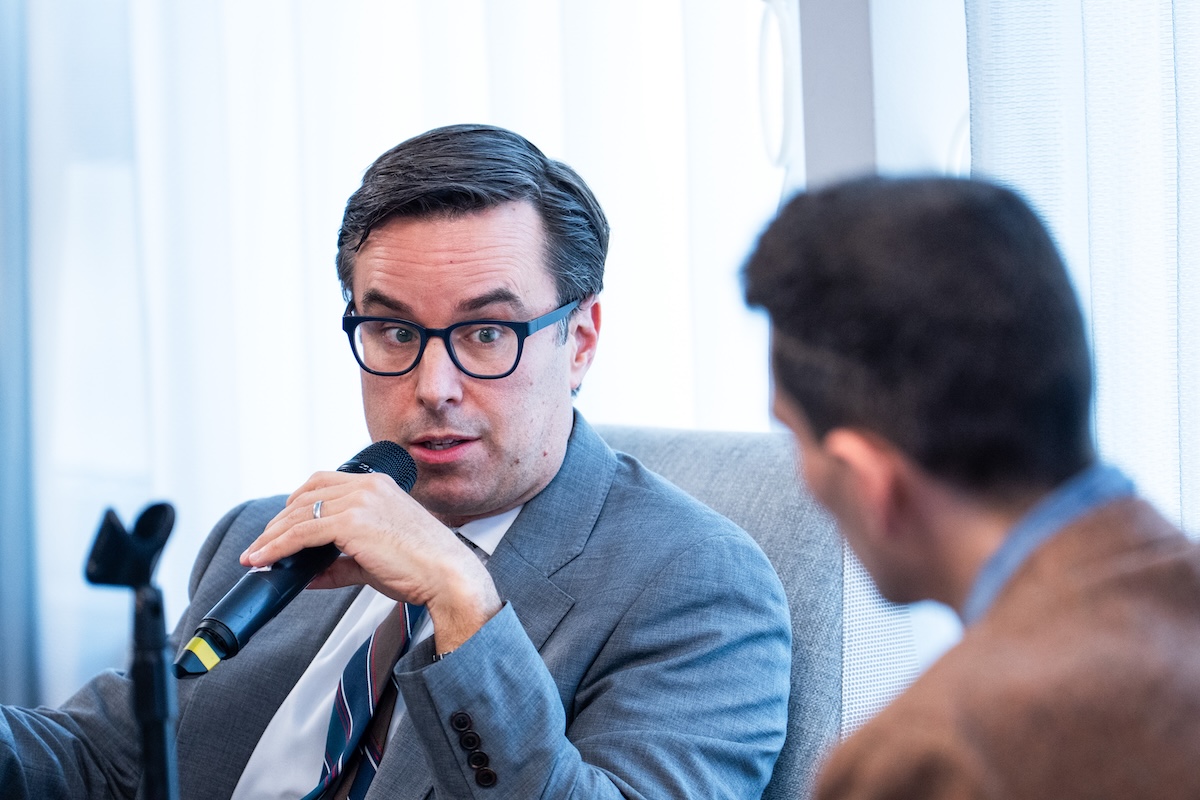
Scherer spoke May 29 with health reporters attending HJ26 in Minneapolis. The session was entitled “’The most powerful man in science’: The inside scoop on RFK, Jr.” and was moderated by Dr. Eli Cahan, a fellow in neonatal intensive care at Stanford University and an award-winning investigative journalist.
Kennedy was extremely difficult, even hostile at times, Scherer told his audience. But the journalist stuck with it, even after an earlier story he wrote during Kennedy’s presidential campaign infuriated him. Kennedy wrote Scherer a 15-page rebuttal.
Rather than give up, the rebuttal made Scherer realize that Kennedy really wanted to talk. “I know you don’t really trust me. We’ve had this bad experience, but I think there’s a story to be told here about why you are the way you are, why you’re doing the things you’re doing,” Scherer said he told Kennedy. “And he was attracted to that idea.”
“The dialog around Kennedy happens in a very polarized environment, he’s like anti-vax, he’s a danger, he’s crazy, he does very bizarre things, or he’s like a truth-teller, crusader standing up to, you know, the evil establishment,” Scherer said. “It struck me that what was really going on was a very personal journey he was on that actually explained his behavior in a way that I hadn’t seen explained elsewhere.”
“It took quite a lot of massaging and negotiation and hours of conversation” to get him to agree. A five-month period of back and forth led to a 10,000-word piece that ran Nov. 23, 2025. “Why Is Robert F. Kennedy Jr. So Convinced He’s Right?”
Scherer said he doesn’t believe Kennedy is actually anti-vax but has a more nuanced position. Kennedy has said he is not anti-vax and acknowledged vaccine benefits. But he wants proof that they don’t cause any harm, Scherer said. “That’s the space that Kennedy…and the vaccine skeptic movement has latched on to.”
Scherer explained several ways in which he gets sources to talk with him. He cultivates sources by hanging out with staff people, sometimes people who would never admit that they hung out with a reporter. Calling nightlife essential, Scherer stated that the most successful reporters in Washington “go to all the parties.”
Cheryl Clark is a medical and science journalist with MedPage Today.