When health and science journalist Nicole Karlis moved to Florence, Italy, in 2024, she started writing about some of her observations on Substack and for local publications. One topic quickly stood out — the everyday habits of Italian grandmothers, or “nonne,” whose lifestyles naturally support longevity. Around the same time, she noticed that the term “nonnamaxxing” was trending on social media, suggesting the subject could resonate with a wider audience.
“There really is a lot to learn from Italian grandmothers,” Karlis thought, “but it goes beyond what looks cool on Instagram.’
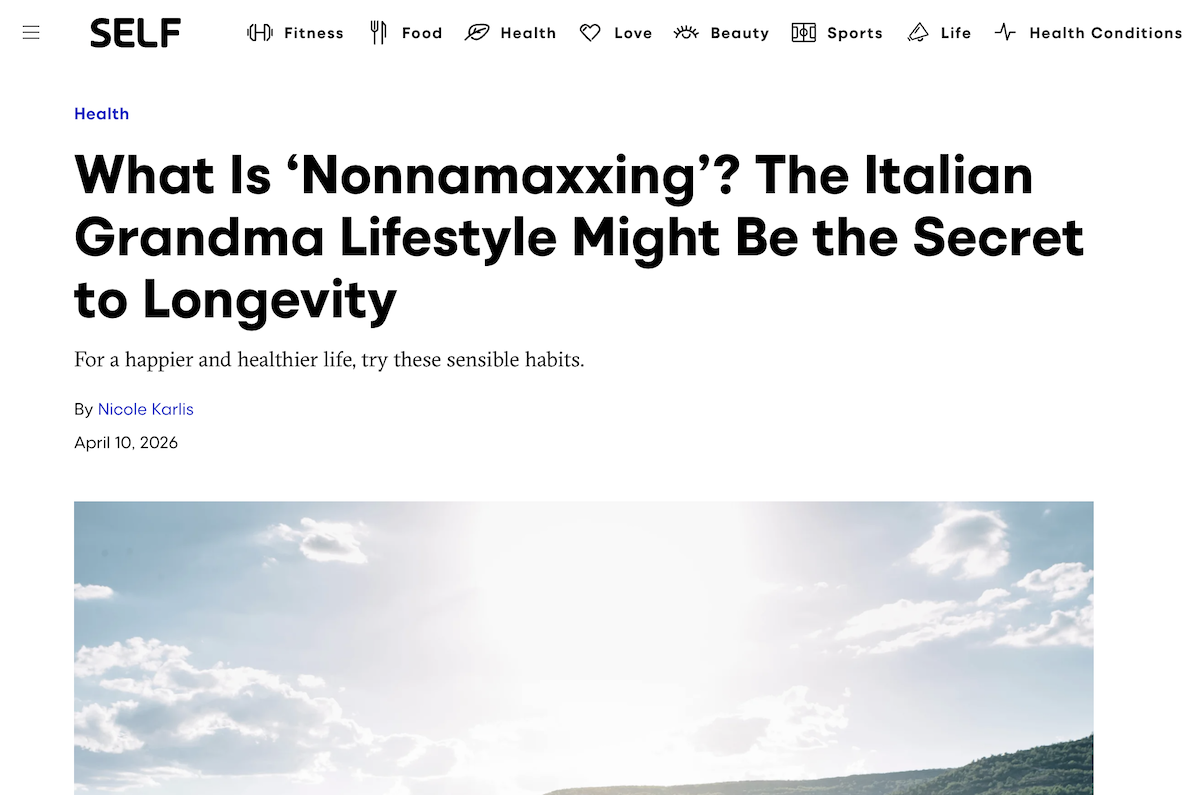
So she pitched the idea to SELF magazine, where it was published in April. It was her first story for the outlet. Days later, the publication announced its closure. The story lived on and was picked up by US Weekly, Glamour and Vice, and referenced on “The View.”
Here, Karlis shares the exact pitch that yielded the assignment, as well as advice about pitching in general — including how to pivot when a publication or editor you like closes their door. Click on the highlighted parts of her pitch for my biggest takeaways from Karlis’s success.
Here’s the pitch:
Dear [editor],
I hope this note finds you well. My name is Nicole Karlis, and I’m a health and science journalist (bylines Salon, NYT Well & Marie Claire) and author of Your Brain on Altruism (UC Press). My portfolio can be found at https://nicolemkarlis.com/writing/, and I’ve included a few relevant clips here:
Medaris: This introduction is short, sweet and professional, with just enough information (as well as where to find more) for the editor to recognize Karlis is accomplished, experienced, and worth listening to. Your opening is especially important when, as in this case, pitching a publication you haven’t worked with before.
- Why Doing Good Is Good for the Do-Gooder | The New York Times
- Defining wellness in Florence | The Florentine
- The online baby sleep boom | Salon.com
I’m writing to pitch a reported service piece examining the social media trend of “nonnamaxxing” — and what women can learn from Italian grandmothers about aging and longevity. On social media, “nonnamaxxing” has become synonymous with wearing cotton nightgowns and eating Italian penicillin soup. But after living in Italy for the past year and a half, I’ve noticed something deeper as a health and science journalist: many habits of Italian nonne (grandmothers) align with research on healthy aging. Italy leads the European Union in life expectancy, and more people in Italy are living to 100. There are real lessons on longevity to take away from the lifestyles of Italian grandmothers that go beyond the la dolce vita.
Medaris: A social media trend contrasted with a personal experience — especially an uncommon one, like being an American living in Italy — is a recipe for a solid pitch.
1. They embrace aging
Medaris: Many freelancers might stop right before this, and say something like, “For this piece, I’ll explore more about what the rest of us can learn from Italian grandmothers, and how the research aligns with their lifestyles.” But Karlis took an important step further by not just saying she’ll explore it; she actually explored it. She essentially presents a strong outline of her piece, which proves that her inkling isn’t just a theory, it’s a real “thing.” Yes, this kind of pre-reporting takes time, but if you really believe in your idea, it’s worth it. It can make or break whether you get an assignment — and make your job easier once you do.
Italian nonne are generally not getting Botox and trying to reverse aging. In Italian culture, aging is seen as a gift, and that’s the mindset Italian nonne carry with them later in life. Why try to erase wrinkles when they’ve been earned? A 2022 study co-authored by experts at Harvard suggests that having that kind of mindset about aging is associated with better health later in life.
2. Nonne are still caregivers
I don’t always see parents at school pick-up. I also see Italian grandmothers. That’s because Italian grandmas are very involved in their grandkids’ lives. And research shows that caregiving later in life is associated with lower mortality rates.
3. They walk everywhere
Italian cities and villages are highly walkable, meaning walking isn’t treated as exercise; it’s just a way of life. A 2025 study found that even 15 minutes of fast walking a day can reduce premature death.
4. They eat seasonally.
In Italy, there is a focus on eating what’s in season. Some nutritionists believe that this strategy provides people with a broader range of nutrients the human body needs to thrive.
5. Community, connection, and gossip
Italian grandmas are known to be “nosy.” But being deeply embedded in their communities may act as a buffer against loneliness, which is a major health risk for older adults. As I once wrote for Salon, good gossip can play an important role in maintaining social cohesion in communities.
For this piece, I would report on each of these points by interviewing researchers in aging, psychology, and public health, while grounding the story in observations from my everyday life in Italy.
I could deliver the piece in 1-2 weeks if approved.
Thank you for your time and consideration.
All my best,
Nicole
Tell me more about how this idea came to you.
I saw an Instagram post about nonnamaxxing, and obviously had some thoughts about it given where I now live and my profession. I also thought that since we live in a culture where wellness means more products and more routines, this health advice actually asks the reader to take a step back and embrace a more grounded approach to wellness.
Why did you pitch SELF?
I thought the idea would be perfect for SELF [which is known for trustworthy, tangible wellness content]. I wanted it to be a fun service health piece with practical advice. I saw it as a way to define and further a social media “-maxxing” trend that seemed to be the antidote to other “maxxing” trends.
How quickly did it get accepted?
The editor responded within a couple of days. From there, we workshopped the angle a little more — focusing on how I’d report on this through the lens of longevity. She asked me to get some quotes from Italian grandmothers on the ground, too.
Why do you think the pitch was successful?
I think it helped that I’m a health journalist living in Italy who’s familiar with research on aging and longevity. I also think it hit a cultural nerve and speaks to where we are with wellness in America right now.
How do you think the published story turned out?
I was really happy with the final piece. I think adding quotes from Italian nonne made it stronger. We also ended up adding one more section on living mindfully as my reporting came through.
What else do you want freelancers to know about pitching in general?
When you’re trying to break into a new publication, it helps to have as much of the story thought out as you can and a very strong angle.
Why do you think the story attracted other media outlets to pick it up?
I did not expect this article to get so much attention. But I think it really resonated with people because we are in a culture where we are always being sold a new health trend that could be the “secret” to longevity. When really, maybe, we don’t have to be trying so hard.
Now that SELF has folded, where might you pitch similar stories in the future?
I was working on a new pitch for SELF, but I’ll have to shape it differently for another publication now — maybe Cosmopolitan or Glamour UK. I think the best thing you can do as a freelancer [to adjust to an ever-changing journalistic landscape] is try to diversify your portfolio so you have a range of editors to work with.