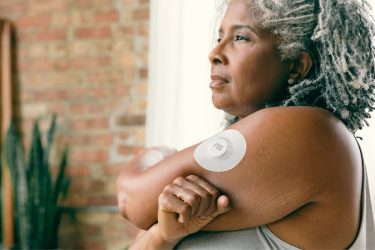
Across the country, researchers are working on numerous artificial intelligence-based research projects that could improve care and health outcomes for older Americans. Some technologies include robotic “exosuits” that help seniors stand and walk, smart home cameras that can detect movement and falls, and wearable devices — including in shoes — to monitor gait and balance.
The program is funded by the National Institute on Aging, a part of the National Institutes of Health, through a program called the Artificial Intelligence and Technology Collaboratories for Aging Research (AITC). The AITC earmarked $40 million to fund promising AI-driven AgeTech projects, including tools for social isolation and loneliness, and algorithms to predict certain health outcomes or help with early diagnosis. For health care reporters, the initiative offers opportunities to examine how AI technologies aimed at older adults are moving from federally funded pilot projects into hospitals, homes and caregiving settings nationwide.
The NIA funded three AITC centers — at Johns Hopkins, the University of Pennsylvania and the University of Massachusetts Amherst. Together, the three centers are part of the a2 Collective that holds an annual symposium and webinars on the work and funds promising pilot studies nationwide.
“The NIA was at the forefront way before the hype about generative AI and large language models,” geriatrician Peter Abadir, M.D., an associate professor of medicine at the Johns Hopkins University School of Medicine and co-principal investigator of the Johns Hopkins Artificial Intelligence and Technology Collaboratory for Aging Research (JH AITC) in Baltimore, said in an interview.
Smart technologies for independent living
Smart homes, or embedding sensors or motion detection technology in homes, is one big area of focus, said George Demeris, Ph.D., director of the Penn Artificial Intelligence Collaboratory for Healthy Aging (PennAITech) at the University of Pennsylvania, in an interview. This includes bed sensors to provide information on sleep patterns and restlessness, or door and window sensors that detect when people come and go. Observing how many times a person gets up to use the bathroom at night could indicate a urinary tract infection, he said, and help clinicians intervene before hospitalization is needed.
How AI could spot health risks earlier
“Right now, our health care system is somewhat reactive, so we’re waiting for something bad to happen, and a person to fall or experience another event, and then we try to minimize the impact of that,” he said. In a more proactive approach, smart technologies could help identify changes in behavior or movement so interventions could happen sooner. Depth sensors, for example, provide a silhouette of the person as they move. By studying stride length, gait speed and balance, researchers could calculate a fall risk score, Demeris said. They also can see where seniors are leaning on unstable furniture to help them rise up from a chair.
“I think we will have some form of AI in every home,” he said.
Busting stereotypes about seniors using technology
There is a big myth that older adults will not use technology, said Abadir and Demeris. The Johns Hopkins AITC has a registry of 900 older adults who like to learn about what new tools are being tested, Abadir said. “They always want to play with some of those technologies, so they are open to trying and learning more,” he said.
Older adults they have spoken with say they want independence, and to stay home and stay sharp, Abadir said. They want tools to help them perform daily tasks at home. The technologies don’t have to be complicated, he said, even helping with simple things like opening a jar.
This is especially important for people living in rural areas, according to Jason Karlawish, M.D., professor of medicine at the University of Pennsylvania Perelman School of Medicine and director of the Penn Memory Center. “Technologies offer a lot of opportunity and promise, removing barriers of travel and distance, getting people access to the right clinicians, and monitoring for problems that are not currently well monitored for.” Continuous monitoring through AI technology also offers opportunities to help a person understand whether they’re experiencing cognitive issues, which could be helpful for early detection and diagnosis, he said.
Seniors get a say
The Johns Hopkins AITC has a council of older adults, physicians and insurance company representatives that weigh in on what matters most to seniors and reviews technologies in development, Abadir said. Another core within the center works with companies to take products that seem promising into a studio to work with engineers and some older adults to try them out and make them feasible, he said.
When it comes to wearables, older adults don’t want to wear items that look like medical devices, Demeris said. “People don’t like to wear something unless it’s a fancy Apple Watch that their grandson also wears,” he said. But seniors are becoming more comfortable with technologies like motion sensors that are already are embedded in retirement communities, he said. “People are more welcoming of passive sensing technologies when it’s framed as technologies that will help you stay independent and promote wellness, versus technologies that are going to tell you when you deteriorate and you’re not doing as well.”
Design for the user is important in technologies, the experts said. One company that Johns Hopkins worked with developed a non-camera Wi-Fi system that scans the home every 10 seconds to detect movement. As a resident moves around, it disturbs the Wi-Fi signal, so an algorithm can detect how fast the person gets around, if they fall, their heart rate and breathing, Abadir said. It can send a warning to an emergency contact if adverse events such as falls occur. “Why is that a cool technology that we funded with a pilot? Because a lot of older adults don’t want cameras but want to stay home safe,” he said.
By contrast, they trialed a headband designed to enhance sleep. But the interface it had was so complicated that seniors didn’t want to use it, so they provided that feedback to the manufacturer.
One of the biggest challenges in helping older adults adapt to AI-enabled tech is the lack of a qualified workforce to help people select, use and set up technologies, Karlawish said.”There’s a real role for a profession that will help people pick and use and set things up. And not just a tech geek, but a brain geek, who’s going to address what you need.”
Unfortunately, there’s a real gap in some of the information AI devices collect and what actually makes it to the physician, he added. “It’s like a firewall between everything that could be monitored and what makes it into someone’s electronic medical record. It’s still something that needs to be addressed,” according to Karlawish. “The problem isn’t enough data. The problem is integrating it, culling it, sorting it and organizing it.”
Localizing the story
Journalists could find multiple story ideas from the research ongoing at these centers, and can find ways to localize the story. Although the three centers are in Boston, Baltimore and Philadelphia, they are funding multiple pilot projects at other universities across the country. Johns Hopkins has funded research projects on AI technologies across 45 states, Puerto Rico and the Virgin Islands, according to a recent article in the Johns Hopkins HUB publication. As of December 2025, the projects have resulted in 42 published research papers and brought seven new products to market, the article said. Some 45% of pilots are being done in startup companies, nearly half of which are women-owned, Abadir said.
A recent announcement from the Penn center mentioned they had awarded $2.47 million in new grants to 10 research teams nationwide. Some funded projects are developing a multi-agent AI system to explain lab results to older adults, providing conversational AI agents to support the mental well-being of caregivers of people with Alzheimer’s disease, and developing AI nutrition support for people with dementia in adult day centers.
Karlawish suggested these additional angles to explore:
- Dementia care transformation: How technology is changing diagnosis and care for diseases like Alzheimer’s, Lewy body disease and frontotemporal dementia.
- Caregiving workforce: Frame the story around Rosalynn Carter’s observation that everyone will either be a caregiver or need care; use this as an entry point to discuss home technology solutions.
- Smart homes: Rather than focusing on individual conditions (falls, sleep), tell the broader story of how homes are being rewired and redesigned for aging populations.
- Self-driving cars: This could be a boon for people with mild cognitive impairment and help them maintain independence. But many questions remain about issues like safety, personal identifying information and fraud.
Good questions to ask
Abadir discussed questions he asks as part of his vetting process with companies looking to market new technologies to seniors. Journalists can adapt many of these questions in their reporting:
- Can you show me the technology and how it works?
- How many older adults was this tested on, or are you testing this on?
- What kind of validation studies did you do? What were the results?
- What were the inclusion and exclusion criteria? (Meaning, what were the characteristics of seniors included in the testing versus those that were deemed ineligible?)
Resources
- Leveraging Artificial Intelligence for Healthy Aging and Dementia Research – National Institute on Aging
- Empowering Innovation in AI/Tech + Aging – NIA a2 Collective
- Hopkins Funds AI Research Across the Country to Support Aging Patients – Johns Hopkins HUB
- A New Approach to Healthy Aging – Johns Hopkins Engineering magazine
- $20 Million for AI-Driven Technological Health Solutions for Older Adults – Penn LDI news release
- A Smarter Future for Seniors: PennAITech Invests $2.47M in AI for Healthy Aging – Penn Nursing news release
- PennAITech Awards $2.3 Million for AI Research to Support Aging – Penn Nursing news release
- Aging in the Age of AI – UMass magazine
- Massachusetts AI and Technology Center Funds 11 Pilot Projects Totaling $2.3 Million – UMass news release
- Massachusetts AI and Technology Center Funds First Seven Pilot Projects – UMass news release