For many women, menopause is a condition they’re told to expect in their early 50s — a gradual, sometimes uncomfortable transition that marks the end of the reproductive years. But for a significant number of women, that timeline is very different. Some enter menopause as early as their 30s. And the likelihood of that happening is not evenly distributed.
Black women are about three times as likely as white women to experience premature menopause, according to a recent study published in JAMA Cardiology. And mounting evidence suggests that women who experience menopause earlier face higher rates of atherosclerotic cardiovascular disease, type 2 diabetes, osteoporosis, mood disorders and even certain cancers during and after menopause, compared to their white counterparts, according to research from The Lancet.
That connection between reproductive timing and chronic disease is one of the most underreported stories about menopause, often discussed in terms of hot flashes and mood changes alone. But the research makes clear that the timing of menopause is a meaningful predictor of long-term health. Especially for some women of color, earlier menopause may be one piece of a larger cardiovascular risk profile that includes higher rates of hypertension, diabetes, and stroke.
Many women of color say they lack information to make appropriate care decisions, and that too often, doctors are not well-versed about these issues, according to preliminary findings from the Black Women’s Health Imperative. The organization conducted a national cross-sectional online survey of some 1,500 U.S.-based Black women ages 30 to 65.
More than half of women surveyed (52%) said they were unsure of which recommendations to follow and more than 4 in 10 (43%) said they experienced discrimination while seeking care. Respondents also said they lacked culturally grounded education starting in their 30s, affordable treatment options, access to trusted providers, and safe spaces to share experiences.
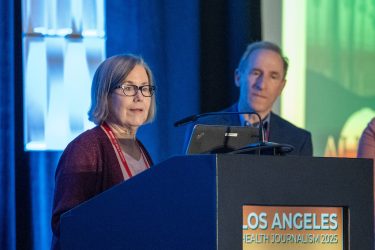
This survey lays bare what too many of us already know: Black women are navigating menopause with too little support, too few resources, and not enough trusted information.
Joy D. Calloway
President and CEO
Black Women’s Health Imperative
What journalists can do
Health journalists have an opportunity to widen the frame of these stories by treating menopause timing as a clinical signal, not just a life stage. That can mean asking sources about age at menopause alongside traditional risk factors when reporting on heart disease, pressing researchers on whether their data are stratified by race and ethnicity, and examining whether clinicians are trained to recognize early menopause as a red flag for future cardiovascular risk.
It also means looking beyond individual behavior and into the conditions shaping these outcomes: access to preventive care, exposure to chronic stress, and differences in treatment for menopausal symptoms. Even small shifts in framing, like including menopause timing in a patient narrative or sourcing both cardiology and gynecology experts in the same story, can help audiences understand how closely reproductive health is tied to long-term disease risk.
One of the most comprehensive datasets on menopause in the U.S. has consistently found that Black women reach menopause earlier than white women and report more frequent and severe vasomotor symptoms, such as hot flashes and night sweats. They also experience higher rates of sleep disruption and depressive symptoms during the transition. These differences persist even after adjusting for socioeconomic factors, pointing to a complex mix of biological, environmental and structural influences.
Further disparities
Other populations of color show similar patterns, though they are less frequently covered. Analyses of SWAN data and related studies indicate that Hispanic women also tend to reach menopause earlier than white women, and may experience distinct symptom profiles. Some evidence suggests that Asian American women report fewer vasomotor symptoms on average, though this varies widely across subgroups and may reflect differences in reporting, culture, or study design rather than underlying biology alone.
Women of African and Caribbean descent also experience a longer menopause transition, have the highest prevalence and longest duration of vasomotor symptoms, that are also more severe, and are more likely to sleep less and wake up more often through the night.
Evidence increasingly points to chronic stress and structural inequities as among the contributors to these disparities. The “weathering” hypothesis — the idea that cumulative exposure to stress accelerates biological aging — has been pointed to as an explanation of Black and Hispanic women’s earlier reproductive aging.
Studies examining perceived discrimination have found associations between higher levels of reported racism and earlier onset of menopause. This line of research is still evolving, but it underscores that menopause timing may reflect lived experience as much as physiology.
There are also gaps in care that journalists can pay attention to. Despite experiencing more severe symptoms, Black women are less likely to receive hormone therapy or other treatments for menopause-related symptoms.
Barriers include access to care, differences in provider counseling, and longstanding mistrust of the medical system. These disparities in treatment can compound the health effects of earlier menopause, leaving some women to manage both more intense symptoms and higher long-term risk with fewer resources.
Another underexamined issue is how research itself may obscure disparities. Many menopause studies enroll women in midlife, which can inadvertently exclude those who experienced menopause earlier. This can lead to underestimation of racial differences in menopause timing and outcomes, especially for Black and Hispanic women. For journalists, that’s a reminder to ask how study populations are defined and what group of women may be missing.
The takeaway is straightforward: menopause does not unfold the same way for everyone.
Who experiences it earlier, who has more severe symptoms, and who faces greater downstream risks are all shaped by race, ethnicity, and the conditions in which people live. Covering those differences with clarity and context can help audiences — and clinicians — better understand how women really experience menopause.
Resources
- SWAN Study
- The Menopause Society (formerly the North American Menopause Society
- Reframing menopause by honouring the lived experiences of Black women, The Lancet Obstetrics, Gynaecology, & Women’s Health (2025)
- Perimenopause and/or menopause help-seeking among women from ethnic minorities: a qualitative study of primary care practitioners’ experiences, British Journal of General Practice (2023)
- African American women’s experiences of menopause: A focus group study, Maturitas (2024)