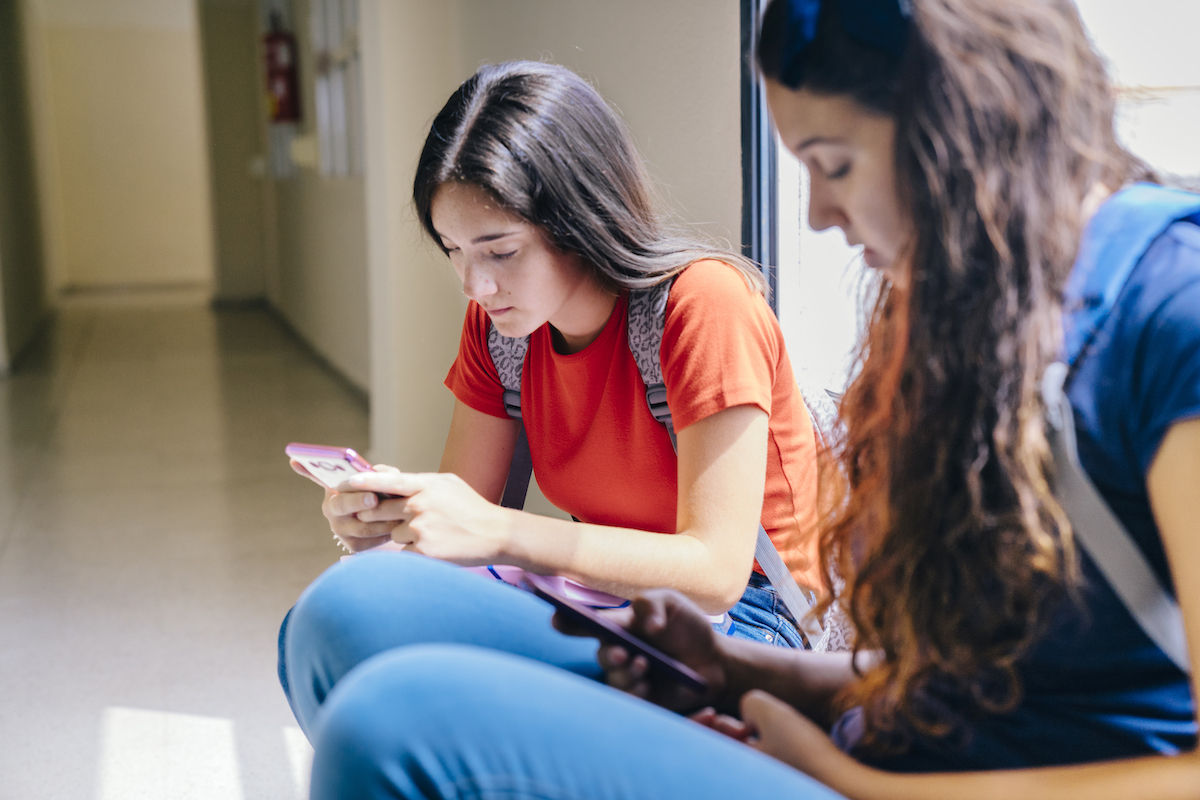
The debate over banning cell phones in schools is often framed as a classroom management issue — a tug-of-war between distracted students and frustrated teachers, or between anxious parents and wary administrators.
However, journalists should also examine whether “bell-to-bell” phone restrictions designed to improve student well-being could unintentionally exacerbate disparities in health, education and opportunity. A recent editorial in JAMA Pediatrics urges readers to examine both what is known and what is not known about cellphone restrictions in schools.
What we know vs. what we don’t
Schools are key sites where policies shape adolescents’ mental health, safety, social development and exposure to disciplinary systems that already disproportionately affect students of color.
Early evidence suggests that cellphone restrictions may modestly improve attendance or test scores in some schools. But they can also bring unintended consequences. In one large Florida district, suspensions increased in the first year after restrictions were implemented, especially for Black students, suggesting that enforcement of new discipline rules can exacerbate existing inequities in school discipline.
Rates of anxiety, depression and loneliness among teens have risen over the past decade, alongside the near-universal adoption of smartphones and social media. That parallel trend line has made devices an appealing policy target. If youth mental health is in crisis, and smartphones are ubiquitous, then restricting them during the school day can seem like a straightforward intervention. But public health is rarely that simple.
A deeper dive
While heavy social media use has been associated with sleep disruption, cyberbullying exposure and symptoms of anxiety and depression, the evidence linking school-based phone bans to improved mental health outcomes is far less clear. Restricting access during school hours does not necessarily reduce overall screen time. Nor does it address the complex ecosystem of social pressures, online platforms and offline stressors that shape adolescents’ lives.
When stories focus narrowly on whether students can text during math class, they risk missing the broader public health context: sleep hygiene, physical activity, social development, family dynamics and community support. A phone ban may change the texture of a school day. Whether it meaningfully shifts population-level mental health trends is a different question entirely.
That distinction is important because public health interventions are judged by measurable impact rather than by intention. If bans are positioned as solutions to a youth mental health emergency, reporters should ask what outcomes are being tracked and over what time frame. Are districts measuring depressive symptoms? Attendance? Academic engagement? Bullying reports? Or are they relying on anecdotes and visible calm in hallways?
Widen the lens
Smartphones are not only linked to mental health concerns; they intersect with injury prevention, online exploitation, sedentary behavior and sleep deprivation. At the same time, they provide connection, access to health information and, for some teens, vital social support. Public health reporting must hold both realities at once.
The way journalists frame this story will shape how the public understands the issue. When coverage frames cell phone bans as just another culture war — with phones serving as the latest symbol of generational decline — it overlooks the more important questions about evidence, equity and unintended consequences.
A better approach is to treat these policies as population-level experiments in adolescent health. For example, you can talk with students about how the rules affect their school day, ask pediatricians and mental health researchers what the evidence actually shows, and check in with teachers who enforce the policies and parents who worry about staying in touch with their kids. The story then becomes how society responds to a youth mental health crisis, how evidence informs policy and how schools function as public health settings.
It also means asking who is most affected by the bans. Are schools tracking whether discipline for phone violations falls unevenly across race, gender and ethnicity? Do girls and boys experience the policies differently, given research suggesting social media pressures affect them in different ways? Are students in lower-income districts more likely to face suspensions or other consequences? And how might the impact look different in rural communities, where phones may be essential for transportation or family communication, compared with affluent suburban districts? Framed this way, the story becomes about how schools are responding to a youth mental health crisis, and whether the solutions being proposed help all students or leave some behind.
Additional resources
- “School Cell Phone Bans: Listen to Researchers and Stakeholders,” Albert Shanker Institute
- “10 Policy Recommendations To Address Cellphone Use in Schools,” Center for American Progress
- “Principals See Many Benefits of Cell Phone Policies, but Youth Remain Skeptical,” RAND
- Take Cellphones Out of the Classroom, Educators Say,National Education Association