Each year at The Association of Health Care Journalists’ annual conference, freelancers clamor for slots in PitchFest, an energizing afternoon that allows writers to pitch their story ideas to editors face-to-face. The speed-dating-style event is an increasingly rare opportunity for independent journalists to meet editors in real life — and it pays off.
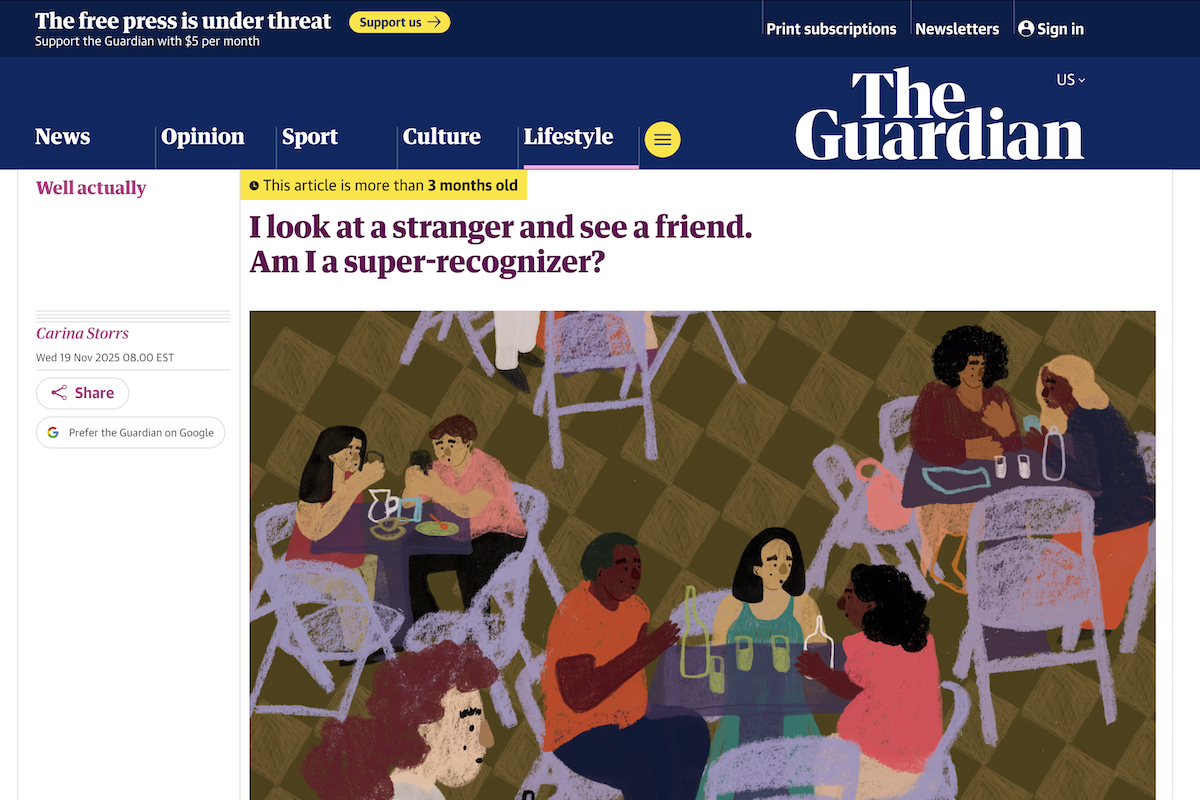
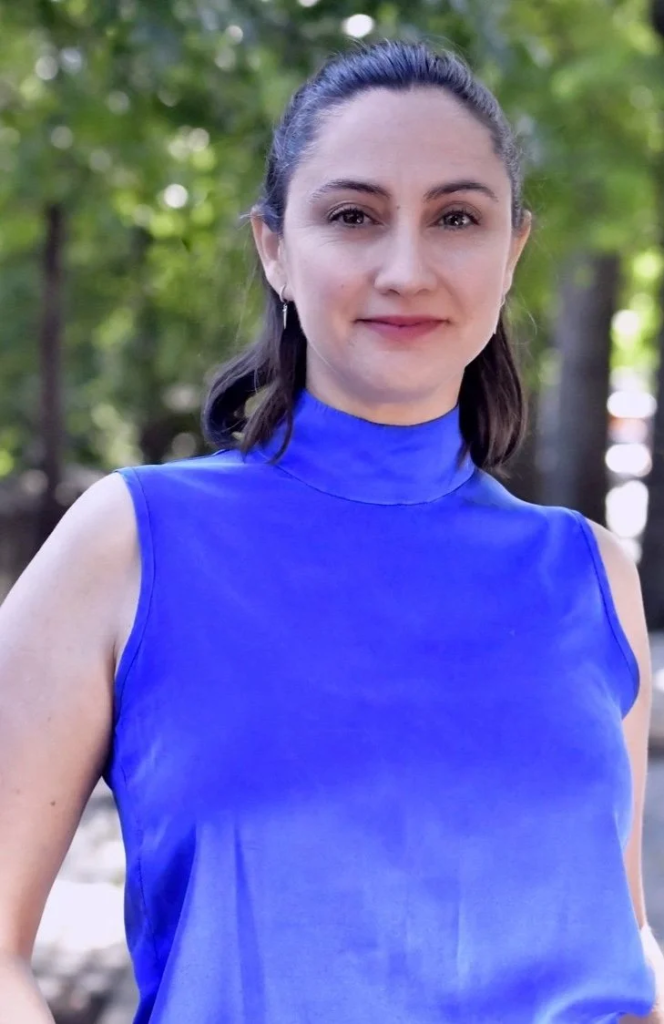
Last year, Carina Storrs, a freelance health and science journalist in New York City, shared an idea with an editor from the Guardian at PitchFest, and the ensuing correspondence landed her the assignment. Here, Storrs shares more about how the brief meeting became a published story and reveals the exact pitch that anchored it all. Click the highlighted parts of the pitch below to see my commentary on why it’s a winner.
This interview has been edited for clarity and brevity.
What was your story idea, and how did you come up with it?
I keep a list of random story ideas in a spiral notebook on my desk. It includes things that come up while talking with friends or that I wonder about the world. I’d been wondering for a while why I think people who are probably (and sometimes certainly) strangers look so familiar. I thought I might be a super-recognizer, or maybe the opposite, which is known as being face blind.
I thought that exploring the question could make a good reported essay. But I didn’t really start digging into it until I landed a time slot with an editor at the Guardian at PitchFest. If I’m pitching a new publication or exploring a topic that’s new for me — or, in this case, both — I often need the motivation of a scheduled meeting to put in the pre-reporting work.
Why did you think this idea was right for that publication?
Ahead of PitchFest, I saw that the Guardian’s Wellness column runs a lot of fascinating personal essays. I thought my idea might fit nicely there. I was also encouraged when I looked up the people who wrote recent essays and saw that some of them were freelancers.
How did the meeting go?
The editor said he liked the idea and asked me to email him and their wellness editor a written pitch. This outcome is the best I hope for from PitchFests — it’s rare to get an assignment on the spot.
A few days later, I emailed them the following pitch:
Reported Essay Idea for The Guardian US: I see familiar faces everywhere. What is going on?
Carina Storrs, Ph.D. From AHCJ PitchFest on May 30, 2025.
Who doesn’t love seeing a familiar face! So maybe my brain is trying to do me a favor when it “recognizes” people I’ve never seen before. But it can be embarrassing if I don’t rein in a friendly greeting before I realize—no actually, we’re strangers.
Medaris: Storrs could have chalked up these experiences to a random personality quirk or not pondered them at all. But it takes a journalist with her storytelling instincts to notice a pattern, get curious about what it means, and turn it into a pitch. It’s a good reminder that not all or even most health-related personal essays are about earth-shattering revelations or diagnoses.
Like the time years ago my friend had to convince me our favorite bartender was not moonlighting as an Amtrak agent about to take our tickets. Or the time the other day I was convinced I was sitting next to Christian Slater and his young daughter on the bus until a quick Google search revealed that Christian Slater’s daughter is in her 20s.
Moments like these make me jealous of super-recognizers. The lucky few who never forget a familiar face, and also don’t mistake random people in coffee shops for acquaintances.
But as experts have been realizing over the last decade, there is a wide range of abilities to recognize faces, with super-recognizers at one extreme and those with prosopagnosia or face blindness at the other. The development of face memory tests laid the groundwork for studying the extremes and also revealed that the majority of us who are in between can really be all over the map.
Researchers are getting the first hints at what may explain my quirk of seeing acquaintances and celebrities in strangers.
Medaris: Here, Storrs smoothly and efficiently helps answer, “Why now?” or “What’s new?”
I spoke with Mike Burton, a psychology professor at University of York whose research focuses on face recognition. He says it seems there are two distinct abilities: remembering a face you’ve seen before (I’m pretty good at that!) and determining when you’ve never seen a face before (my downfall).
Medaris: It’s a green flag for editors to see that you’ve already done some legwork to connect or even interview a source. One time-saving trick for this, I’ve found, is to run an idea by a source who’s already on the phone for a different story. You can get a quote or something to paraphrase for a pitch, but save an official interview for if and when it gets a yes.
But wherever a person’s ability, there is probably little chance for improvement, according to Burton. Courses that promise to train police officers and passport agents to be better at matching people with photos don’t work, as his research has shown. Efforts to help those of us who confuse strangers for familiar faces would likely also fall short.
I’d like to write a reported essay for The Guardian Health/Wellness section. I would use my quirk as an excuse to delve into the growing understanding of the diversity of face recognition abilities, why it may be very difficult—or impossible—to improve, and why it is important to understand our limitations (so prosecutors etc don’t put too much weight on witness testimony).
I would like to include points and research from Mike Burton, Joseph DeGutis, a Harvard cognitive neuroscientist, and Meike Ramon, a neuroscientist at the Bern University of Applied Sciences in Switzerland.
What happened after you sent the pitch?
I didn’t hear back for a couple of months, and checked in by email twice over that period. I started thinking about other places to pitch it. But finally, I got an email from the wellness editor saying she liked the idea and had a couple of questions, like how common the phenomenon is. I did a bit of digging to answer her, and two weeks after responding, she assigned it.
Face recognition got a lot of attention a few years ago when stories were coming out about super-recognizers, including an essay in the Guardian that I linked to in follow-up emails to the editor. There was also a flurry of face blindness stories in all kinds of news outlets a while ago. What I experience fits somewhere between those two extremes, and it is a different kind of quirk that hasn’t really been covered.
Why do you think the pitch was successful?
I like to think that sharing the embarrassment I sometimes feel, as well as a couple of specific examples, helped sell the idea. Talking with a couple of scientists before pitching was helpful, too, because it was such an obscure topic. It probably reassured the editor that there were experts out there in face recognition who would be appropriate and willing to weigh in for the essay.
How did the story turn out compared to how you imagined it would when you pitched it?
The essay ended up being even more about my experience than I had envisioned. In it, I described the different facial recognition tests I took, what they were like and how I scored. The editor pushed me to go further into what research tells us about how face recognition works, why I have the quirk that I do and how it affects my life. It was tricky weaving everyday experiences in with some pretty technical science, but it made the story stronger.
The editor wanted to include other people in the story who “recognize” strangers as I do. Finding someone was tricky since the phenomenon has mostly been studied in people who have serious neurological conditions. I’m lucky that a researcher mentioned Jenny to me, and very grateful she shared so much of her story.
While the pitch includes how important face recognition is for security and other aspects of society, I didn’t end up including that in the story. As I was reporting, I realized it didn’t tie in closely enough with my experience and would have been a distraction.
What pitching advice do you have for other freelance journalists?
Try as much as you can to get face time with editors. PitchFests at journalism meetings, whether in-person or virtual, are one way. But any meeting or event with editors is an opportunity. I’ve emailed editors a few weeks before various events I knew they’d be attending, and asked if we could get coffee and chat about story ideas. If they say yes in situations like these, you’ve got their attention and you’re almost guaranteed to get some kind of feedback, whereas real feedback over email is hard to come by. Plus, I’m more likely to get a response to emails I send later if the editor has met me in person.