
When aspiring journalists used to ask me how I got my ideas, I worried they were pursuing the wrong profession. After all, I’m a writer largely because there are so many stories I want to tell. Whether it’s the middle of the night or the middle of a shower or the middle of eavesdropping on a stranger’s conversation, I’ve never been at a loss for what to pitch next.
But I’ve come to learn that many journalists I admire came into the field for other — and frankly, more selfless — reasons, like a deep-seated drive to pursue the truth or the ability to write with breaking-news speed.
So in the spirit of learning from one another, here are a few key ways I’ve accumulated story ideas — and spun them into the kind of pitches that secure assignments.
1. Find the intersection between your interests and cultural buzz
For the last few years, readers (and therefore editors) have been eating up stories about GLP-1 drugs like Ozempic. Viral stories have explored how the meds are affecting relationships, the restaurant industry, beauty standards and more. I too have written about family dynamics and substance misuse in the age of Ozempic.
So, as a freelancer, I thought: What’s a community I’m interested in, and how are GLP-1s affecting it? Bingo: My pitch, and subsequent feature, about the drugs as the latest “member” of your run club for Women’s Health, which was recently recognized by the American Society for Journalists and Authors.
2. Say the thing everyone’s thinking
Sometimes, a story idea is almost so obvious it doesn’t seem like a fresh idea at all. But if it hasn’t been captured in print, or delivered to a particular audience, it just may be a gem hiding in plain sight.
Case in point: As a woman in my 30s, I’ve been talking to my partner and friends for years about being “on the fence” about having children. It’s the conversational pool I’m swimming in.
But while news outlets have thoroughly covered declining fertility rates and the child-free movement, few if any had zeroed in on the many of us stuck in the middle. Hence my pitch to — and yes from — the American Psychological Association’s magazine on “fence sitters.” (As a bonus, I was paid to talk to therapists about an issue that’s top-of-mind in my life — not the other way around.)
3. Give it a name
Speaking of “fence sitters,” sometimes a catchy name for a common conundrum is what it takes to crystallize an idea and catch an editor’s attention.
That thinking is what drove my story for Vox about “emotional hangovers.” If, in my pitch, I’d said, “I’d like to write about the physical and mental repercussions of an emotional event,” I’d have surely heard crickets. Instead, I described the pit-in-the-stomach feeling I get after a tough conversation or even after watching a heavy movie, and gave it a name: an emotional hangover. The editor was in.
The same reasoning applied to stories on things like whether “strong is the new skinny” and how “zoom dysmorphia” is affecting body image.
4. Reverse engineer
As a long-time reader of New York Magazine, I noticed its “How I Got This Baby” series continue to pop up on my feed. The as-told-to column features people who became parents in unconventional ways or under unusual — if not dramatic or totally dire — circumstances.
Well, I know people like that! But, I wouldn’t have necessarily thought to pitch their experiences without a model for how and where that kind of story could run. The result was this piece about a polyamorous woman who got pregnant at the same time as her female partner. I’ve got one more piece for the series in editing.
Other segments I keep my eye on include the New York Times’ “Letter of Recommendation,” The Washington Post’s “The Upgrade,” and HuffPost Personal.
5. Repurpose your expertise for different audiences
Back to Ozempic: I’d covered the drug for mainstream publications like Business Insider and Women’s Health, and so I had a good understanding of how the shots work and the nuanced discussions around it. I also knew that its psychological and mental health effects were top of mind for users and health care professionals alike. So why wasn’t the American Psychological Association’s magazine, which I’ve long contributed to, covering it? That thinking led to my pitch and multi-page feature in a recent issue.
The reverse thinking can yield results, too, though I suspect that’s more obvious: The expert you interview for a trade can tip you off to an idea that’s mind-blowing to the general public.
6. Seize the moment
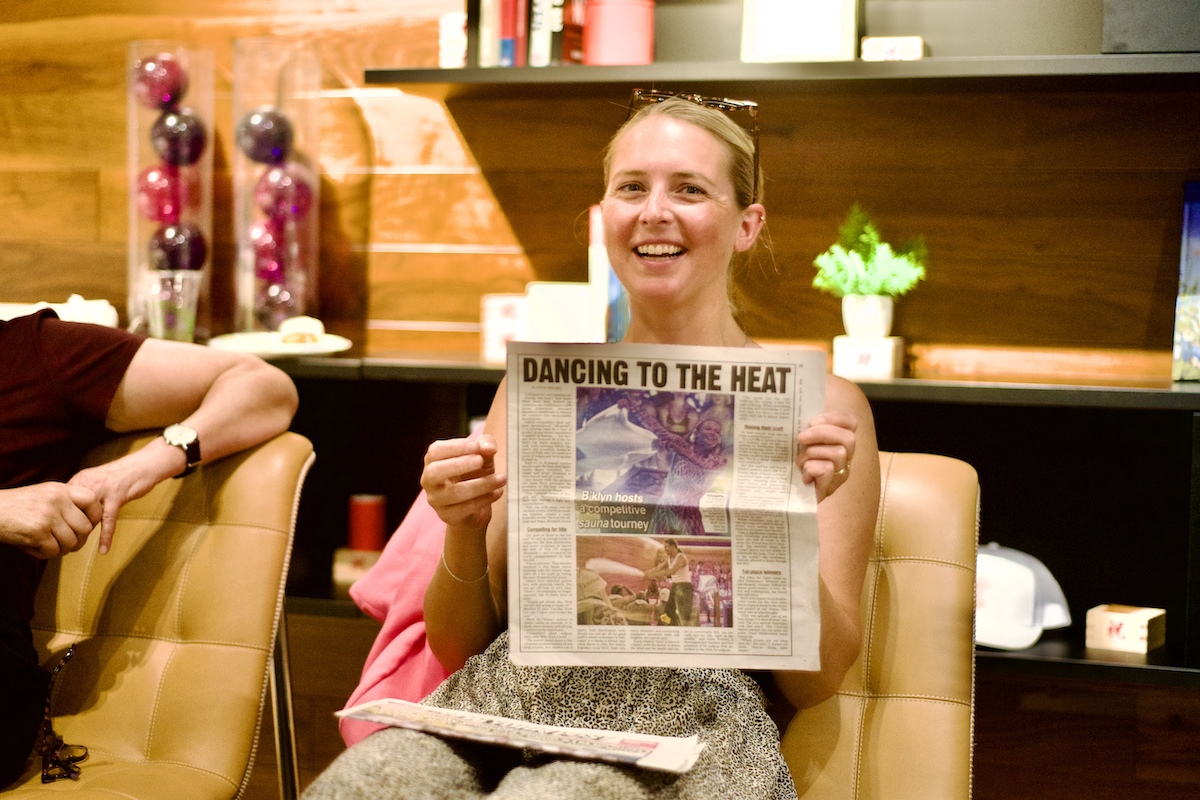
Sometimes, you just have to jump on an idea when it strikes, no matter what else is on your plate. For instance, I was working with a Rhode Island-based writing coaching client when he mentioned that the first “show aufguss” competition in the US was set to take place in New York. (Show aufguss is a sort of sauna-based performance art that he’d experienced abroad, and so he was working on a travel pitch about the experience.)
The concept seemed just whacky enough to pitch to the New York Post, and the timing and location of the competition — blocks from my apartment, days away — meant I couldn’t dawdle. Plus, I’d met the Post’s wellness editor just weeks earlier. I reached out with the time-sensitive idea and, as they say, et voila.
Similarly, after an acquaintance attended a luxurious-appearing postnatal retreat, she texted me with urgent notes: The $1,000-a-night space was, to put it nicely, not what it seemed. I spent a weekend learning more, pitched an editor I’d Zoomed with once before and earned what became a nine-month investigative New York Magazine assignment. It too was recently recognized by ASJA.