
You may not have heard this interpretation of the One Big Beautiful Bill Act: The House-passed legislation is not designed to cut Medicaid spending, according to Stephanie Carlton, deputy administrator and chief of staff at the federal Centers for Medicare and Medicaid Services.
“Just to be clear, nobody’s proposed a cut. It is a management of the rate of growth over time,” Carlton said Friday at Health Journalism 2025 in Los Angeles, attended by more than 600 people from May 29 to June 1.
Since the U.S. House of Representatives passed the bill on May 22, reports have shown it would cut Medicaid spending. In an analysis of the bill, KFF wrote: “The Congressional Budget Office’s (CBO) latest cost estimate shows the bill would reduce federal Medicaid spending by $723 billion and that the Medicaid provisions would increase the number of uninsured people by 7.6 million.”

Seeking clarification, AHCJ board member Gideon Gil asked Carlton, “When you say, ‘It’s not a cut,’ how do you explain how you’re spending less?”
Carlton replied, “So, if you look at the Congressional Budget Office scores, and you look at where spending would go relative to today, nobody’s talking about cutting spending relative to today. It is managing the rate of growth.”
Like all costs, Medicaid spending will rise
“Over time, there will still be more money spent on Medicaid next year and in following years than there is today under the proposals that we’re seeing coming out of Congress,” Carlton added. “So, it’s quite literally not a cut.” Instead, she reiterated, the bill is meant to manage the rate of growth.
As KFF and others have reported, the CBO shows the House bill would reduce spending sharply each year through 2034. But next, the U.S. Senate will consider the effects of cutting billions for Medicaid, food stamps and Medicare. When that happens, senators may make changes, according to some members of the upper chamber, as Jordain Carney reported for Politico.
Pressing further, Gil asked about how the bill would affect the nation’s 1,400 federally qualified health centers (FQHCs). “How will you manage disruptions in the federally qualified health centers that will result from reduced spending,” he asked.
Carlton responded, “FQHCs play a really important role in the safety net, and making sure they have the right resources to deliver care to vulnerable populations is a big priority.”
Commercial rates for Medicare
Provisions in the bill will cut funding from hospitals that have been paid at rates similar to what hospitals get from commercial insurance contracts, Carlton said. “Think about that for a second,” she said. Hospitals mostly get paid at Medicare rates, she added.
“Then commercial rates are some multiple of Medicare rates,” she commented. “I think 190% is the last analysis I saw. And then, Medicaid rates are a fraction of Medicare rates, right?”
Reducing what hospitals get paid is included in the House bill because the aim is to pay hospitals appropriately, she added.
“But up to commercial [rates] is not what anybody signed up for in the Medicaid program, which is intended to be our safety net,” Carlton said. Another aim of the House Bill is “starting to add common sense to a program that the trajectory has just gotten out of control when it comes to spending.”
For example, she said, Medicaid funds have paid for student loans. In California, for example, Medi-Cal has a program that will start this year to reduce educational debt for behavioral health professionals who commit to serving Medi-Cal members and underserved communities.
AHCJ hosts ‘What the Health’
Carlton stayed in the room during the plenary session in which moderator Julie Rovner, the chief Washington correspondent for KFF Health News, asked three experts to talk about Carlton’s interpretation of the Big Beautiful Bill Act and what effect, if any, they had seen in Medicaid funding. The interview was recorded live for KFF Health News’ weekly health policy news podcast, “What the Health?”
Of the three members of the panel, one was a director of the Los Angeles County Public Health Department. Another was an executive at the nation’s largest FQHC, and the third was an expert on state and federal health policy. Two said they were worried about the future of funding for the nation’s safety net if the Senate slashes the Medicaid budget as proposed in the House bill. The third said steep cuts had come already.
‘A massive dismantling’ of public health
“In public health, unfortunately, we’ve already had some impacts,” said Anish Mahajan, M.D., chief deputy director of the Los Angeles County Public Health Department. For weeks, health agencies have faced what he called “a chaotic, immediate rescission of key public health grants nationwide” such as for the prevention of HIV and sexually transmitted diseases, he said.
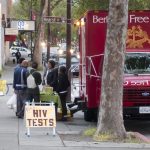
For example, Mahajan’s department was expecting to receive a $19 million grant in June that the federal Centers for Disease Control and Prevention (CDC) has funded for decades to pay for HIV education, prevention and testing, including money for pre-exposure prophylaxis (PrEP), he explained.
“We simply never received the notice of award for June 1,” he said. “We still hope that over the next 24 to 48 hours we will hear, but there was never a notification from the government as to whether we would get anything or if the program is over.
“It’s left the entire infrastructure for HIV prevention, not just here in L.A., but across the nation, with a giant question mark,” Mahajan added. “This is a massive dismantling.”
In late March, public health agencies were notified that their CDC grants for epidemiological and laboratory-capacity grants were eliminated immediately during their grant-funding period, Mahajan said. Known as ELC grants, that funding equaled about $45 million in potential loss to his department, he added.
“We use money from these grants to pay for outbreak response for infectious diseases in places like jails and schools and other congregate-care settings,” he explained. “This money was being used to improve the laboratory capacity of public health so that we could do genomic sequencing better and faster.”
After challenging the cut in funding, the plaintiffs won a preliminary injunction, he added. The lack of funding was senseless, he said. “If you pull the rug out from underneath, you end up having a lot of sunk costs, let alone the lack of those services.”
FQHC patients are worried
Rovner also asked Berenice Núñez Constant, a senior vice president at AltaMed Health Services Corp., about her concerns. The nation’s largest FQHC, AltaMed, serves 700,000 patients in Los Angeles and Orange counties, she said.
“The questions we’re hearing every single day from our patients are, ‘Am I going to lose my Medi-Cal?’” she said. “We are also watching things like food benefits, social services and housing supports all while we are facing a state deficit in California. That leaves me with sleepless nights and a lot of questions every single day.
“Thankfully, because of our role in the community, so far so good, but we are obviously worried about what’s to come,” she added.
Roughly 40% of voters don’t know about Medicaid cuts
In answer to Rovner’s questions, Commonwealth Fund Senior Vice President for Policy Rachel Nuzum explained that recent polling showed that 40% of voters don’t know that the House bill includes Medicaid cuts — if they know about the bill. “It would be the largest reduction of federal resources for the Medicaid program since its inception,” Nuzum commented.
And there are many implications not only for the Medicaid program but also for beneficiaries and families and for state and local economies, she said. “There’s job loss associated with cuts of this magnitude,” she added.
Community health centers will lose about 45% on average, Nuzum noted. It’s higher in some places and lower in others. Still, it all comes from Medicaid, she said, adding that funding will be cut from the federal Health Resources Service Administration, which oversees community health centers, including their staffing levels. “We’re potentially talking about a major cut to the Medicaid program, which will affect beneficiaries’ ability to access and to afford care,” she said.
Early in May, the Commonwealth Fund reported that every state would feel the effects of the House-passed bill. In that report, “How Does Medicaid Benefit States?,” the fund showed that the nation’s gross domestic product (GDP) would decrease by $95 billion and tax revenue would drop by $7 billion over those same 10 years.
The full effects of the bill won’t be known until after the Senate acts on it. In the meantime, health care reporters may need to reach out now to Medicaid providers to report on their concerns and what steps they plan to take now and in the coming weeks.