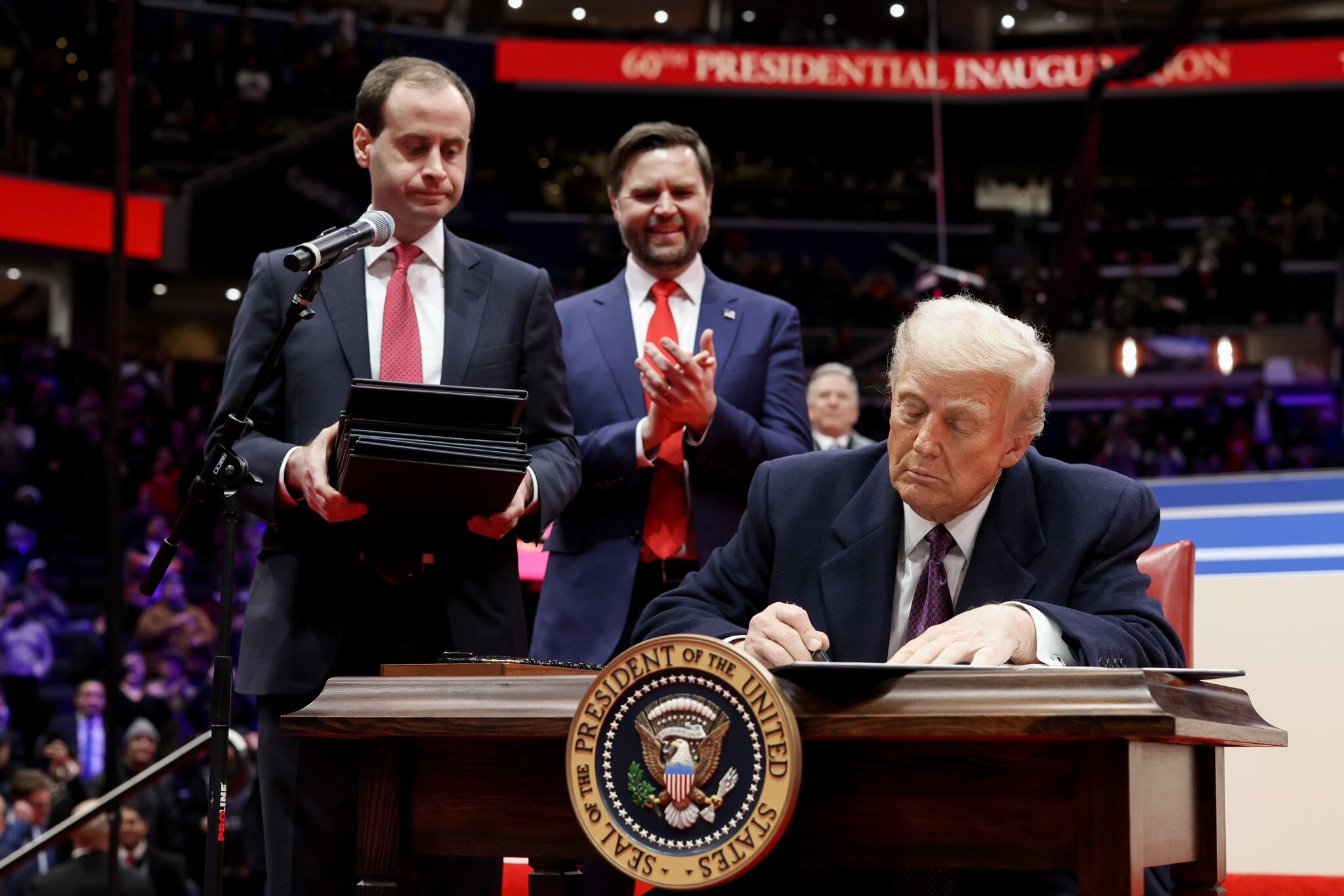
On his first day in office, President Trump signed dozens of executive orders rolling back key initiatives from the Biden Administration. The topics covered in Trump’s orders ranged from future pandemic preparedness to withdrawing the United States from the Paris Climate Agreement. One action that created some confusion among consumers was the rescission of Biden’s Executive Order 14087, Lowering Prescription Drug Costs for Americans.
Biden’s 2022 order instructed the federal Department of Health and Human Services to “select for testing by the Innovation Center new health care payment and delivery models that would lower drug costs and promote access to innovative drug therapies for beneficiaries enrolled in the Medicare and Medicaid programs, including models that may lead to lower cost-sharing for commonly used drugs and support value-based payment that promotes high-quality care.”
In other words, the Center for Medicare and Medicaid Innovation (CMMI) would test different ways to lower the cost of prescription drugs for older adults, including one model that would have capped the price of generic medications at $2 per month.
Reactions to Trump’s action among some pundits and policymakers were swift. Sen. Adam Schiff (D-Calif.) posted on Threads, “Donald Trump rescinded Biden’s action to lower prescription drug costs for Americans on Medicare and Medicaid. There’s no other way to spin it. That means more money out of pocket for seniors and families.” Last year, then-candidate Trump campaigned in part on bringing down the cost of prescription drugs.
Why this matters
Journalists should pay attention to any attempts in Congress to roll back or repeal the Inflation Reduction Act or laws that specifically address drug prices. It’s not yet clear what the new administration intends to do about current or planned cost-saving efforts for Medicare Part D beneficiaries.
Also, reporters should follow what CMS and HHS post on their websites, particularly for any attempts to be less informative or to frame content inaccurately. It’s crucial for journalists to track these changes to help readers, listeners and viewers understand what may have changed and where they can find accurate, vetted information on Medicare drug pricing.
When covering drug prices for Medicare members, journalists may need to draw distinctions between pilot programs implemented under executive actions and processes that are included in law, such as the Medicare Part D negotiations for drug prices under the Inflation Reduction Act. It’s likely that the end of any pilot programs will not have an immediate effect on out-of-pocket costs for most beneficiaries, Pearl Steinzor reported for the American Journal of Managed Care.
For example, Trump overturned a Biden initiative that instructed Medicare to explore ways to reduce drug costs, including a potential $2 monthly cap on out-of-pocket costs for certain generic drugs, Steinzor wrote. This Trump proposal, however, was still being developed and its implementation was uncertain, she added, quoting Stacie B. Dusetzina, Ph.D., a health policy professor at Vanderbilt University, who spoke with NBC News.
It’s also important to emphasize that other key Biden initiatives, including the $35 monthly cap on insulin and the $2,000 out-of-pocket cap on prescription drugs, which went into effect on Jan. 1, remain unaffected by Trump’s executive actions. We reported on this benefit in November.
Preventing HHS from negotiating the prices of these drugs would require an act of Congress to overturn the Inflation Reduction Act, said Gretchen Jacobson, vice president of the Medicare program at the Commonwealth Fund.
15 new drugs selected for negotiations
On Jan. 17, three days before Trump’s inauguration, HHS announced 15 drugs to be included in the next round of drug-price negotiations, bringing the total number of drugs under price negotiation to 25. New prices for the latest 15 medications would take effect in 2027 while new prices for the first 10 drugs will be effective in 2026.
Here’s the most important point to keep in mind about the drug-price negotiations program: It saves the Medicare program (meaning taxpayers) and Medicare members with Part D plans billions of dollars.
Between November 2023 and October 2024, about 5.3 million people with Medicare Part D coverage used these 15 drugs, costing the Medicare Part D program about $41 billion in total gross covered prescription drug costs, HHS and CMS noted.
For comparison, Medicare Part D beneficiaries paid $3.4 billion out-of-pocket in 2022 for the 10 medications while the agency paid $50.5 billion.
HHS and CMS projected that savings for all 25 drugs selected so far will represent more than one-third of total gross covered prescription drug costs under Medicare Part D.
Leigh Purvis, prescription drug policy principal at the AARP Public Policy Institute, explained that the drug-price negotiation program is “capturing the drugs that are really driving spending under the Part D program.”
Drugs subject to price negotiations are sole-source drugs, Purvis added. Once a biosimilar or generic comes on the market and provides real competition, selected drugs will be dropped from the program.
The challenge of making changes
Under the Inflation Reduction Act, the new administration has little leeway to change which drugs are selected, according to Jacobson, who added that HHS must adhere to what the law says about how many and which drugs make the list.
“There are criteria that the drugs have to fit that are specified,” Jacobson said. “So they can’t just make up whatever list they want to.”
KFF Senior Vice President Tricia Neumann explained that the Trump administration has three options:
- Do nothing and keep the status quo.
- Try to weaken the law by passing new regulations.
- Try to overturn the drug-price provision.
“KFF’s latest poll finds bipartisan support for expanding the number of drugs to be negotiated by the federal government, and weak support for any effort to repeal the Medicare negotiations program,” she added.
Significant cost savings
Vanderbilt professor Dusetzina and colleagues found that many seniors who are not receiving financial assistance forgo needed medications due to cost, leading to poor outcomes and higher health costs. Those without financial assistance were 22% to more than 50% less likely to fill prescriptions for conditions including cancer, hepatitis C, immune system disorders or high cholesterol, the research showed.
Medicare beneficiaries take an average of four to five prescription drugs monthly, meaning copayments or coinsurance can add up quickly, Purvis said. HHS projected that the Part D $2,000 out-of-pocket cap alone would save beneficiaries an average of $400 a year.
This HHS map shows overall Part D cost savings by state from the Inflation Reduction Act to date.
Resources
- FAQs about the Inflation Reduction Act’s Medicare Drug Price Negotiation Program, KFF, Jan. 23, 2025.
- Most Medicare Part D Enrollees Who Reach the New $2,000 Out-of-Pocket Spending Cap Will See Substantial Savings Despite Premium Changes, AARP, January 2025.
- Prescription Medication Use, Coverage, and Nonadherence Among Adults Age 65 and Older: United States, 2021–2022, National Center for Health Statistics, Sept. 5, 2024.
- Older Americans are prescribed more medications than ever, US Pharmacist, July 10, 2024.
- The Burden of Prescription Drug Costs, a survey of adults ages 50 and older, AARP, August 2024.