
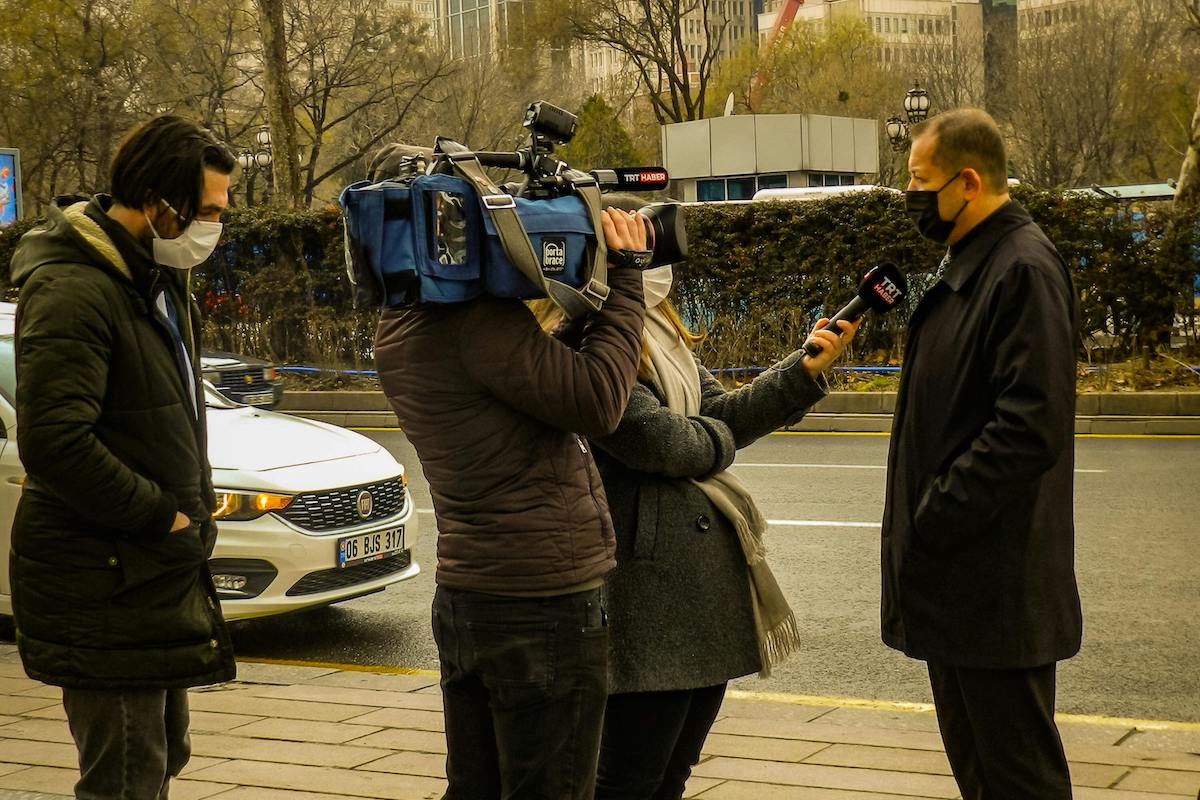
Health care journalists should learn the proper reporting techniques before interviewing people who have experienced trauma, such as the sudden death of a loved one, medical malpractice or gun violence. Some of these techniques go against traditional journalism practice — for instance, allowing sources to review quotes — but they are important because the last thing journalists want to do is inflict emotional pain.
While we can’t predict what distress our reporting will cause trauma survivors in the long run, we can manage predictable challenges to make the process easier for our sources, said Bruce Shapiro, executive director of the Dart Center for Journalism and Trauma at Columbia University Graduate School of Journalism.
For this tip sheet, we interviewed Shapiro and former crime reporter Tamara Cherry, a trauma researcher, a communications consultant to trauma survivors and the author of “The Trauma Beat: A Case for Re-Thinking the Business of Bad News.”
The basics
Being a trauma-informed journalist does not mean avoiding difficult subjects, interviews, conversations, language or images, Shapiro said. “Trauma is unavoidable,” he added. “So, if all we do is back away from urgent, sensitive, important reporting or powerful images that communicate something important, that’s not being trauma-informed.”
Trauma-informed reporting acknowledges that there are a wide variety of responses to trauma that individuals, families and communities can have.“We should never assume that someone is too vulnerable to talk to us or that they’re going to want to talk to us,” Shapiro said. “We need to meet people where they are, and everyone’s going to be in a different place.”
Be transparent
A crucial part of a trauma-informed approach is being transparent about who we are and what we’re looking for, Shapiro said. That helps to make the person feel safe and builds trust.
“We’re going to need to be transparent about fact checking and other steps that our reporting requires because we’re looking to have as few surprises as possible.” That’s why it’s key to be careful about what we promise, avoid overpromising and keep our promises, he added.
Build trust
It is usually unintentional when a journalist doesn’t build trust or betrays it, Shapiro said. It can be something simple, like being late for an interview, which might make it seem as if you are not a safe person, he said.
If, by our own actions, we “remind sources of the times that their trust in others was betrayed, or the times they were victimized by others, that can unleash a lot of distress, a lot of anger or may shut sources down,” Shapiro said.
Watch your emotions
It is important to show that you care, but be careful not to make the interview about your experiences, Cherry advised. “You can have those candid conversations before the actual recorded conversation starts, but the interview itself needs to center that victim or survivor who you are interviewing,” she said.
“Are they starting, for example, to speak in the present tense about their traumatic event? If so, they might be reliving what happened,” Cherry said. “That’s a good point to ask if they remain comfortable with where the conversation is going or if they’d like to take a break or stop altogether.”
Grant the interviewee some control
Many traditional interviewing techniques are best suited for people in positions of power, but that toolkit doesn’t work when interviewing trauma survivors, Shapiro said.
“Every person who has been through a genuinely traumatic event, or series of events or episodes, has lost power, control and agency over their own safety,” Shapiro explained. So, while interviewing them, make it clear that they have control.
For example, allow for extra time when arranging interviews because survivors may need time to prepare for the conversation. Offer them the option to bring someone to the interview. Let them decide how long you talk and when to take breaks or to come back to a topic or question.
And Shapiro suggested finding small ways of asking for permission during the interview, such as, “‘Is it okay that I take my notebook out?”
Journalists might also want to allow a source to review quotes and context before sending a draft to their editor, Cherry said. There’s a good chance that in discussing the details of a traumatic event, especially right afterwards, a survivor might give some inaccurate information. Allowing them to review your work is one way to make sure your reporting is accurate and not harmful, she said.
Healing, hope and solutions
In her research with trauma survivors, Cherry said the vast majority reported that they were harmed by the way the media covered their stories but, even so, found value in sharing their stories publicly. They looked at it as a way to show other survivors that they’re not alone and to help each other heal. Try to bring out that aspect of the story, when possible, Cherry said.
If length allows, also try to paint a full portrait of the person so they don’t come across as only a one-dimensional victim, Cherry said, adding that it is important to do follow up stories if the person is amenable.
Cherry also said journalists interviewing trauma survivors should include in their stories efforts to find solutions to violence and trauma in their stories, when possible. “Because if you’re not reporting on that, then you’re really just reporting on trauma for the sake of trauma… and you’re not moving the conversation forward,” she said.
Keep your editors informed
“It is really important that your editor is aware that you are reporting the story per these trauma-informed principles, especially when you’re working as a freelancer and you’re not in the newsroom,”Cherry said .
Support yourself
“You can’t ignore your emotions. But you need to save that for after the interview is over,” Cherry said. “To sit and process everything that you have heard and witnessed is extremely important.”
That can be difficult if a journalist covers a beat or is in the midst of a reporting assignment that requires regularly interviewing trauma survivors.
“Journalists are at a higher risk of developing PTSD and suffering vicarious trauma because they have such little time to process what they witnessed. And then, we just rinse and repeat it all the next day,” Cherry said. Listen to your mind and body for signs that you are struggling, she advised.
Cherry is a big proponent of personal therapy and said she wishes that during her career as a crime reporter, she had attended regular therapy sessions. “I only started seeing my therapist after I left journalism,” she said.
But therapy is expensive and not always an option, especially for freelancers on a tight budget. So, Cherry recommends other options, such as exercise, meditation, being mindful and deep breathing.
Resources
- “2024 Reporting Safely in Crisis Zones Course for Freelance Journalists,” reporting course from The Dart Center for Journalism and Trauma.
- “How journalists can take care of themselves while covering trauma,” The Poynter Institute.
- Pickup Communications.
- “Journalists need support and self-care when reporting on trauma,” AHCJ.