By Michael Finch II, American Cities Health Journalism Fellow
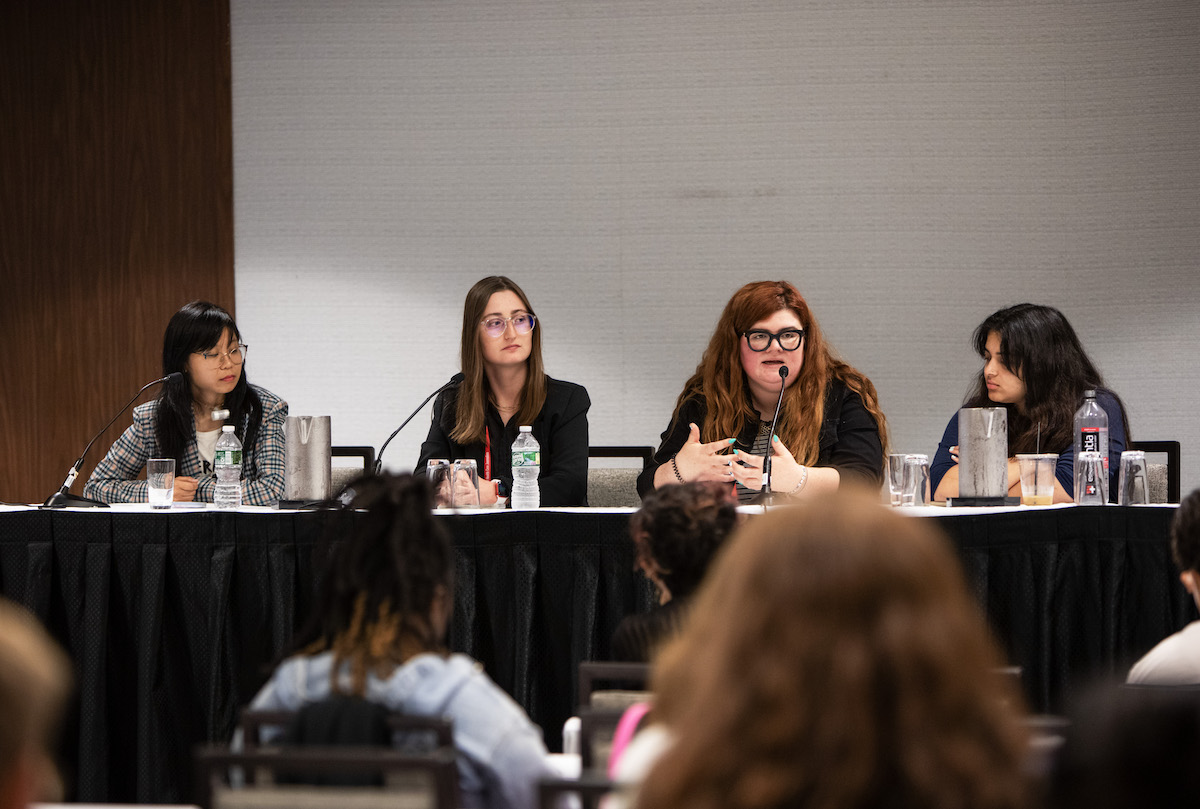
Four journalists delved into the challenges and pitfalls of writing about the disabled community during “The nuances of reporting on people with disabilities” panel at Health Journalism ’24.
The discussion highlighted tropes often used in news stories and tricky language choices. Reporters should consider the varying definitions of disability, said Emyle Watkins, a reporter at WBFO, Buffalo’s public radio station.
Watkins, who created a guide to investigating disability issues, said she relies on the World Health Organization’s more inclusive description of disability: a physical or mental condition and how a person interacts with the world around them.
Each of the journalists on the panel shared their personal experiences working in the industry with physical or invisible disabilities and cautioned against stories they called “inspiration porn”↭— a term credited to disability activist Stella Young.
Those seemingly innocuous news stories about a high school athlete taking a student with Down syndrome to prom or features about a local business employing disabled adults flatten the experiences of the disabled, said Hannah Wise, assistant managing editor for engagement and experimentation at the Kansas City Star.
“I understand that a lot of these come from a good place, but we really want to be looking for news stories that have depth and show the complexity of being a person,” Wise said. “And that really means that we need to focus on not reinforcing negative stereotypes about disability.”
The panelists agreed that there are opportunities to bring disability coverage to the forefront on every beat.
Neelam Bohra, a former reporting fellow with the New York Times and Texas Tribune, said the stories are easier to identify if reporters consider intersectional experiences. Bohra mentioned a story she wrote about migrants seeking asylum at the U.S.-Mexico border where they were required to scan their face on a phone app to schedule an appointment with the U.S. Customs and Border Protection.
“That app was not accessible to people who were blind, people who were neurodivergent because the app requires you to log in every single day and scan your face for months at a time in order to be able to set up one appointment at one of the centers to seek asylum,” Bohra said.
“It’s so easy to forget that people with disabilities are just as affected by this big story about the migrant crisis that all these news outlets talk about.”
Resources
- Disability Matters: A toolkit for newsrooms to better serve the disability community
- Reporting Guide to Investigating Disability Issues
Mike Finch is a journalist based in Memphis, Tenn. He was an AHCJ American Cities Health Journalism Fellow.