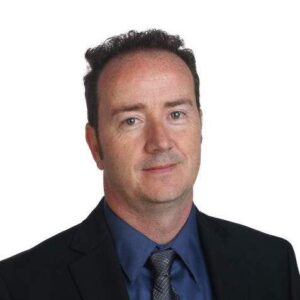

In October 2022, Tampa Bay Times health care reporter Chris O’Donnell covered the controversial decision by Florida’s surgeon general, Joseph Ladapo, to recommend against mRNA-based COVID-19 vaccines for men ages 18 to 39. Ladapo said a state analysis of death certificate data showed a high-risk of heart-related deaths within weeks of getting the vaccines.
Medical and public health leaders were quick to condemn the state’s analysis and recommendation, noting that the report hadn’t been peer-reviewed, had no authors cited and appeared to cherry-pick data. O’Donnell wanted to know how the state’s study drew its conclusions, but state agency officials weren’t talking.
So he did what many health journalists do to get public health information out of Florida’s government: He filed a public records request. His efforts worked, resulting in the April 7, 2023, story: “Florida health officials removed key data from COVID vaccine report”.
O’Donnell spoke with AHCJ recently about how he got the story and how his COVID-19 coverage has changed as the U.S. has moved beyond the pandemic.
Give us a little background about how this story came to be.
When the surgeon general published that recommendation on October 7 (2022), there was a huge amount of controversy. Epidemiologists were very skeptical of it and said that it made no sense because it didn’t look at the effect of COVID-19 infection on cardiac deaths. Many epidemiologists actually used the phrase: ‘This report is missing data.’ So, I put in a public records request, asking for any draft versions of the report. Luckily, Florida has a pretty good public records law. Eventually, they provided five draft versions of the report. And in analyzing those, it became very clear that what we had been presented in October was not even half the picture.
For journalists who don’t work in Florida, is there a standard way that reporters in the state put in public records requests? Or did you have to go through a process to learn how to do that?
You can find templates for public records requests, but you don’t really have to do that. You can just write an email and say you want something under the public records law. Public officials are not allowed to ask you why you want it. It’s a very good public records law. Florida is a great state to work in as a journalist.
What happened after you got the five drafts through the public records request?
What we got was a scientific analysis in scientific format and notation. Though I’m not a scientist, we saw significant omissions and certainly that the language in the conclusion (of the final official October report) had been changed from what had been the (original analysis). But because I am not a scientist, we sent the drafts to four epidemiologists and asked them to analyze the drafts. And that was how we came up with the story that we came up with —that key data had been removed from the report.
What has been the impact of your story?
There’s been a huge outcry from a lot of experts. One of the epidemiologists in my story used the phrase ‘academic dishonesty’ and called into question Ladapo’s research integrity. The story spread like wildfire on Twitter, and the tweet had about 1.1 million views. So, I guess that is where the echo chamber still plays a role.
Has there been any other backlash, like the University of Florida, where he is a professor, calling into question his academic position, or any official government investigation of the report?
Not that I’ve heard so far. The governor (Ron DeSantis) has petitioned the Supreme Court to convene a grand jury to look into whether any medical guidelines were violated by the vaccine makers, but that happened before my story came out.
So, what now? What are you thinking about how to cover COVID-19 now that we are moving past the pandemic?
COVID-19 is less of a priority for us because the number of infections is so low, right now. But we still see it as an important story. One of the things that I’m interested in is looking at how COVID has permanently changed the health care landscape. I think there are a lot of stories to be told about that. Also, the pandemic has really accelerated this anti-science sentiment that seems to exist in one of our country’s major political parties. I’m interested in what that means going forward across the whole health spectrum. For example, school vaccines were an accepted part of life, except for a very small minority of parents, but what will happen with those going forward? I think the pandemic has exposed this huge schism in respect for science. It’s going to have major impacts on the way we care for people, especially when it comes to preventative health measures. So, I’ll be thinking about that in my reporting.