
Health care spending data from five states (Connecticut, Delaware, Massachusetts, Oregon, and Rhode Island) show health care spending exceeded each state’s target in 2023, according to an analysis by Health Affairs in August. Those five states are among nine that, since 2012, have established targets to contain rising health costs. The other four are California, Nevada, New Jersey and Washington state.
Each of the five states aggregated claims and spending totals from Medicaid, Medicare Advantage and commercial insurers, providing a comprehensive view of payments in those states, explained researchers January Angeles and Jessica Mar. Both researchers work for Bailit Health, a consulting firm in Needham, Mass. Angeles is a managing director and Mar is a consultant with the firm.
For journalists and consumers, this story is significant because the research reveals how health insurers that acquire physician groups and other provider organizations increase health care costs and avoid paying rebates to consumers under the medical loss ratio (MLR) rule in the Affordable Care Act (ACA). When insurers acquire physician groups, it’s called vertical integration, because one company in the supply chain buys another company that serves the same group.
In particular, journalists could follow the money after health insurers acquire any physician groups, hospitals, health systems, and pharmacies and pharmacy benefit managers. After such acquisitions, reporters should examine how health insurers report those payments on financial statements.
“We’ve heard anecdotal evidence that vertical integration pressures physicians to change referral patterns, steering patients away from local facilities toward more expensive hospital settings, to essentially arbitrage that double payment rate and increase revenues,” Christopher Whaley, Ph.D., explained during a presentation last year. Whaley is an associate professor of health services, policy and practice at Brown University.
What the data show
Angeles and Mar’s analysis is significant for three reasons:
- The numbers show health spending in each sector and where spending exceeds targets.
- The reports help states and researchers identify opportunities to limit rising costs.
- The data help researchers understand how insurers exceed targets set in the MLR formula.
The MLR rule requires insurers to report the proportion of premium revenue spent on clinical services and quality improvement. When that proportion exceeds 80% or 85%, insurers must issue rebates to enrollees. Since 2012, health insurers have paid ACA enrollees $13 billion in MLR rebates, according to this KFF report, “2024 Medical Loss Ratio Rebates.”
Insurers serving the large-group market must spend 85% on health claims and quality, while insurers serving people and the small-group market must spend 80% of premium income on claims and quality, KFF explained. The remaining percentages (15% and 20%) go toward administration, marketing and profit, KFF added.
A significant consumer protection
In a follow-up analysis that Health Affairs published in September, Angeles and Michael Bailit, the president of Bailit Health, explained the importance of analyzing how insurers spend premium revenue. For that second article, Angeles and Bailit explained the unexpected findings that Angeles and Mar reported in August.
“Spending grew sharply in service categories that have historically increased more slowly,” Angeles and Bailit wrote. “The most notable increase was in non-claims payments — payments made through financial arrangements between providers and health insurers that are not tied to individual claims. These payments rose by an average of 40.4% across the five states.”
Most of those increases came from spending that Medicare Advantage insurers made that were not tied to patients’ claims, they added.
How vertical integration subverts the MLR
A close examination of spending showed how insurer-provider vertical integration could weaken the effectiveness of the MLR, Angeles and Bailit added. “However, a significant loophole allows insurers that have ‘vertically integrated’ with providers to inflate reported medical spending,” they explained in the follow-up analysis published in September. “This reduces their rebate liability while increasing held profits.”
In other words, the MLR gives insurers a reason to acquire physician practices, outpatient clinics and entire health systems, Angeles and Bailit noted. “As a result of this vertical integration, payments to these affiliated providers count as medical spending when calculating an MLR for the insurer,” they wrote. “However, there is no MLR requirement for providers. This creates an incentive for the insurer to direct spending to these affiliated provider entities, which may charge inflated prices, allowing the insurer to increase its reported MLR without delivering more care or improving quality.”
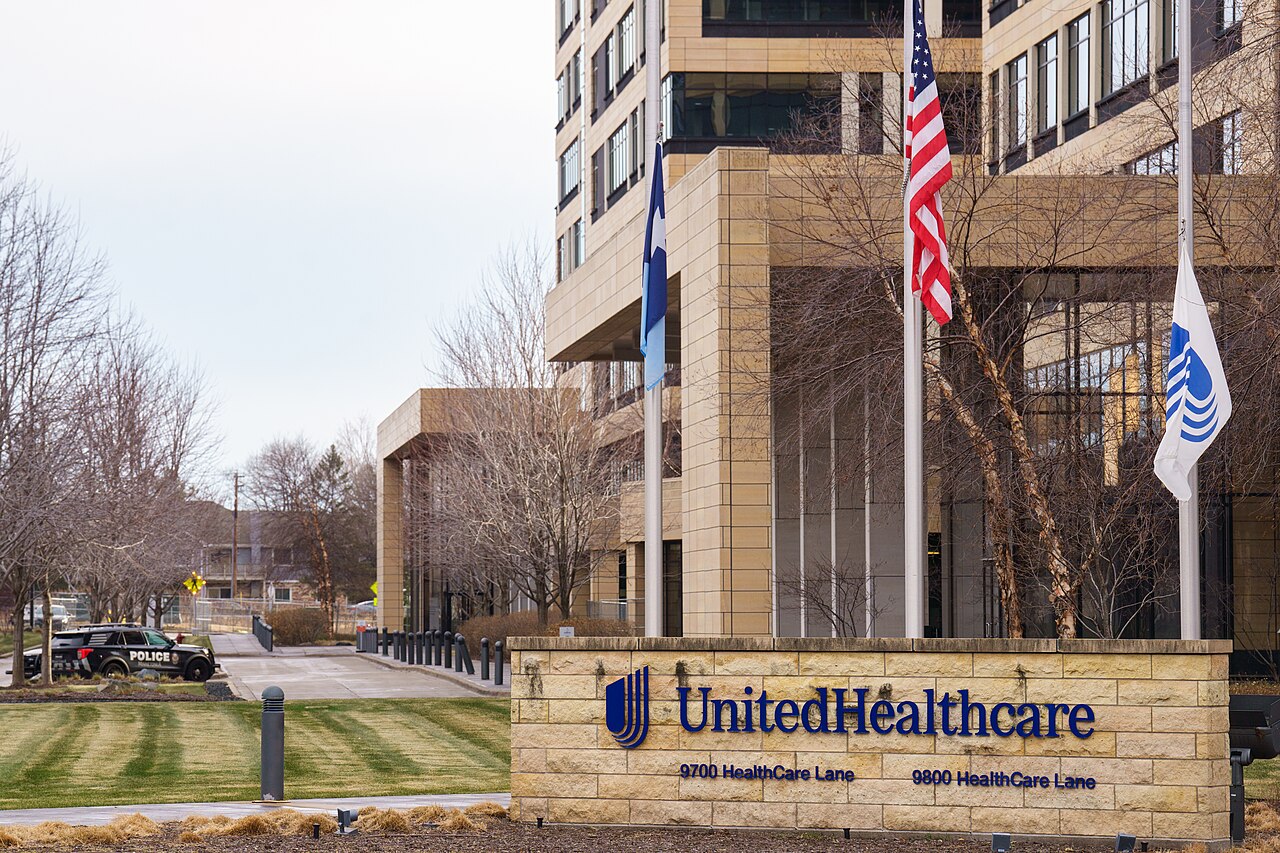
Last year, Bob Herman, Casey Ross, Lizzy Lawrence, and Tara Bannow reported for STAT News that UnitedHealthcare adopted a strategy to acquire physician practices after Congress passed the ACA in 2010. “That law created a regulation with a seemingly straightforward goal: to make sure health insurance companies were spending premiums mostly on people’s care instead of hoarding profit,” they wrote. “Thus began the era of the medical loss ratio.”
UnitedHealthcare’s ‘intercompany eliminations’
Among the physician groups UnitedHealthcare acquired were ProHealth Physicians in Connecticut, the urgent care company MedExpress, and other large physician practices, the STAT team reported. UnitedHealthcare executives explained that the company wanted to steer more insurance members to those provider groups, the team added.
“The strategy has played out in the company’s financial results,” they wrote. UnitedHealth counts the income it gets from its physician groups and other providers under an accounting measure known as “intercompany eliminations,” they explained.
The STAT reporters cited an analysis from the Brookings Institution on the same topic. “All of those eliminations count when it comes to reporting its expenses under the medical loss ratio rules,” the STAT team wrote. Amounts that insurers pay to their own physician groups can be treated as medical costs “even if some of that spending represents profits for the parent company,” according to a Brookings Institution analysis that looked at vertically integrated Medicare Advantage plans, STAT added.
“You’re cooking the books here by pushing things that are really insurance company profit over to medical expenses, because you own those doctors,” said Ron Howrigon, a health care consultant who was previously a health insurance executive, according to the STAT team.
The Louisiana lawsuit
In a lawsuit Louisiana filed in 2022, state Attorney General Jeff Landry explained how a similar strategy worked. Landry filed the lawsuit against OptumRx, United Healthcare of Louisiana and its United Healthcare Community Plan. OptumRX is a pharmacy benefit manager. Louisiana sought to recover billions of dollars in inflated prescription drug prices that the defendants charged the state Medicaid program, Landry added in the complaint.
“In what can only be described as a perverse incentive structure, United gets to count overpayments it makes to its wholly owned PBM subsidiary as an ‘expense’ to help United satisfy its statutorily required medical loss ratio. The more these ‘expenses’ are inflated, and the less transparent the billing is to Louisiana Medicaid, the greater the illicit profits for Optum and United,” the lawsuit noted.
On Nov. 12, the legal site FindLaw.com reported that the initial case resulted in fines against UnitedHealthcare and Optum Rx but those fines were appealed and reversed. The case is now before the state court of appeal to reconsider the fines and to conduct a thorough review of the case.
Resources
- New Study Reveals UnitedHealth’s Hidden Hand, Health Care un-covered, Nov. 10, 2025.
- UnitedHealthcare Pays Optum Providers More Than Non-Optum Providers, Health Affairs, November 2025.
- Gaming the System: Medical Loss Ratios and How Insurers Manipulate Them, Health Care un-covered, Feb. 26, 2025.
- How UnitedHealth harnesses its physician empire to squeeze profits out of patients, STAT Health Care’s Colossus series, part 1, July 25, 2024.
- How UnitedHealth turned a questionable artery-screening program into a gold mine, STAT colossus series, part 2, Aug. 7, 2024.
- UnitedHealth pledged a hands-off approach after buying a Connecticut medical group. Then it upended how doctors practice, STAT colossus series, part 3, Aug. 28, 2024.
- Inside UnitedHealth’s strategy to pressure physicians: $10,000 bonuses and a doctor leaderboard, STAT colossus series, part 4, Oct. 16, 2024.
- UnitedHealth pays its own physician groups considerably more than others, driving up consumer costs and its profits, STAT colossus series, part 5, Nov. 25, 2024.
- Lawmakers call for curbs on UnitedHealth’s growing empire, STAT colossus series, part 6, July 25, 2024.
- Under siege after a tragedy, UnitedHealth grapples with fresh security threats and a customer backlash, STAT colossus series, part 7, Feb. 25, 2025.
- Inside the research machine that helps UnitedHealth protect its Medicare profits, STAT colossus series, part 8, Aug. 11, 2025.
- Related businesses and preservation of Medicare’s Medical Loss Ratio rules, the Brookings Institution, June 29, 2023.
- Medicare Advantage spending, medical loss ratios, and related businesses: An initial investigation, the Brookings Institution, March 24, 2023.
- Profits, medical loss ratios, and the ownership structure of Medicare Advantage plans, the Brookings Institution, July 13, 2022.