Covering long COVID as an accountability story: Story ideas and reporting tips from experts
By Raquel Villatoro, Texas Health Journalism Fellow
Long COVID impacts one in 20 Americans and can involve over 200 symptoms affecting various organs. Symptoms can be cardiovascular, respiratory or neurological. Everyone who gets COVID is at risk of developing it, including those who are vaccinated, said Alison Cohen, an assistant professor of epidemiology and biostatistics at the University of California San Francisco.
Globally, there are an estimated 400 million people living with the condition, said Pato Hebert, MFA, chair at NYU Tisch’s Department of Art and Public Policy. Hebert is a “long hauler” himself, having lived with long COVID since 2020 and creating art about the experience.
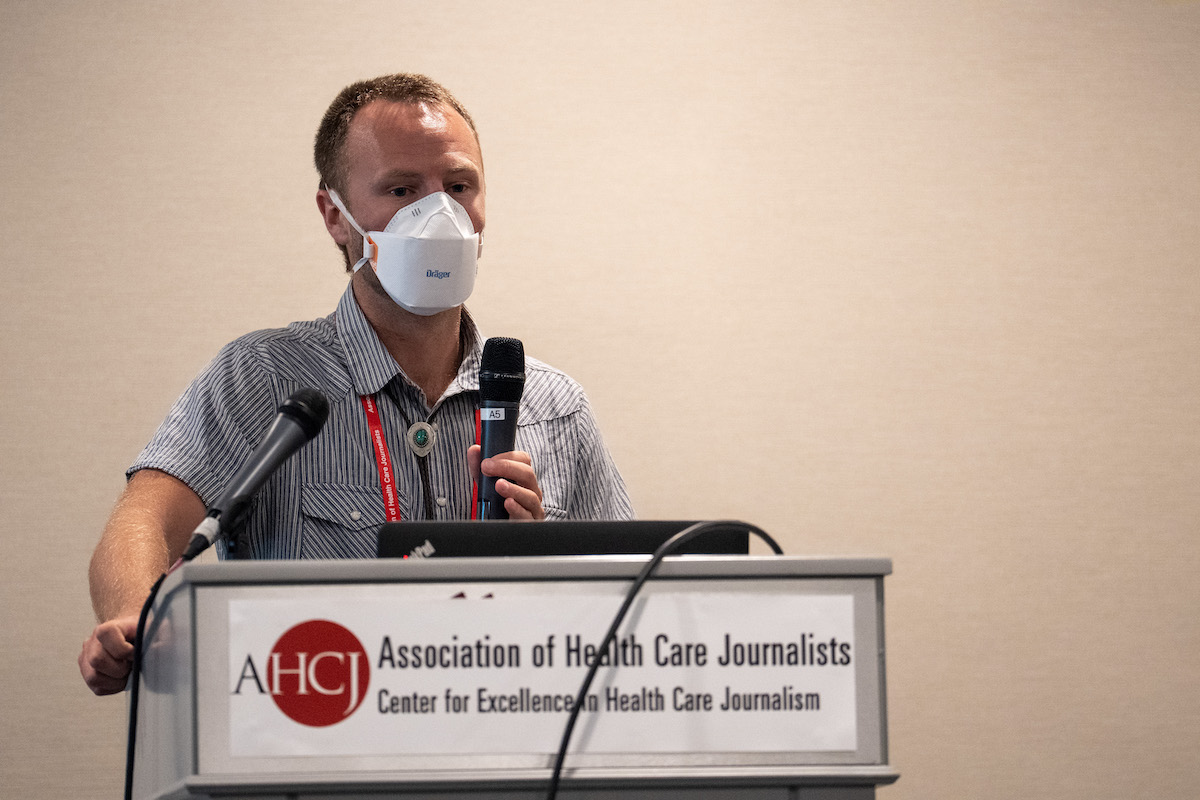
So it’s important that reporters pursue accountability stories. That was the gist of a panel on long COVID at HJ25.
There are many stories of government accountability related to long COVID that reporters can explore. The Office of Long COVID Research and Practice, established in 2023, was the only federal government office putting out messaging, but the Trump administration announced it would be closing the office in March.
Meanwhile, many people with long COVID continue to experience medical gaslighting, in which their symptoms are dismissed or ignored, said Miles Griffis, executive editor of The Sick Times, a publication focused on long COVID and related conditions.
“It’s a massive scandal, at the end of the day,” Griffis said.
Local reporters can also look into how funding for COVID programs is being re-allocated for clean air programs and other projects, Griffis said.
It’s also important to push back against the idea that we are post-pandemic, Cohen added. She encouraged reporters to cover the science, funding and human interest stories.
“We are still in the COVID 19 pandemic,” Cohen said. “It is just that right now, it’s much more defined in some people’s lives than others, and the people whose lives are still very defined by the COVID-19 pandemic includes people with long COVID.”
Hebert suggests people look into the evolving COVID vaccine recommendations and how they will impact access. In addition, he suggested reporters consider stories looking at how working-class people and those with low income are navigating their need for care, including through their unions. Other story ideas include focusing on people in prison with long COVID and transgender and nonbinary people.
“It’s a very painful time to be a transgender and non-binary person in this country,” Hebert said. “We know that transgender people statistically are disproportionately impacted by long COVID. That’s a hard story to tell right now. It’s an extremely important story to tell right now.”
Raquel Villatoro covers health challenges in northeast Texas for Tyler Morning Telegraph.