Elevating women’s health research and its funding
By Elizabeth Moss, California Health Journalism Fellow
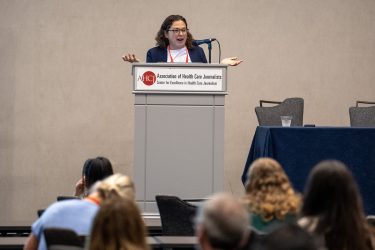
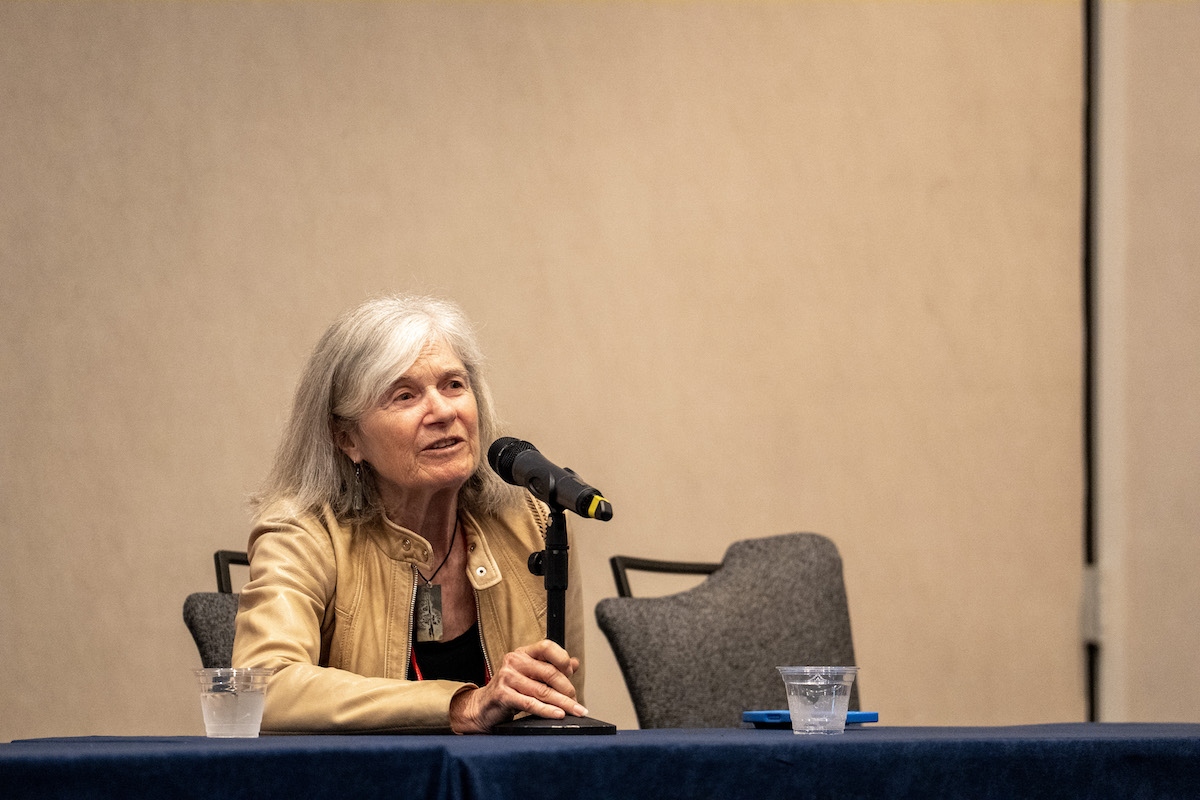
For decades, men have been the subject of studies on critical diseases, leaving knowledge about how women’s bodies are affected as an afterthought. A panel at HJ25 unravelled this phenomenon and highlighted how the tide is turning to center women in important medical research.
There’s a lot at stake when women aren’t given their research due, including reduced life expectancy, cancer, heart disease, Alzheimer’s disease and more. LaCroix discussed research she’s leading at UC San Diego, including on Alzheimer’s and menopause. Women die from Alzheimer’s at higher rates than men, and almost two-thirds of people with the disease in the U.S. are women. LaCroix’s research also dismantled misconceptions around physical activity, showing that light daily movement significantly benefits cardiovascular health in older women.
Stefanick highlighted overlooked phenomena such as microchimerism, which are fetal cells that remain in a mother’s body for decades, and the need to tailor contraceptives and menopause treatments based on individual physiology. Stefanick is the principal investigator for the Women’s Health Initiative Extension Study, a decades-long study into disease prevention among postmenopausal women. The study received recent attention when the National Institutes of Health announced a funding cut. (Funding was later restored.)
Strides have been made in the study of cardiovascular health in women versus men. Cardiologist C. Noel Bairey Merz of Cedars-Sinai explained that for years, women experiencing chest pain and other symptoms of heart disease were often told they had “normal” arteries because traditional angiograms showed no large-vessel obstruction. The Women’s Ischemia Syndrome Evaluation (WISE) study changed that. The study revealed that many of these women were actually suffering from small vessel disease, a condition in which the tiny arteries in the heart malfunction. Women with this condition had a 12% five-year major adverse cardiac event (MACE) rate, including heart attacks, strokes and death.
This work helped validate women’s experiences and provided evidence that heart disease can look different in women, Bairey Merz said. Despite progress, Bairey Merz noted a troubling reversal: Cardiovascular mortality is rising again, especially among midlife women.
“Life expectancy gains have been reversed since the pandemic in women and men, and they’re not really coming back,” LaCroix said, noting this is why research into women’s heart disease is so important.
Women’s health research has always been in flux, and that’s true now more than ever. The proposed congressional budget could slash research funding by 43%, and women’s research is not immune from that or other Trump Administration’s cuts.
Elizabeth Moss is a freelance writer based in Los Angeles.