2025 Fall Summit
Research reset: Covering promising paths to better health
Jump to: Session summaries and recordings
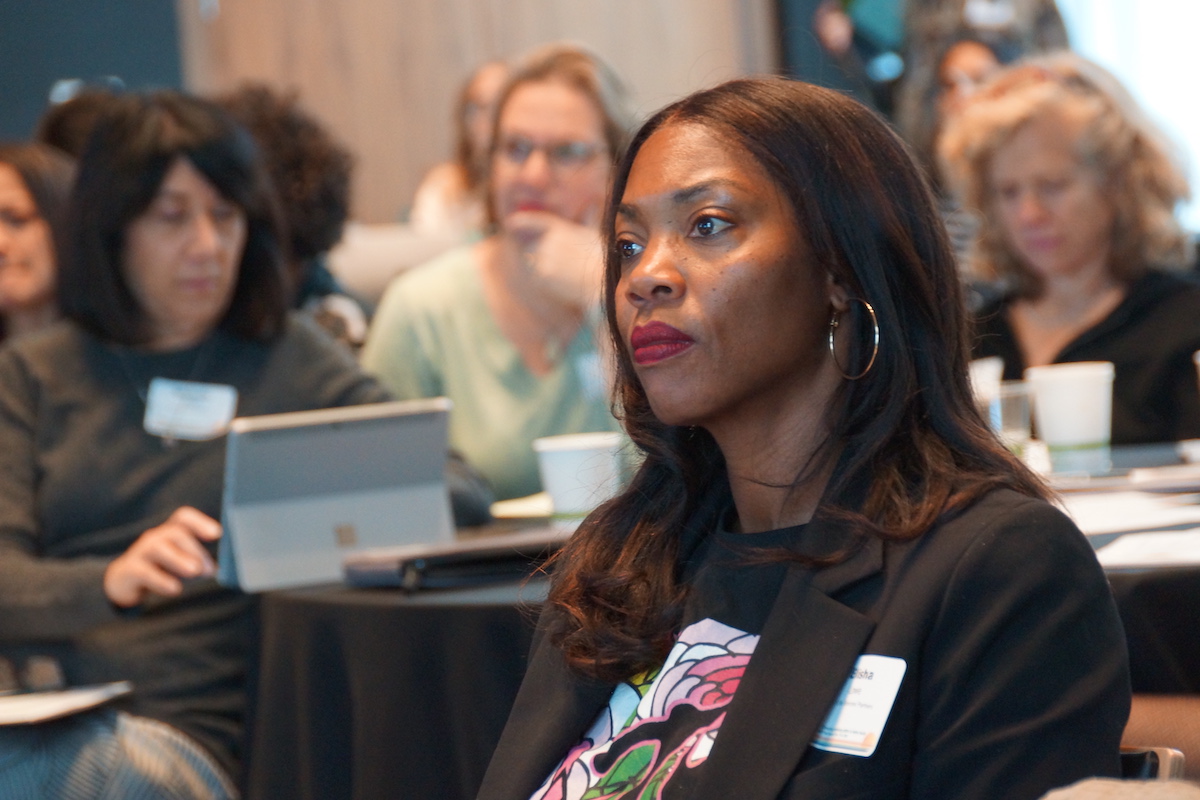
 Attendees listen attentively during a session at AHCJ’s Fall Summit on Roosevelt Island in New York City. Photo by Erica Tricarico
 Katherine Reed, AHCJ’s director of education and content, addresses attendees during AHCJ’s Fall Summit. Photo by Erica Tricarico
 Journalists on a guided tour of Roosevelt Island during AHCJ’s 2025 fall summit. Photo by Kevin Ridder
 Participants discuss an ethical dilemma involving coverage of a transgender health care story during the Fall Summit ethics workshop. Photo by Erica Tricarico
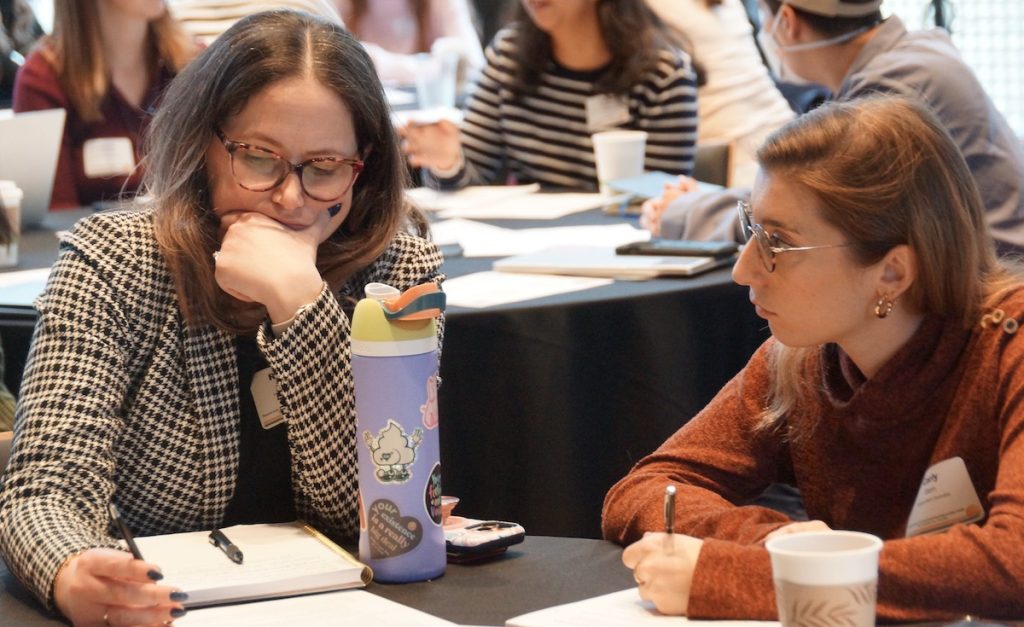 Small groups discuss whether to publish or not publish a story during the ethics session at AHCJ’s Fall Summit. Photo by Erica Tricarico
 Three journalists look at a map of Roosevelt Island during a guided tour at AHCJ’s 2025 fall summit. Photo by Kevin Ridder
 Panelists Terence Muhammad, co-chair of the Greensboro Health Disparities Collaborative (left), and Kristin Z. Black, Ph.D., MPH, assistant professor at the UNC Gillings School of Global Public Health (right), during the session “Promising partnerships for improving health” at AHCJ’s Fall Summit. Photo by Erica Tricarico
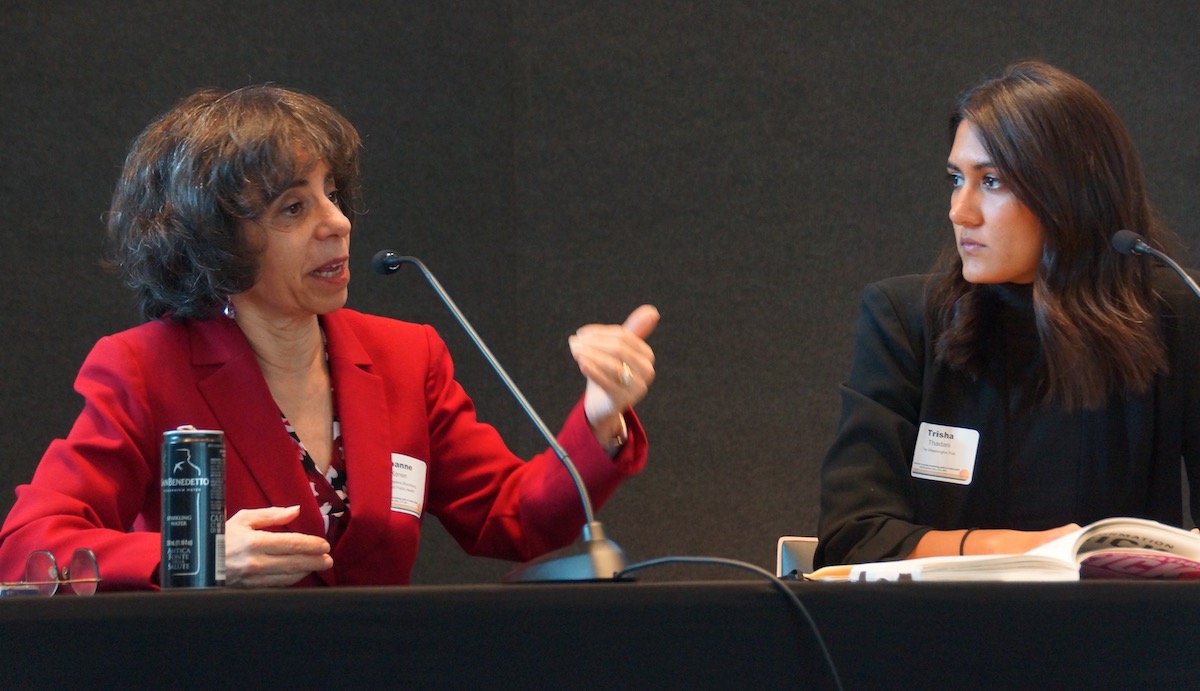
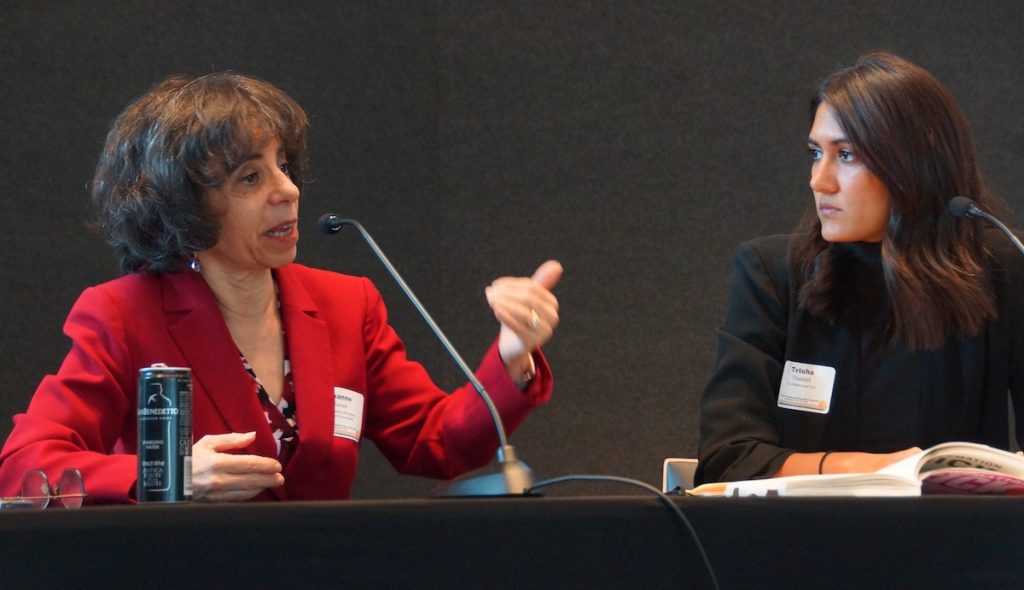 Joanne Kenen, journalist-in-residence at the Johns Hopkins Bloomberg School of Public Health (left), and Trisha Thadani, health reporter at The Washington Post (right), speak during the “Information Sick” author talk at AHCJ’s Fall Summit. Panelist Joshua Sharfstein, M.D., (not featured) participated via Zoom. Photo by Erica Tricarico
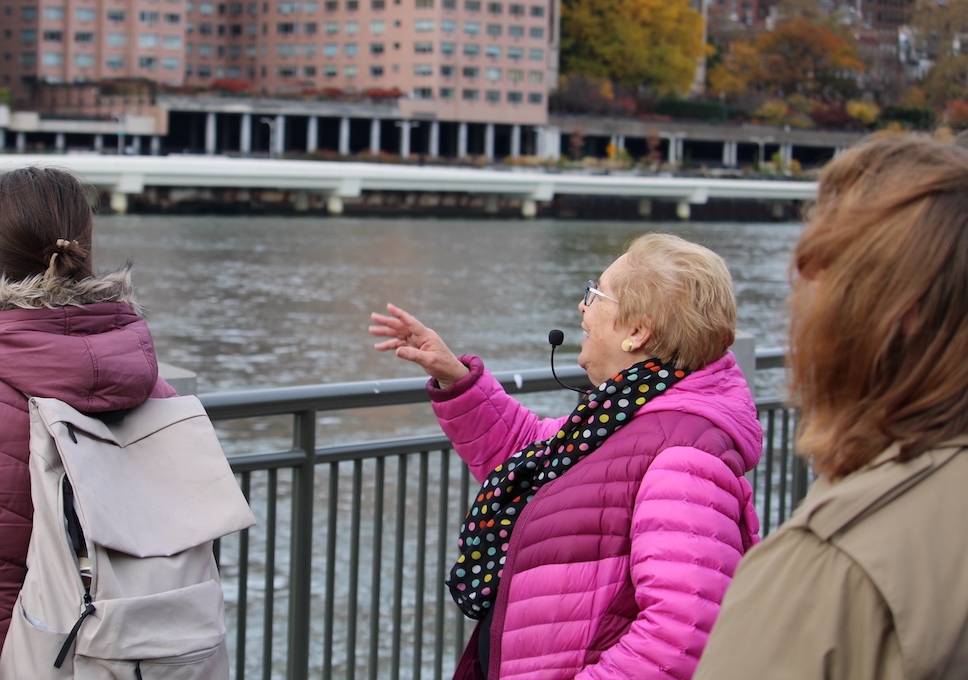 Journalists on a tour of Roosevelt Island look across the Hudson River. Photo by Kevin Ridder
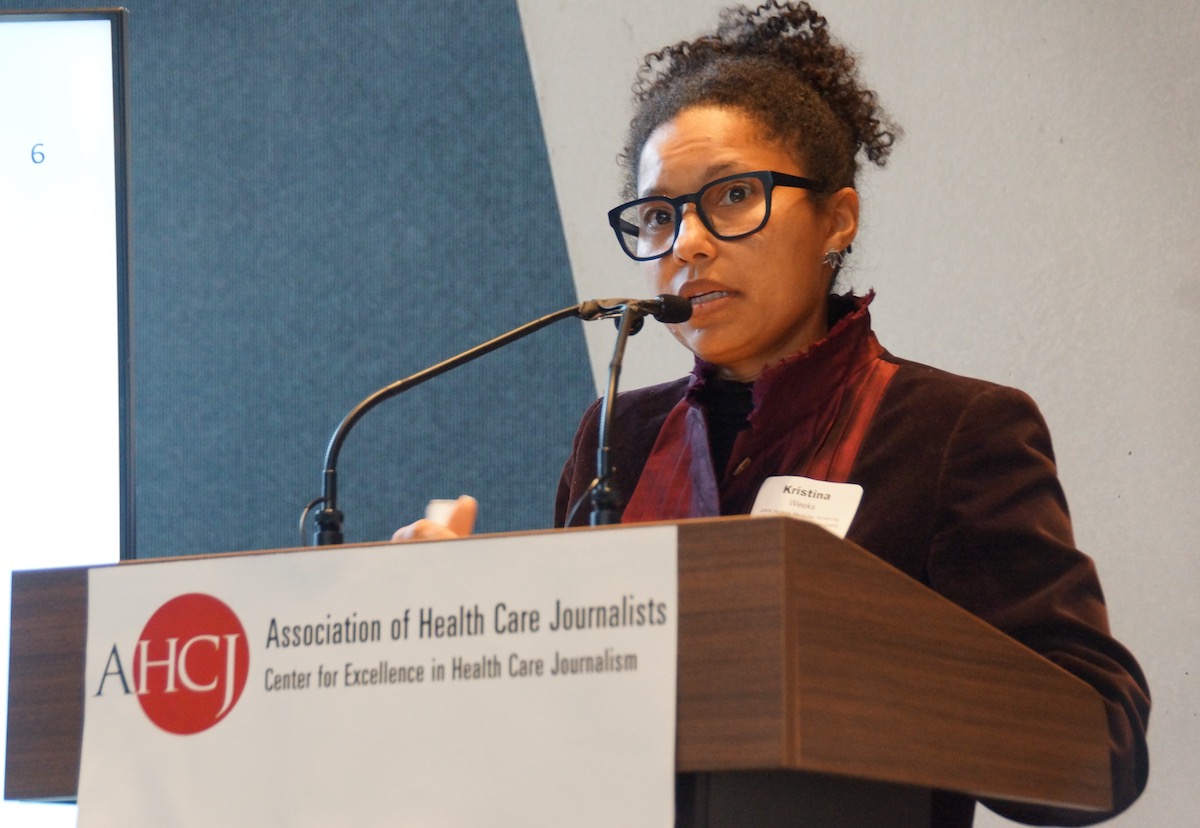
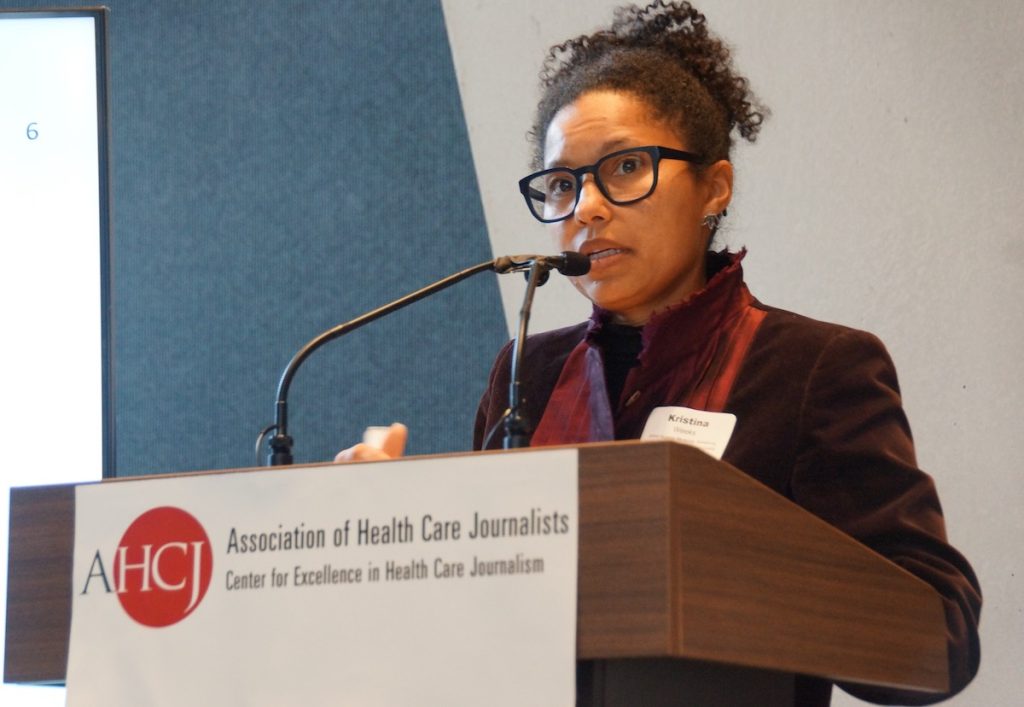 Kristina Weeks, Dr.P.H., MHS, assistant professor of anesthesiology and critical care medicine at the Johns Hopkins School of Medicine and a member of the Armstrong Institute for Patient Safety and Quality and the Center for Health Equity, speaks during the session “Quality over quantity: Reaching patients with research” at AHCJ’s Fall Summit. Photo by Erica Tricarico
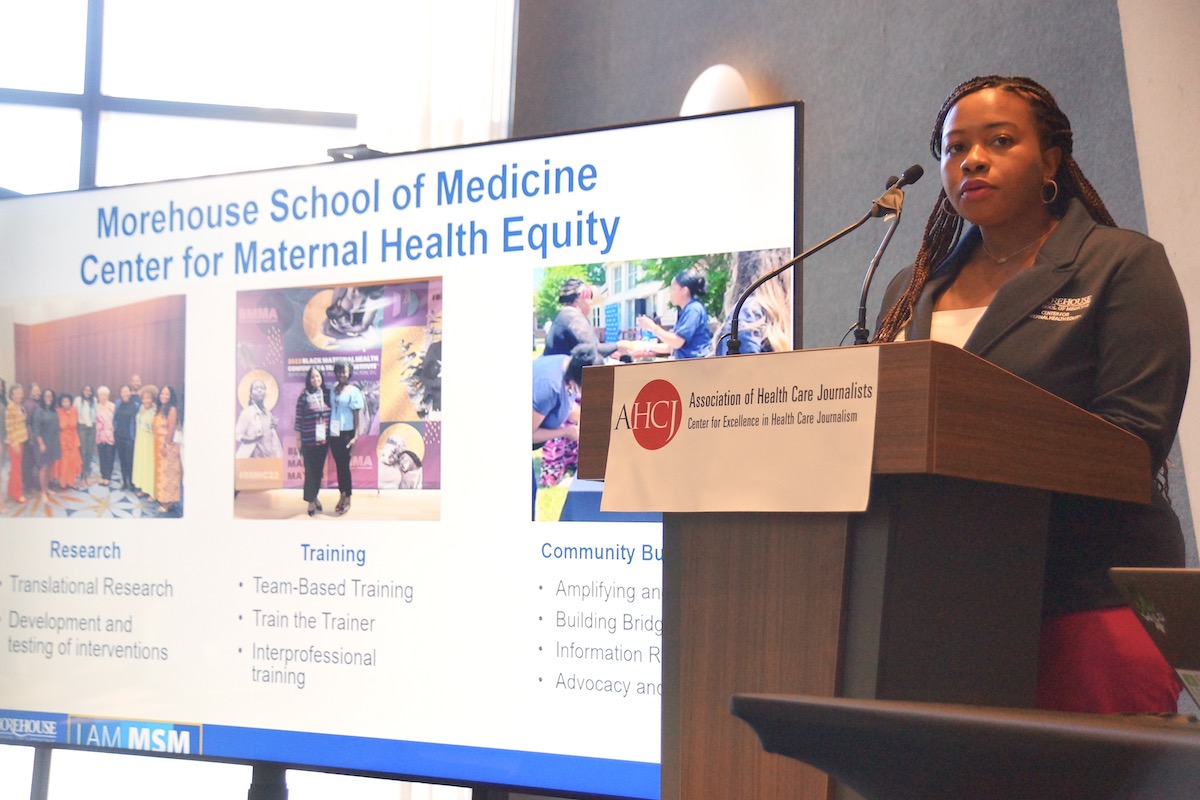
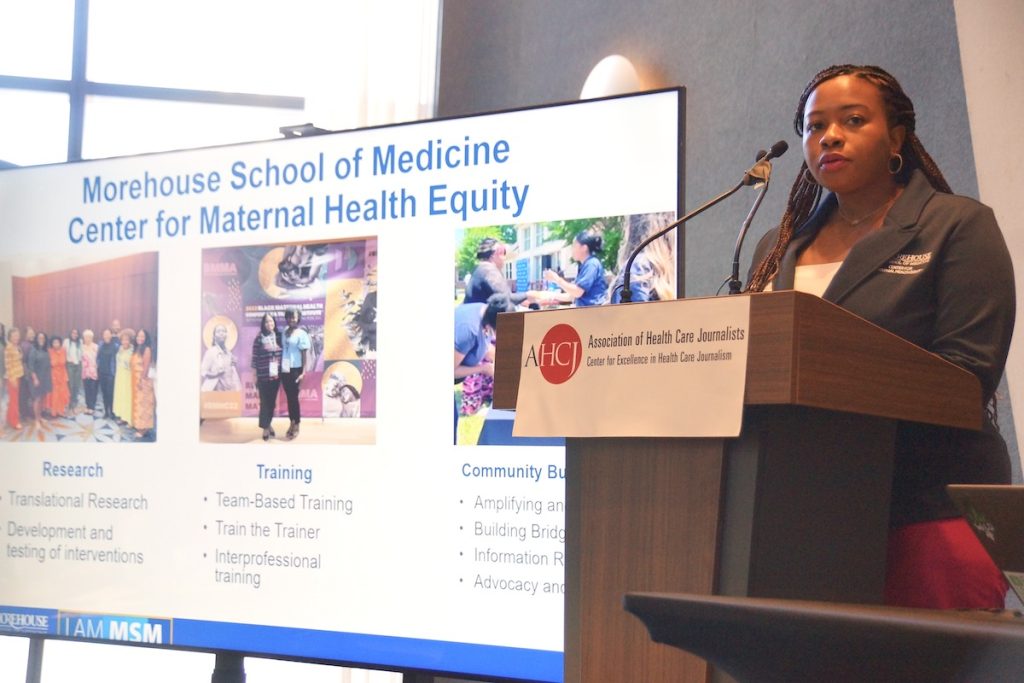 Myah Griffin, M.D., maternal-fetal medicine physician and medical director of the Center for Maternal Health Equity at Morehouse School of Medicine, addresses attendees during the session “What we don’t know could kill us: Finding the missing pieces in maternal health research” at AHCJ’s Fall Summit. Photo by Erica Tricarico
 Christine Herman, AHCJ board vice president (right), and Laura Beil, AHCJ board treasurer (left) during the interactive ethics workshop at AHCJ’s Fall Summit. Photo by Erica Tricarico
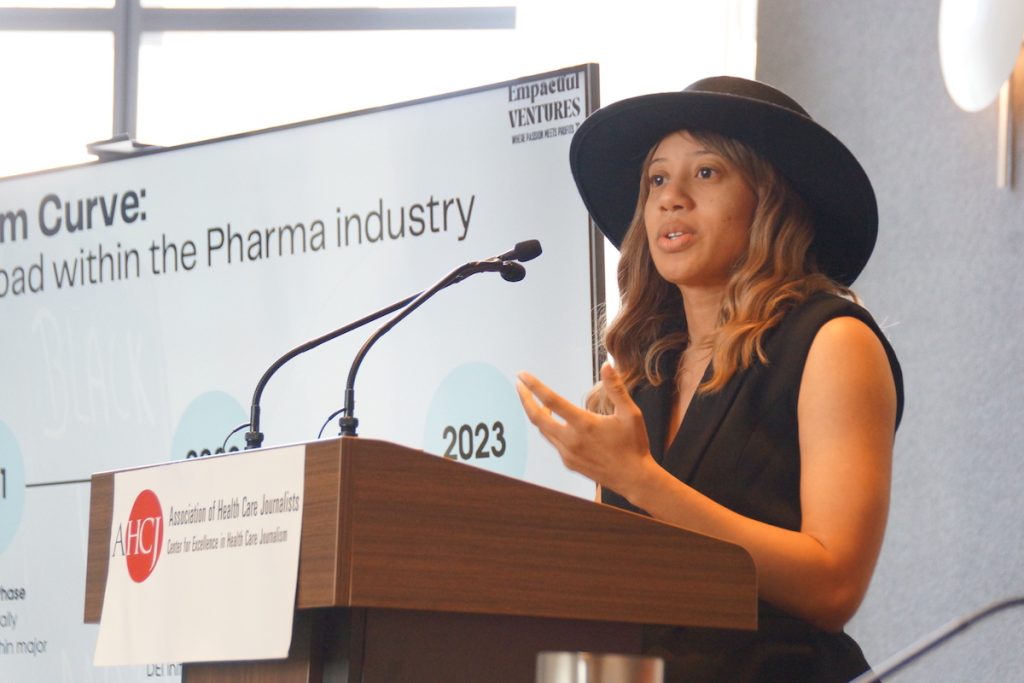 Denise N. Bronner, Ph.D., founder and CEO of Empactful Ventures, speaks during the session “Where do we go from here? The future of diversity in health research” at AHCJ’s Fall Summit. Photo by Erica Tricarico
 A citizen of Roosevelt Island’s feral cat colony basks in the afternoon sun. Photo by Kevin Ridder





Funding in flux: How politics is reshaping health research
Health research funding has been thrown into a state of uncertainty. Grants that once seemed secure are now vulnerable to cancellation for using the “wrong” language or focusing too much on equity. Overall funding levels are being cut, and political agendas are reshaping what gets studied — and what doesn’t. This matters not just to scientists, but to the communities journalists cover. In this session, journalists heard about how funding decisions used to be made, how they are made now and where the common ground is for reshaping the structure of health research funding.
- Moderator: Jessie Hellmann, health policy reporter, CQ Roll Call
- Ellie Dehoney, senior vice president, policy & advocacy, Research!America
- Miranda Yaver, Ph.D., assistant professor of health policy and management, University of Pittsburgh
- Stuart Buck, Ph.D., executive director, Good Science Project
Promising partnerships for improving health
Community groups and health system partnerships have leveraged distinct perspectives and expertise to tackle health issues with an innovative or collaborative intervention. But how are long-term and firmly funded relationships built and sustained? This session looked at three examples of partnerships that produced results and the research that came out of those projects.
- Moderator: Rachael Robertson, health reporter, MedPage Today
- Alyssa Aguilera, co-executive director, VOCAL-NY
- Kristin Z. Black, Ph.D., MPH, assistant professor, UNC Gillings School of Global Public Health
- Charlotte Miller, MPH, REACH Program manager, Division of General Internal Medicine, Icahn School of Medicine at Mount Sinai
- Terence Muhammad, co-chair, Greensboro Health Disparities Collaborative
Author talk: ‘Information Sick: How Journalism’s Decline and Misinformation’s Rise Are Harming Our Health—and What We Can Do About It’
Join Politico reporter Joanne Kenen and Johns Hopkins Vice Dean for Public Health Practice and Community Engagement Joshua M. Sharfstein, M.D., for a chat about their new book, “Information Sick: How Journalism’s Decline and Misinformation’s Rise Are Harming Our Health — and What We Can Do About It,” moderated by Washington Post health reporter Trisha Thadani. The book looks at how public health has been jeopardized by “the erosion of local news, the polarization of national media, and the rising flood of misinformation” and what journalists can do about it.
- Moderator: Trisha Thadani, health reporter, The Washington Post
- Joshua Sharfstein, M.D., vice dean for public health practice and community engagement & distinguished professor of the practice in health policy and management, Johns Hopkins Bloomberg School of Public Health
- Joanne Kenen, journalist-in-residence, Johns Hopkins Bloomberg School of Public Health
Quality over quantity: Reaching patients with research
Despite substantial investments in research and care, the U.S. continues to fall behind in health outcomes. This panel will explore some major areas in health where a greater commitment to applying evidence to prevention, access and the delivery of care could produce significant improvements. Journalists will leave this session prepared to more effectively report on these areas of promise.
- Moderator: Lara Salahi, AHCJ’s health beat leader for health equity
- Kristina Weeks, Dr.P.H., MHS, assistant professor, anesthesiology and critical care medicine, Johns Hopkins School of Medicine; Armstrong Institute for Patient Safety and Quality; Center for Health Equity
- Wendy Wilcox, M.D., MPH, MBA, FACOG, chief women’s health officer, NYC Health + Hospitals; chief, Obstetrics & Gynecology at New York City Health + Hospitals/Woodhull
- David Rastall, DO, Ph.D., assistant professor of Neurology, Johns Hopkins University School of Medicine; lead for artificial intelligence strategic initiatives, Armstrong Institute Center for Diagnostic Excellence
Extreme heat: Unsiloing data and expertise to save lives
Roughly 10,000 excess deaths can be attributed to extreme heat every year in the U.S., and this growing health threat has enormous consequences for older adults in particular. Exploring possible solutions has been hampered because health and environmental data-gathering take place in distinct and separate spheres and without support at the federal level. So what does it look like when states and/or metropolitan areas build community-led partnerships to determine who is most at risk, how to most effectively reach those people, and which interventions have the most impact? This session will explore approaches to cooling hot cities and saving lives.
- Moderator: Katie Burke, Ph.D., AHCJ’s health beat leader for environmental health
- Anna Bershteyn, Ph.D., associate professor of population health, NYU Grossman School of Medicine
- Kendra White, climate resilience manager, City of Cambridge, Mass.
- Grace Wickerson, senior manager, climate and health on the Climate and Environment team at the Federation of American Scientists
What we don’t know could kill us: Finding the missing pieces in maternal health research
Over the past five years, the problem of maternal mortality — especially among Black women — has been widely analyzed and reported on by many news outlets. But how has the history of funding affected maternal health and postnatal care? With many research grants on the chopping block, what approaches to improving outcomes for new mothers have the most potential? This session delved into the history of maternal health research, where we are today and some areas of promise.
- Moderator: Hoda Emam, professor of visual journalism and independent journalist, University of North Texas Mayborn School of Journalism
- Myah Griffin, M.D., maternal-fetal medicine physician and medical director, Center for Maternal Health Equity, Morehouse School of Medicine
- Vanessa N. Robinson, Dr.P.H., MPH, assistant professor of public health and community medicine, Tufts University School of Medicine
- Eugene Declercq, Ph.D., MBA, professor of community health sciences, Boston University School of Public Health
At the intersection of AI and health: Prevention, access and delivery
Artificial intelligence (AI) is enabling health care teams to monitor patient metrics by extracting data from electronic health records — a task that previously would have taken dedicated personnel countless hours. Using these predictive analytics programs, teams can determine which patients are most likely to be readmitted or who might benefit most from more aggressive care management and pull information about social determinants of health information from clinical notes that might indicate that a person needs transportation, housing or other resources. This session explored the funding of these research efforts and the barriers that must be overcome to create truly integrated medical records.
- Moderator: Karen Blum, freelance journalist and AHCJ’s health beat leader for health IT
- Lili Chan, M.D., MSCR, associate professor, Windreich Department of Artificial Intelligence and Human Health, Icahn School of Medicine at Mount Sinai
- Adam Stracher, M.D., chief medical officer and associate dean for clinical affairs; director of primary care, physician organization; associate professor of clinical medicine, Weill Cornell Medicine
- Divya Pathak, M.S., MBA, vice president and chief data and artificial intelligence officer, NYC Health + Hospitals
Where do we go from here? The future of diversity in health research
With cuts in funding and priorities, medical and clinical research focused on improving health outcomes for women, people of color, the LGBTQ+ community and people living with disabilities will be diminished. This session explored how institutions are pivoting to continue the research they’ve invested in and who is stepping in to fill the gaps. This session also gave journalists tips for finding ”lost” data sets.
- Moderator: Andrea Collier, independent journalist
- Angelita P. Howard, Ed.D., MBA, vice president for global education and student success, Meharry Medical College; founder/CEO, Improving Access, Inc.
- Denise N. Bronner, Ph.D., founder/CEO, Empactful Ventures
- Alane Laws-Barker, M.D., MBA, clinical professor of obstetrics and gynecology, Michigan State University; OB-GYN physician, University of Michigan Health — Sparrow

Special Thanks To Our Sponsors