
By Breanna Reeves/Equity in Health Journalism Fellowship
Reporting on the growing crisis of long-term care
Robert Ingenito became his father’s primary caregiver in 2018 as his then-88-year-old father began to age, and went on to experience a mild stroke and fractured hip. Ingenito’s experience as a caregiver who faced the financial challenges of caregiving kicked off the panel on “Reporting on the growing crisis of long-term care” at HJ24 last month.
Ingenito was one of the featured panelists alongside KFF Health News Senior Correspondent Jordan Rau, who featured Ingenito in his KFF and New York Times collaborative series, “Dying Broke.” Rau and his co-writers earned second place in the business category of the Awards for Excellence in Health Care Journalism in June.
It’s no secret that the long-term care system in the U.S. is fragmented, disjointed, confusing, expensive and challenging — even for those of us who have some background and knowledge about the system.
Liz Seegert, AHCJ Health Beat Leader for Aging
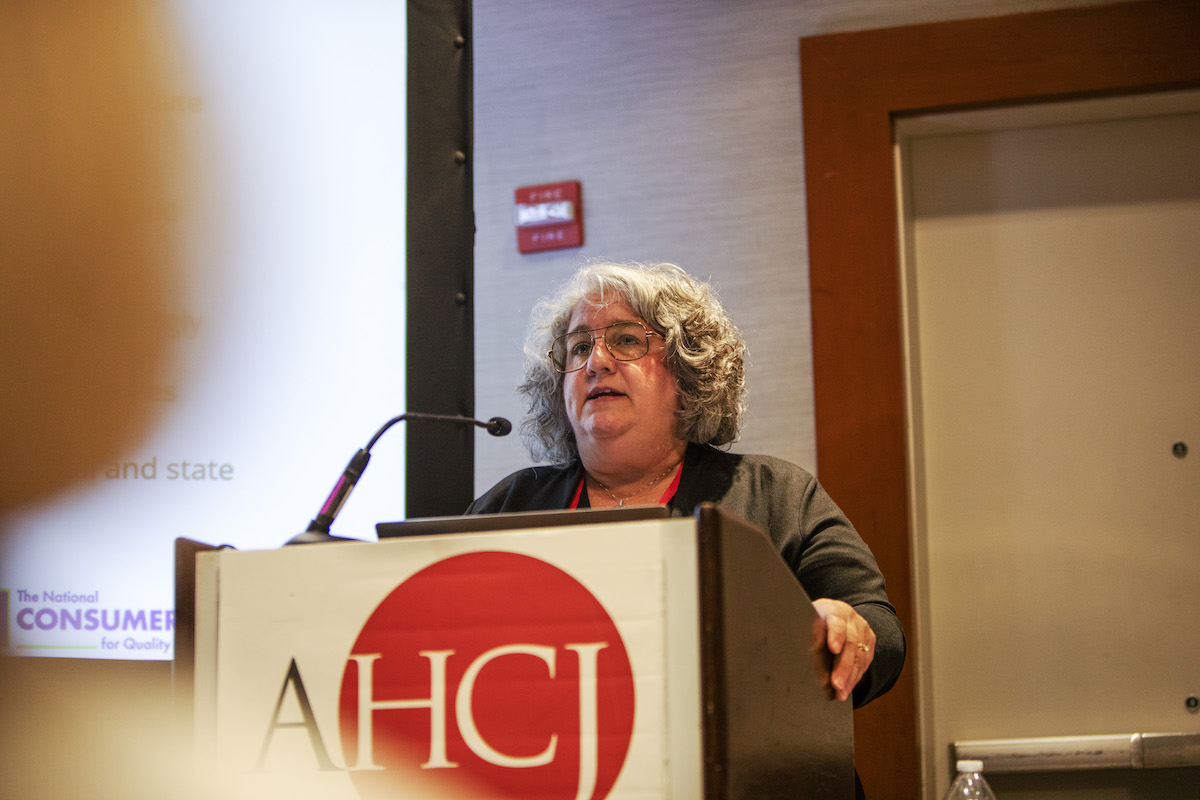
Moderated by Liz Seegert, independent journalist and AHCJ’s Health Beat Leader for aging, Rau and Ingenito discussed the financial burden of caregiving with Lori Smetanka, executive director of the National Consumer Voice for Quality Long-Term Care.
Ingenito shared the mounting costs of caring for his father, who became really sick in 2023. During the panel, Ingenito shared the estimated total cost of caring for his father for just a few months: $57,000.
“The price tag for being a caregiver is just astronomical,” Ingenito said.
Rau spoke about the way he approached his reporting and how he and his co-author, Reed Abelson of the New York Times, focused on the financial burden of long-term care on the middle class, who often spend their personal time or their own money to shoulder the costs of caregiving for a loved one. In their analysis of long-term care, they found that 8 million people over age 65 need long-term care services, but 3 million were not receiving them.
Most people in the U.S. are cared for by unpaid caregivers, which are oftentimes spouses and daughters who have no prior experience in caregiving. Like Ingenito, when their need becomes too great, many families turn toward long-term care facilities. Within long-term care facilities, there is a tier-based system that considers individual clients who can be billed for their varying care needs such as someone who needs help with activities of daily living like showering and toileting. This tier-based system often increases over time as needs change.
“As people age, they need more and more help. More and more help is more and more expensive, and so it becomes very hard,” Rau explained.
During the panel, Smetanka suggested that reporters examine licensure and the cost of care in nursing facilities and long-term facilities, who are certified by Medicare and Medicaid, and “accept Medicare and Medicaid dollars by the Centers for Medicare and Medicaid Services.”
“There’s a real need for increased transparency with respect to ownership, who owns and operates these nursing homes, as well as where the money’s going that they receive,” Smetanka said. “Those are real questions that need to be asked when you think about accountability for care for nursing homes.”
Breanna Reeves is a data health reporter for Black Voice News based in Southern California. She is a 2024 AHCJ-Equity in Health Journalism Fellow.