
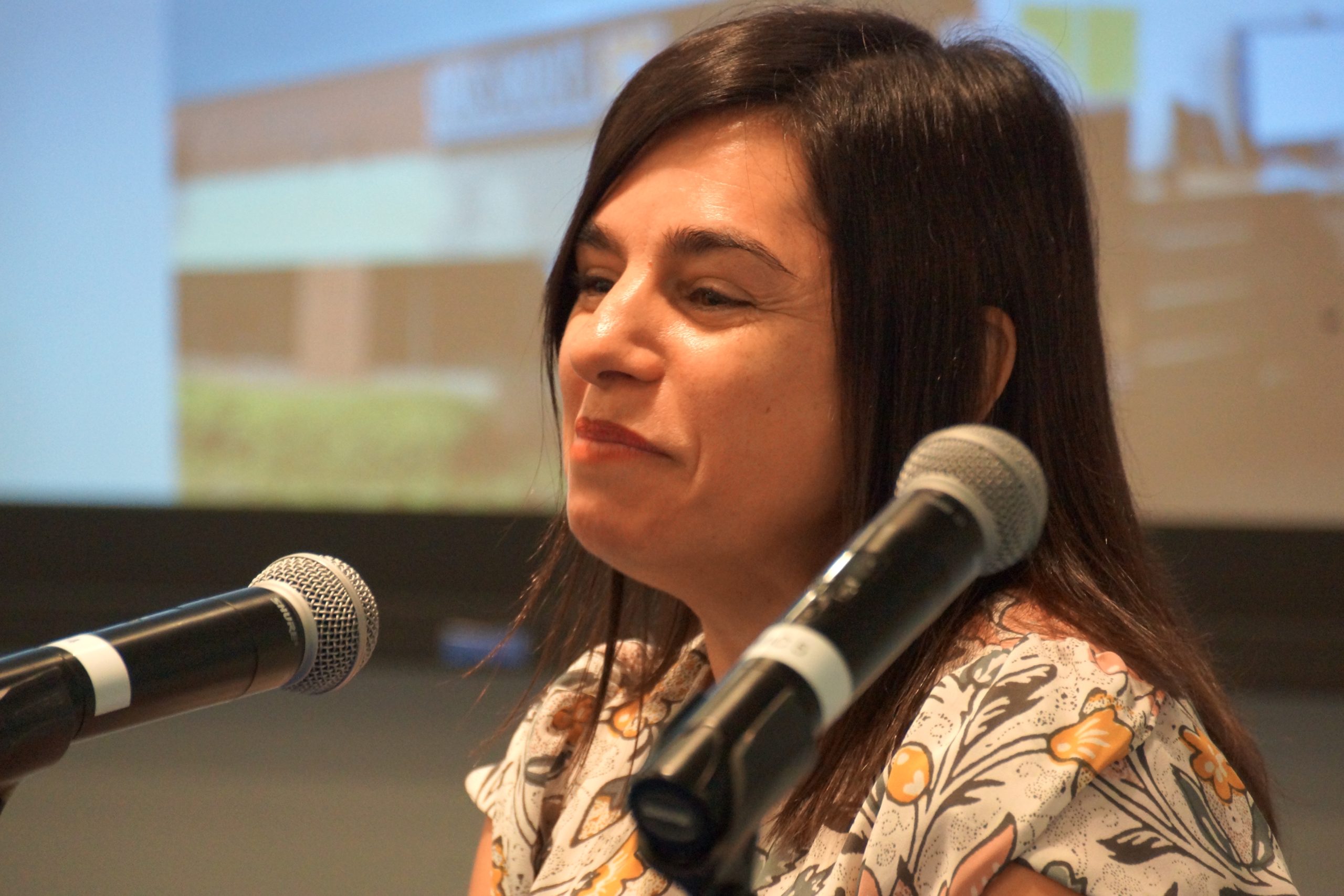
Across the country, cities are rolling out crisis response teams — some with and some without law enforcement involvement — to respond to mental and behavioral health emergencies. During a session at AHCJ’s 2024 fall summit in Washington, D.C., panelists discussed the importance of filling gaps in the crisis care continuum and how some cities are approaching the issue.
What is the crisis care continuum?
- Prevention.
- Crisis response.
- Crisis stabilization.
- Follow-up care.
Panelist Adrienne Breidenstine, MSW, from Behavioral Health System Baltimore, said one of her top priorities is implementing policies to reduce police involvement in mental and behavioral health crises.
“The problem is we have police respond, and then the situation does not go as it should, and the person ends up experiencing more harm than they need to when they’re having a behavioral health crisis,” Breidenstine said. “[Police] are expected to be social workers, teachers and all these things that we don’t train them to do.”
Policies like Maryland’s recently passed telecom fee, which permanently funds the 988 helpline in the state, are a step in the right direction, she said.
Virginia
Panelist and HopeLink Behavioral Health CEO Joseph Getch spoke about the nonprofit’s fully virtual, regional crisis call center structure.
- HopeLink has 320 employees spread throughout roughly 30 states.
- Virginia, unlike Maryland, is primarily a public behavioral health system served by 40 community service boards.
- These 40 boards are split into five health planning regions, of which HopeLink serves four. The fifth, Southwest Virginia, is served primarily by Frontier Health in Tennessee.
- In October 2023, Virginia 988 averaged 190 calls per day, or roughly 69,350 per year. In October 2024, it’s averaging 527 calls daily, or 192,355 per year; a 177% increase.
Getch also spoke about the Marcus Alert System, enacted in 2020. The system:
- Standardizes the language in the crisis response system.
- Created policy to make system-wide changes in response to behavioral health crises.
- Formalized a two-way relationship between 911 and 988 call centers for a better response to these crises.
Grassroots
Mariana Izraelson, Psy.D., panelist and executive director of the Grassroots Crisis Intervention Center, explained how the 24/7 comprehensive crisis center and emergency shelter works. All services are provided free of charge.
“The crisis is defined by the individual, not us,” Izraelson said. Grassroots is also part of the 211 health check program, where “individuals can sign up for routine checkups by a crisis counselor once a week,” she added. While it’s not utilized by everyone, “for people that really need it, they use it and really like it.”