What’s on the ‘Vajenda?’
By Grace Hayba, North Carolina Health Journalism Fellow
We’ve all heard the phrase “Google it.”
And most of us have probably done just that.
But Dr. Jen Gunter — the renowned OB-GYN and New York Times best-selling author who writes a Substack called “The Vajenda” — warns that when it comes to women’s health, turning to the internet for questions about hormones, period problems, and menopause may cause more confusion through misinformation.
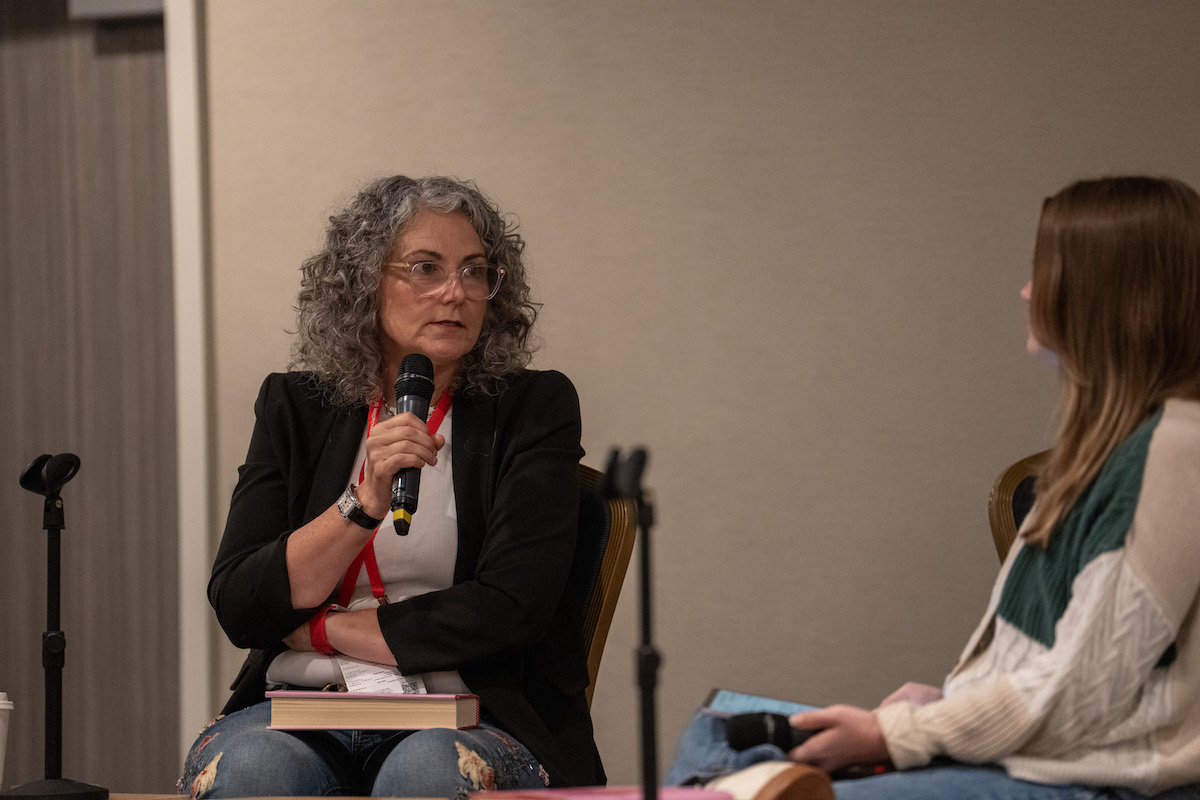
In a wide-ranging conversation at Health Journalism 2025 in Los Angeles centered around her latest book “Blood: The Science, Medicine, and Mythology of Menstruation,” Gunter discussed misinformation, health care system flaws, and exploitative marketing plaguing women’s health.
The physician started by sharing imperfections she has identified through her career with the term “hormone imbalance.”
“If there’s anything wrong with you, it’s related to your hormones being imbalanced. I would say that is the biggest myth, misconception, and disinformation rolled into one,” stated Gunter. “Your hormones are never imbalanced. That’s not even a medical term, that’s sort of a naturopathic term that has somehow wormed its way into scientific discourse.”
For those seeking care in traditional clinical settings, Gunter outlined why she believes current medical training misses the mark.
“Ten percent of office visits are related to vaginitis. People don’t get training in that,” said Gunter. “Tons of office visits are in urogynecology and incontinence. Most people know how to do the surgery, but they don’t know how to talk to the patient in the office.”
Gunter stated that “office-based gynecology is incredibly poorly taught,” which contributes to structural issues within programs.
“The fact that people are leaving physicians’ offices and nurse practitioners’ offices not feeling listened to is a major issue that needs to be fixed,” said Gunter.
She shared that many women now seek out vaginal health information online, giving rise to noncredible social media influencers. Gunter warned the issue is often present in conversations about menopause, including unfounded claims about the possible benefits of testosterone. (Online advocates of testosterone gel say it can boost energy and improve sleep, mood, and concentration.)
Gunter strongly advises women with questions about menopause and any vaginal health topic to speak directly with a physician, to reduce the likelihood of receiving inaccurate guidance surrounding subjects like pelvic pain and hormone therapy.
Gunter also warned that untrained social media influencers, along with companies that sell unproven products, can take advantage of women looking for answers by marketing things like at-home vaginal microbiome tests.
“People mistake testing for caring,” said Gunter. “I have people that come in every day with microbiome testing, and I’m like, ‘Okay, there’s nothing I can do with it,’ and they’re shocked.”
The physician shared that she often has to explain to her patients that the companies behind many of these at-home tests are not medical providers, and the test results may not be an accurate depiction of someone’s health.
“If I sampled your microbiome at 8 a.m. and at 4 p.m. and at 8 p.m., I’m probably going to get different results,” said Gunter. “I really don’t have the ability to take that data and translate it into knowledge.”
Tackling another widespread myth often spotted in online posts, Gunter addressed an inaccurate link between weight gain and menopause.
“There actually isn’t a change in metabolism with menopause,” said Gunter. “What does happen is the weight we put on during menopause is distributed differently. We tend to put on more visceral fat – that’s why people talk about gaining weight around the middle – but it’s the same amount of weight you gain.”
The physician shared that other factors like sleep disturbance, exercise, and diet all play major roles in weight gain and distribution during menopause.
When asked about the Trump administration’s efforts to dismantle the Women’s Health Initiative, Gunter defended the initiative and its landmark study on hormone therapy, calling it “a really good study.”
“When people say it is flawed or bad or terrible, [or that] people were not randomized correctly— the study design doesn’t have flaws,” she said. “The fact it gave an answer that somebody may not want doesn’t make it a bad study.”
She continued, “It’s very easy to go back now and say, ‘Well, we have this concept of a timing hypothesis and they should’ve enrolled younger people.’We didn’t have that concept before this study. You can’t blame the study for perhaps finding something we didn’t know about before.”
When talking about the future of the Women’s Health Initiative, Gunter expressed her belief that the efforts should continue to be funded, adding, “We’re still collecting all of this amazing data from it. It’s the largest randomized, double-blinded, placebo-controlled trial in history.”
As the session closed, Gunter encouraged journalists to continue asking the tough questions—because lives depend on it.
In a world where misinformation spreads faster than fact, outdated training remains the status quo, and unregulated tests are becoming more common in American households, Gunter emphasized the importance of what she calls “lateral research.”
“Go to The Menopause Society in North America, go to the Australian Menopause Society, go to the British Menopause Society: if all three of those societies are saying the same thing, that’s probably a pretty good place to start,” said Gunter.
Grace Hayba covers health for WRAL News in a position made possible by funding from Duke Health and UNC Health. She is the only television reporter dedicated to health coverage in North Carolina.