Political violence and terrorism plots have increased in recent years in the United States, even as overall gun violence has declined since its pandemic-era peak, according to researchers who track extremist activity.
Michael Jensen, now director of research at the Polarization & Extremism Research & Innovation Lab (PERIL) at American University, said last year that researchers were seeing warning signs of growing civil unrest in the United States.
During the first six months of 2025, Jensen said, more than 520 incidents of terrorism and targeted violence occurred in the United States — roughly a 40% increase compared with the first six months of 2024.
This is a trend journalists should track because it provides context about the kinds of violence affecting people’s safety and well-being. Even as overall violent crime declines, spikes in political violence show why it’s important to track specific types of violence separately.
Breakdown of the numbers
From Jan. 1, 2025, through June 30, 2025, there were 96 deaths and 329 injuries linked to terrorism and targeted violence, according to Jensen. The incidents occurred in all states except Montana and Wyoming.
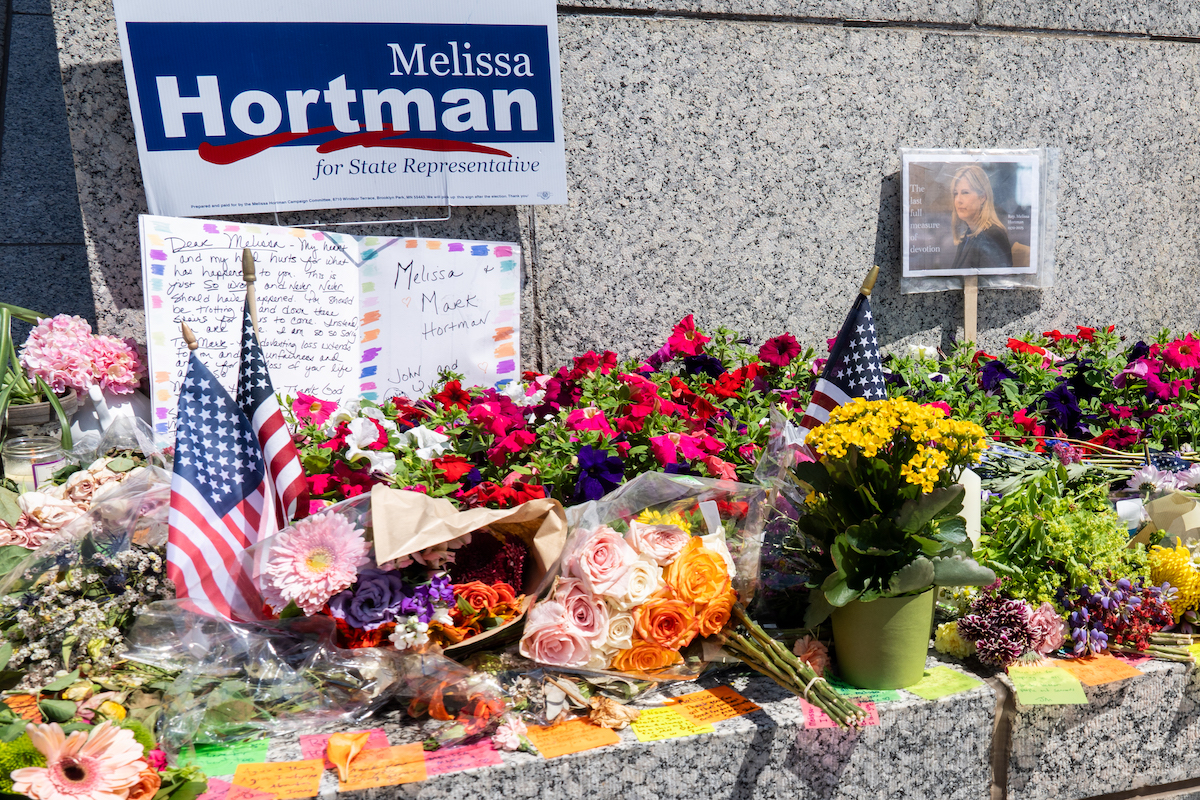
The spike Jensen describes aligns with several high-profile political violence incidents in recent years. One of the most prominent recent incidents was the fatal shooting of conservative activist Charlie Kirk in September 2025 during an event at Utah Valley University. In another major case, former Minnesota House Speaker Melissa Hortman and her husband were fatally shot in in their home in June 2025 in what the Department of Justice called “heinous political assassinations.” In December 2024, UnitedHealthcare CEO Brian Thompson was also shot and killed outside a New York City hotel in what authorities described as a targeted attack.
What the research says
A recent study from researchers at New York University Stern Center for Business and Human Rights found that extremists are exploiting political violence on online platforms to recruit new people to their causes.
The report examined extremist activity across the ideological spectrum, including far-right, far-left, violent Islamist and nihilistic violent extremists, to analyze their tactics and motives.
“Violent extremist groups systematically exploit trigger events – high-profile incidents of violence – to recruit supporters, justify their ideologies and call for retaliatory action,” the report states.
Meanwhile, UC Davis researchers found in a national survey last year that a “substantial minority of American adults” endorsed authoritarian views and smaller groups agreed that the current federal government “should use the military to help enforce its policies.”
And about 10% of survey respondents said they were at least “somewhat willing to use violence themselves” to support or oppose the current federal government. About 13% agreed at least somewhat with the use of “private armed militia groups” for that purpose, and roughly 4% agreed strongly or very strongly.
But the survey also found that large majorities of Americans reject authoritarianism and political violence.
Across the political spectrum
According to Jensen’s findings, the terrorist plots and attacks that have occurred so far this year were not driven by a single political goal, ideology or movement. Instead, they came from across the political spectrum:
- 32 plots and attacks with a nexus to antisemitism.
- 20 premeditated plots and attacks targeting local and federal entities who carry out immigration enforcement.
- 13 premeditated plots and attacks targeting peaceful demonstrators who were protesting the current administration’s immigration and executive policies.
- 21 plots and attacks targeting Republican lawmakers and politicians.
- 10 plots and attacks targeting Democrat lawmakers and politicians.
- 22 plots and attacks targeting the LGBTQ+ community.
- 7 plots and attacks targeting Muslim community members.
- 6 plots and attacks targeting people perceived by perpetrators to be immigrants.
- 5 plots inspired by foreign terrorist organizations.
There was also a 187.5% increase in mass-casualty attacks — events in which four or more victims were killed or wounded — during the first six months of 2025 (23 events) compared with the same period in 2024 (8 events), according to Jenson’s analysis.
Resources
- UC Davis Centers for Violence Prevention has been a leading research institution on understanding political violence and Americans’ shifting attitudes toward political violence and authoritarianism.
- Polarization & Extremism Research & Innovation Lab (PERIL) at American University is an applied research lab at American University’s School of Public Affairs focused on preventing radicalization to violent extremism. The lab uses “a public health approach to design, test, and scale-up evidence-based tools and strategies that effectively reduce the threat of radicalization to harmful online and offline content including conspiracy theories, mis/disinformation, propaganda, and supremacist ideologies,” according to its website. The lab’s work supports individuals and communities to reject propaganda and extremist content, and empowers them to intervene and interrupt early radicalization.