As President Donald Trump’s aggressive immigration campaign sweeps across the country, gun violence tends to follow, according to reporting by The Trace.
That violence came to a head in January when two U.S. citizens were fatally shot in the streets of Minneapolis during “Operation Metro Surge,” a mobilization of the federal agencies Immigration and Customs Enforcement and Customs and Border Protection to arrest and deport undocumented people in the city.
Renee Nicole Macklin Good, a poet and mother of three, was killed on Jan. 7. Her car was blocking a lane of traffic as agents yelled at her to get out. She tried backing up and driving away from the agents when one of them fired, video from the scene showed. The federal government labeled her as a “domestic terrorist” and claimed she tried running the agents over, though video evidence and family accounts have raised questions about that characterization.
Just over two weeks later and about a mile away, 37-year-old Alex Pretti was fatally shot by immigration agents. Pretti was filming agents when they shoved a fellow observer to the ground. When Pretti, an ICU nurse, went to help her up, agents stopped him, pushed him to the ground and shot him several times, according to bystander videos verified by multiple outlets.
Their deaths drew outrage from across the country and the Trump administration has since said they are scaling back the immigration operation in Minnesota, according to Reuters. Minneapolis leaders said that Operation Metro Surge cost the city at least $203 million in lost wages, revenue, support services and more.
But Good and Pretti were just the latest victims. And it’s important for reporters covering these incidents to include the larger context and the other people also shot by immigration agents.
Disparities in coverage
Good and Pretti’s deaths were widely covered and their names became known nationwide. That coverage also humanized them and their names were chanted at anti-ICE protests across the country.
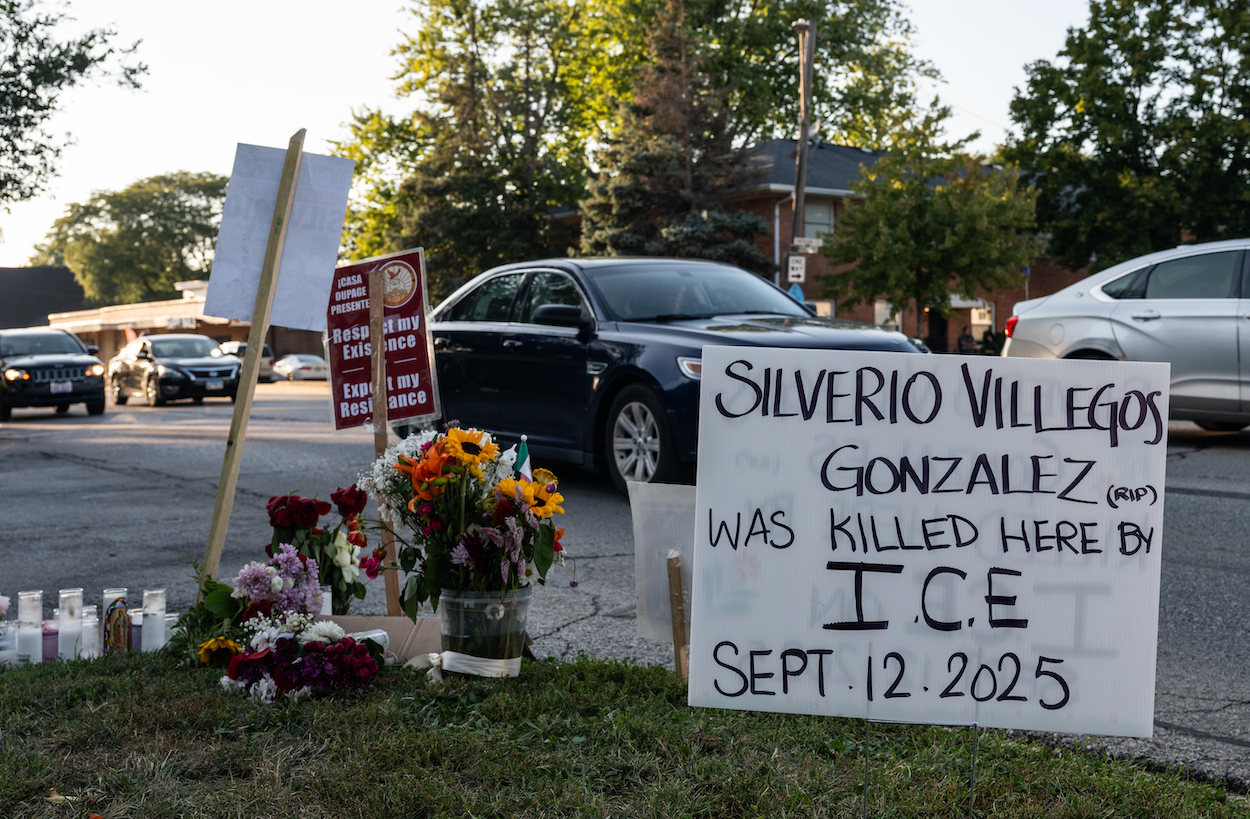
Other victims who were shot by immigration agents, especially those who were people of color or not U.S. citizens, didn’t receive nearly the same level of coverage. For example, the fatal shooting of 38-year-old Silverio Villegas González, a Mexican national with no criminal record who was killed by immigration agents in a Chicago suburb after dropping off his two children at day care, received far less sustained national attention.
This is a bias that repeats regularly in U.S. news media. Another common example is coverage of mass shootings. Mass shootings occur regularly in Black and poor neighborhoods. Yet those incidents rarely receive the same coverage as the mass shootings in which the victims are largely white and wealthier.
A January 2026 UC Davis study found that mass shootings in majority-white neighborhoods received roughly twice the news coverage of mass shootings that happen in neighborhoods largely made up of people of color.
The researchers — from University of California, Davis, Northwestern University and the University of Washington — also found that coverage of police shootings was disproportionately high in majority-minority communities and noted that language varied depending on the type of shooting and the victims involved.
For example, race was mentioned in 62% of articles about gun violence incidents. Reports of violence in majority-white neighborhoods put more focus on the shooters, while coverage of violence in majority-minority neighborhoods more often emphasized the victims or broader crime trends
ICE shootings nationwide
At least six people have been fatally shot by immigration agents since the enforcement campaign began last year, according to an analysis from The Trace. In total, at least 23 people have been shot as of Feb. 23, the news outlet found.
Experts also say that those shootings “underscore the excessive use of force being applied by agents,” according to The Trace.
Before the recent high-profile shootings, a separate investigation from The Trace in 2024 found that immigration agents often recklessly fire their weapons and are rarely prosecuted for it. The investigation also learned that several shootings went unexamined while others appear to have violated Immigration and Customs Enforcement’s policies.
In September when Chicago was the focus of Trump’s deportation operation, immigration agents fatally shot 38-year-old Mexican national Silverio Villegas González during a traffic stop in a northwest suburb of Chicago.
After the shooting, a Department of Homeland Security spokesperson said the agent “sustained multiple injuries” and was “seriously injured” when he was “dragged a significant distance” by Villegas González’s car as he fled a traffic stop.
Officials said the agent had opened fire, fearing for his life. But body camera footage released by the suburban Chicago police department involved in the stop showed the agent’s injuries were “nothing major.” He said he was “dragged a little bit” and suffered cuts to his knee and hands.
Then in October, agents shot Marimar Martinez five times in Chicago. Martinez was driving around Chicago’s majority-Hispanic Brighton Park neighborhood warning residents and monitoring immigration activity.
Martinez and another car were allegedly tailing border patrol cars when they crashed. An agent then fired shots at her. That agent later bragged about the shooting in text messages to fellow agents: “I fired 5 rounds and she had 7 holes. Put that in your book boys.”
That wasn’t the only case of an agent making derogatory remarks about the person they shot. The agent who shot Good called her a “f— b—” after killing her, according to a video analysis reported by NBC News and other outlets.
The 30-year-old U.S. citizen suffered seven gunshot wounds and survived the shooting only to be criminally charged by the federal government for assault. Federal prosecutors later dropped the charges without explanation.
Another fatal shooting of an American citizen happened earlier last year in Texas, but only recently gained national attention. Last March, Ruben Ray Martinez, 23, was shot multiple times on South Padre Island in Texas by an ICE officer after he did not follow commands to get out of his car.
At least one fatal shooting happened separate from immigration enforcement activity.
In Los Angeles on New Year’s Eve, an off-duty Immigration and Customs Enforcement agent fatally shot Keith Porter Jr., a 43-year-old father of two. Porter’s family says he fired celebratory shots near his apartment complex when the off-duty agent approached him and shot him three times. Witnesses said Porter was walking back to his apartment when he was shot and was not a threat. The agent also allegedly did not identify himself before firing.
Key takeaway
For journalists covering these incidents or similar ones, do your best to report on them fully and from all angles.
Talk to victims and/or their family and loved ones, question the official narrative and closely investigate the incident through public record requests and surveillance footage.
While a lack of source cooperation and data access can make this difficult, push the reporting as far as you can and stay on the story even when the news cycle inevitably moves on.
Resources
A common issue with reporting on law enforcement violence is that agencies rarely publish data when one of their own perpetrates violence. And when they do, the data is challenging to rely on and often incomplete.
Here are a few resources to help you find data on law enforcement violence:
- The Trace’s Gun Violence Data Hub is a great resource for reporters looking for good data. We recently highlighted their work here.
- The Gun Violence Archive is a nonprofit that provides near real-time, comprehensive and detailed data on gun violence incidents in the U.S. (We’ve covered this useful resource before.)
- The FBI’s National Use of Force Data Collection is also a useful resource on this topic.