
Recently released data show that the European Union has successfully met its “zero-pollution” target of reducing premature deaths from air pollution by 55% by 2023. However, about 95% of people living in EU cities in 2023 were still exposed to fine-particle pollution above WHO health guidelines.
As the United States falls behind in clean air policy, health journalists can examine progress in Europe and report on the resulting health improvements and policy challenges. To report accurately on air pollution, health journalists must understand the rigorous scientific framework behind the 2021 WHO Global Air Quality Guidelines and the practical policy shifts successfully reducing deaths worldwide. Recent success stories demonstrate that clean air is an achievable goal.
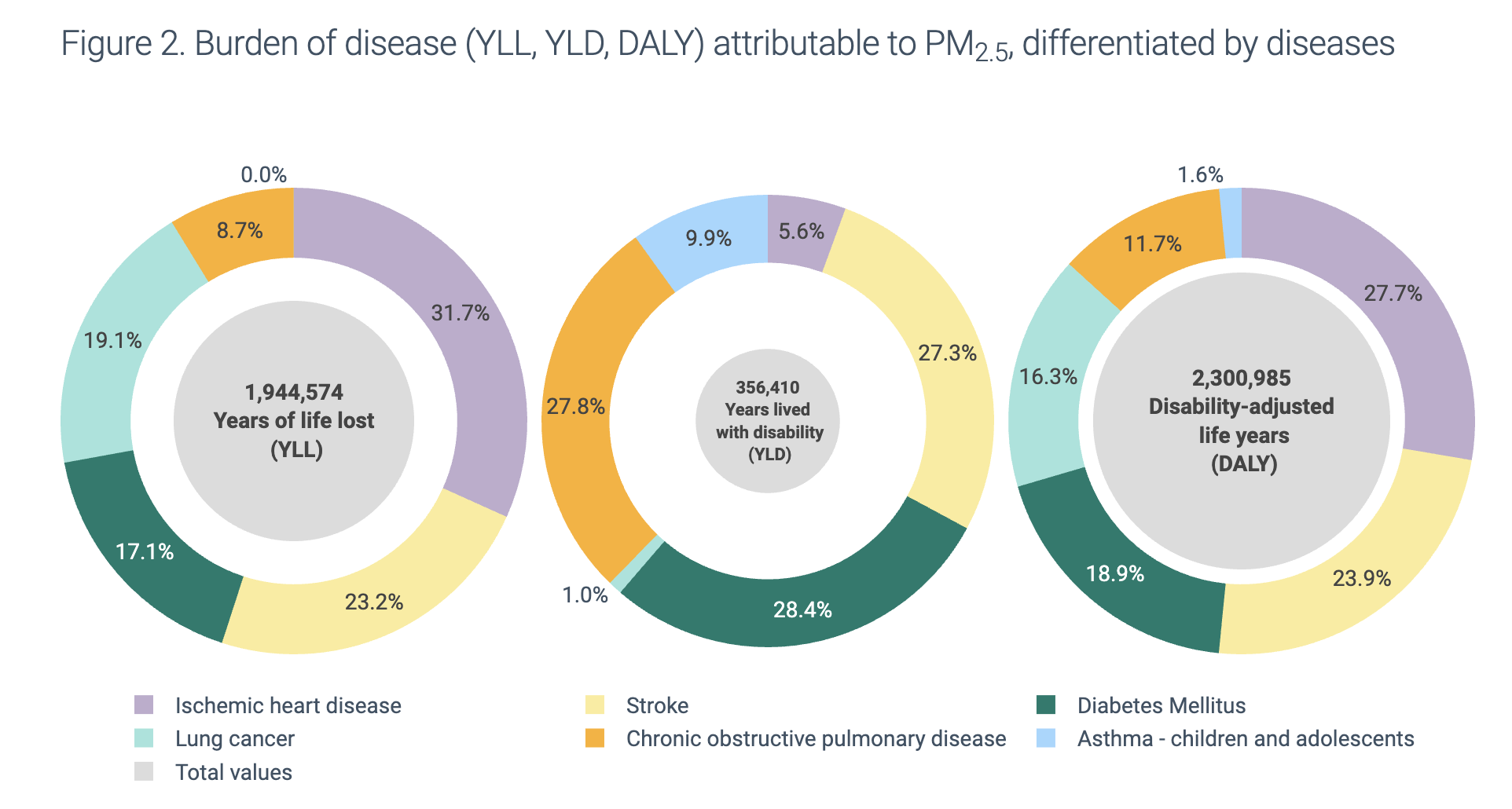
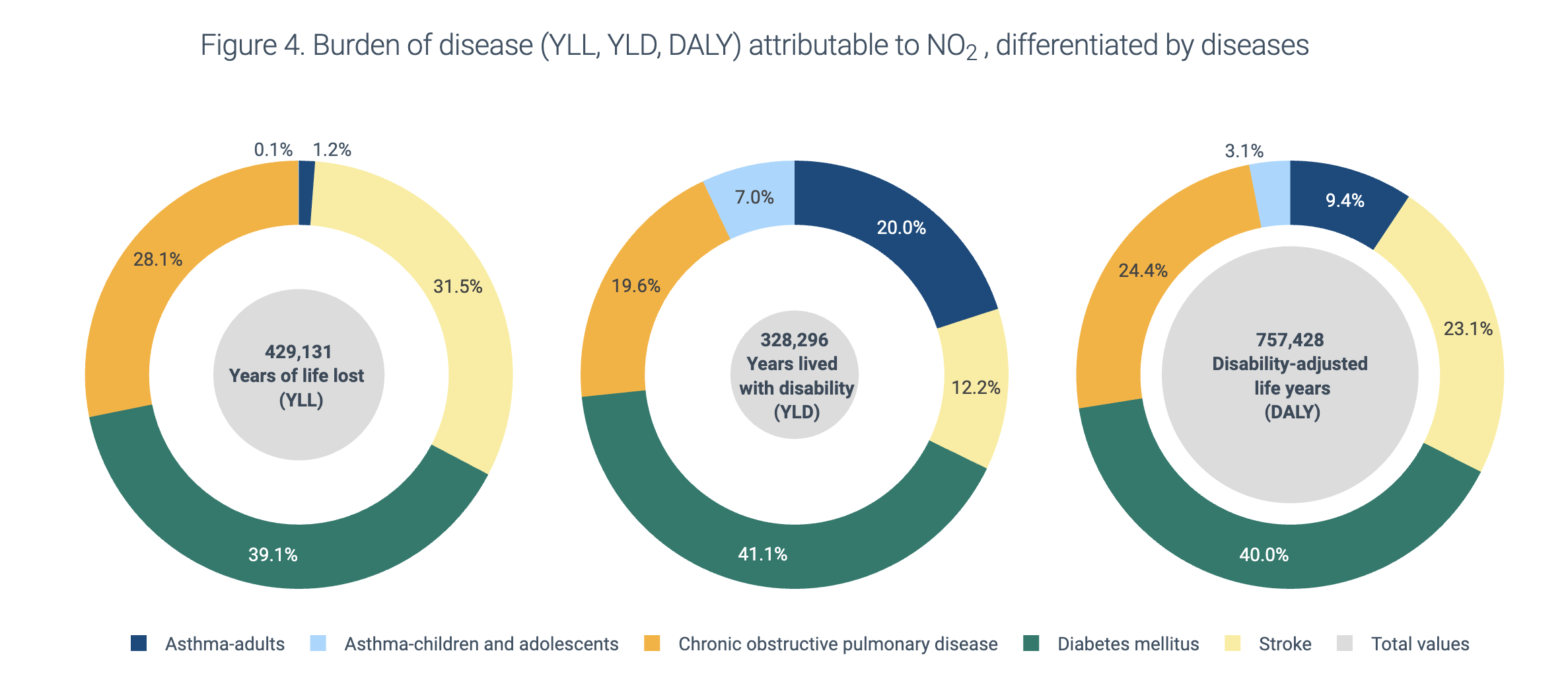
Source: European Environment Agency
The 2021 WHO guidelines: A scientific shift
WHO’s 2021 update to their Air Quality Guidelines significantly lowered the recommended levels of exposure for six commonly regulated pollutants: particulate matter (PM2.5 and PM10), ozone (O3), nitrogen dioxide (NO2), sulfur dioxide (SO2) and carbon monoxide (CO).
For example, the recommended annual level for PM2.5 was halved from 10 µg/m³ to 5 µg/m³. This change was driven by new evidence showing that health damage occurs at even lower levels of concentration than previously understood.
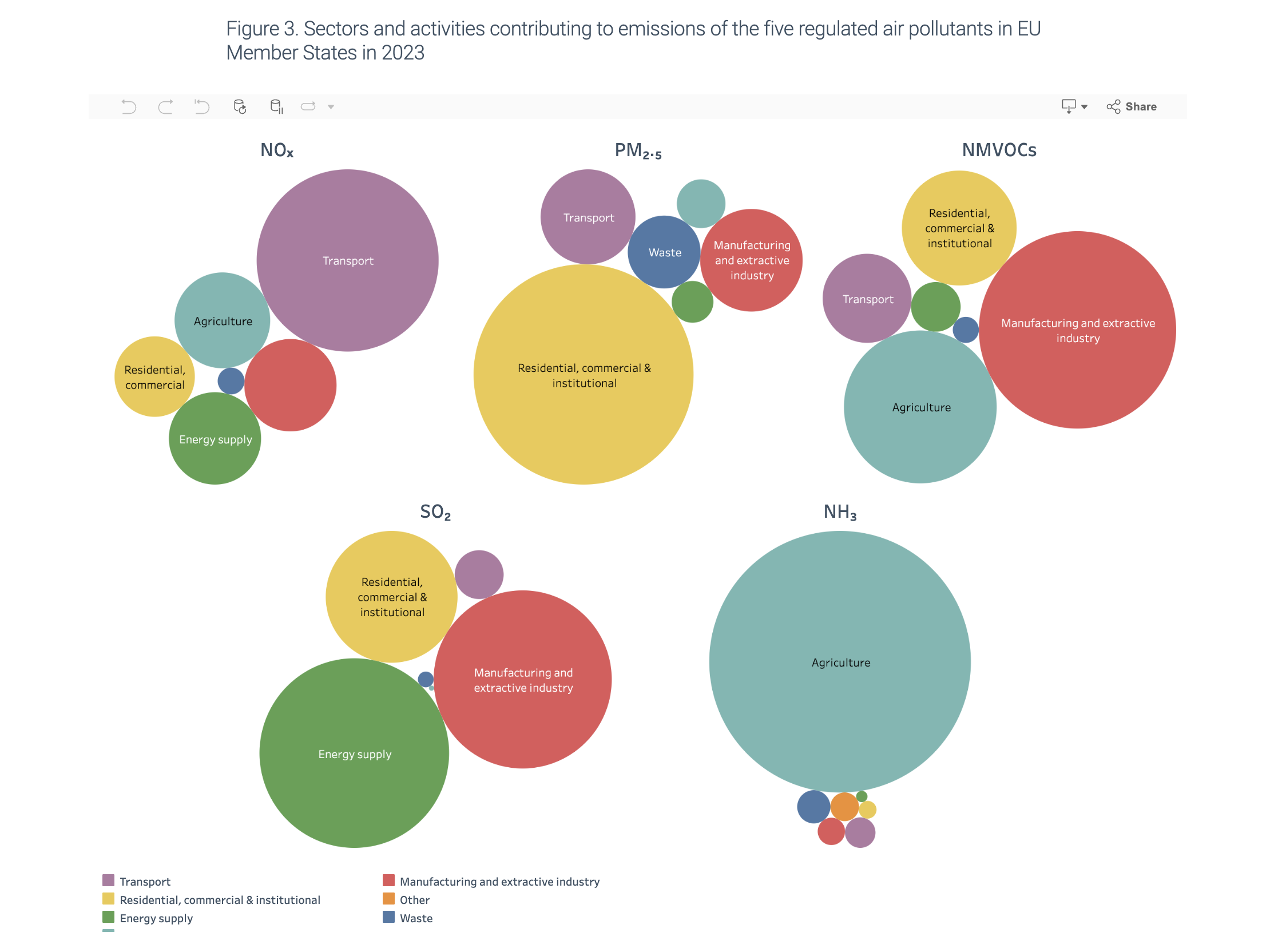
The 2021 guidelines also include recommendations for pollutants that weren’t included in the previous guidelines. For example, ammonia (NH3) is now recognized as an important precursor to particulate matter formation, with implications for the agricultural sector in particular. Another air pollutant new to the WHO guidelines are ultrafine particles, which are now measurable because of technological advances.
Most of these pollutants are intertwined with the same sources and also with fossil fuel use. Reducing one will often reduce the others. Climate change targets and air pollution targets overlap substantially.
These recommendations are not arbitrary; they are the result of six comprehensive systematic reviews covering thousands of papers.
The table below illustrates the dramatic shift from the 2005 guidelines to the 2021 standards and compares them to the current reality in Europe.
| Pollutant | Averaging Time | 2005 WHO Guideline | 2021 WHO Guideline | Current EU Status |
| PM2.5 | Annual | 10 μg/m³ | 5 μg/m³ | 95% of urban population exposed above 2021 levels. (12 out of 27 member states on track to meet guidelines by 2030) |
| PM10 | Annual | 20 μg/m³ | 15 μg/m³ | Significant exposure remains; highest impacts in Eastern/SE Europe. |
| Ozone (O3) | Peak Season | — | 60 μg/m³ | Exposure above this level caused 63,000 deaths in the EU in 2023. |
| NO2 | Annual | 40 μg/m³ | 10 μg/m³ | Exposure above this level caused 34,000 deaths in the EU in 2023. (10 member states on track to meet guidelines by 2030) |
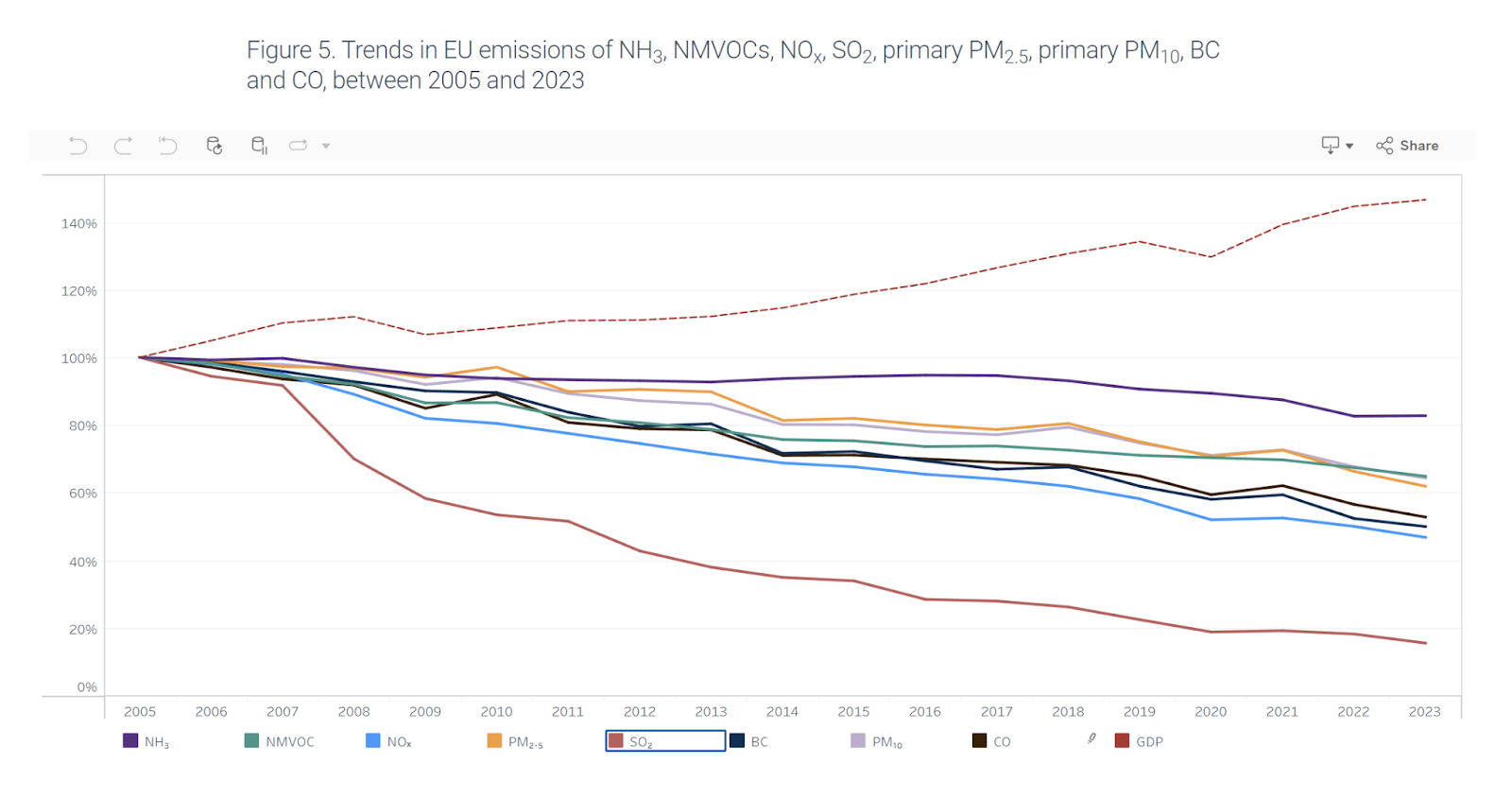
| SO2 | 24-hour | 20 μg/m³ | 40 μg/m³ | Emissions declined by 85% since 2005. (25 member states on track to meet guidelines by 2030) |
| CO | 24-hour | — | 4 mg/m³ | New 24-hour guideline established in 2021. |

Decoupling GDP from pollution
A common political counterargument to reducing air pollution is that it is an inevitable byproduct of economic growth. Sources provide strong evidence to the contrary:
- China: Between 2013 and 2024, China’s national PM2.5 concentrations dropped by 60%, while its GDP more than doubled during the same period.
- European Union: EU emissions of the five main pollutants have steadily declined while the economy grew, demonstrating a successful decoupling of economic activity from air pollution. In the EU, clean air policy benefits (worth at least €372 billion) are estimated by the European Commission to outweigh pollution reduction costs by at least four to one.
Emphasizing what works
As I wrote in a recent post, a solutions-oriented lens is considered best practice for communicating the gravity of climate change and the progress that has and can continue to be made. Journalists should look for specific interventions that have yielded measurable results and can be applied more widely. Some examples:
- Reducing SO2: It once seemed unthinkable that sulfur dioxide, which causes acid rain, could be reduced to protect public and environmental health. Today, it’s normal for levels of this pollutant to be well below limits in most high-income countries.
- Transport: London’s Ultra-Low Emission Zone (ULEZ) led to a 20% reduction in NO2 concentrations across the city. Success depended on robust information, expert validation and “scrappage schemes” to support vehicle changes.
- Clean energy: In Ethiopia, where 90% of households use traditional biomass for cooking, health initiatives are focusing on promoting clean cookstoves and solar electrification of health care facilities.
- Transboundary management: Air pollution does not respect borders. In the United Arab Emirates, policy focuses on desert dust and transboundary pollution, using early warning systems and regional forecasting.
- Urban green spaces: Beyond aesthetics, green spaces in cities help reduce wind erosion, improve air quality and encourage physical activity.
Newly measured and regulated pollutants
While journalists often cover PM2.5, the WHO is now providing “Good Practice Statements” for pollutants where evidence is still emerging but concerning. Although the WHO calls these “new and emerging pollutants,” they are not new in the environment. Rather, they are a new focus because researchers just started measuring and paying attention to them. These include:
- Black carbon: A short-lived pollutant from combustion, also known as soot.
- Ultrafine particles: These particles are smaller than 10 nm and require specialized monitoring. Technology advances have made it possible to measure them.
- Sand and dust storms: These require specific early-warning personal measures to minimize short-term health issues.
The journalistic path ahead
The overarching message from the WHO is one of urgency but also optimism. If countries implement the 2021 guidelines, particularly for PM2.5, it could prevent up to 80% of current air pollution-related deaths. Health journalists should emphasize accountability in their reporting:
- Are local governments adopting the interim targets provided by the WHO to bridge the gap toward final guideline levels?
- Is the health sector leading the conversation? Leadership from the health sector is critical to framing air quality as a non-negotiable medical necessity.
- Are policies protecting vulnerable populations (children, the elderly and the socioeconomically disadvantaged) who are most exposed yet least able to adapt?
The good news? We have the solutions: clean energy, sustainable transport, and bold legislation. Most audiences remain unaware of the impact of air pollution on their lives, or the immediate benefits to their health that reducing carbon emissions yields. Health journalists can fill that gap.
Potential sources
- Heather Adair-Rohani, Technical lead on energy and health, WHO
- Sophie Gumy, technical officer in the Department of Environment, Climate Change and Health at the World Health Organization
- Jos Lelieveld, atmospheric chemist at Max Planck Institute for Chemistry
- María P. Neira, director, public health, Environment and Social Determinants of Health Department, World Health Organization
- Román Pérez Velasco, WHO Regional Office for Europe, European Centre for Environment and Health
- Francesca Racioppi, head of office at WHO European Centre for Environment and Health
- Erika von Schneidemesser, environmental chemist at the Research Institute for Sustainability
- Catherine Tonne, an environmental epidemiologist at ISGlobal
- Robert Wegener, an energy-related emissions chemist, Forschungszentrum Jülich